In a world where a blog is created every second does the world really need another blog? Well, it's got one. An irregular set of postings, weaving an intricate pattern around a diverse set of subjects. Comment on culture, technology, politics and the occasional rant about life. Alan ... in Belfast, Northern Ireland
Tuesday, April 30, 2019
The Curse of La Llorona – more shocks but less drama than the local council election results (Movie House from Friday 3 May)
If however, you like a plot to twist and turn, don’t believe that mumbo jumbo can replace discernible rules of engagement for a monster, and are bored by a woman wearing a wedding dress that is continually being confused with net curtains and table cloths, then beware this latest tenuous addition to the Conjuring ‘universe’.
Shortly after a widowed social worker Anna (Linda Cardellini) removes two brothers from a client’s home, they are found dead and their mother (Patricia Velasquez) seeks revenge in parallel with the 300-year-old Mexican woman La Llorona (Marisol Ramirez) who is scouring the city for children. Anna’s family – the son (Roman Christou) is brave and stoic; his younger sister (Jaynee-Lynne Kinchen) other-worldly – are at risk as the haunting hand of history makes its mark. Raymond Cruz pops up as a former priest turned shaman who specialises in lighting candles and catching tormented souls.
Set in 1973, it’s a time of flared jeans, woollen jumpers and ghostly Scooby Doo cartoons on black and white televisions. However, this attention to detail is quickly overshadowed by flickering lights, sleepwalking children, long corridors and bottles potions. Exploding foodstuffs do liven up some kitchen scenes, and the slow motion shot of a police car’s flashing light gives a nod to the creative talent working on this run-of-the-mill horror.
“We are facing an evil that knows no bounds.” Except, this evil can’t cross an unbroken line of wood-shavings, rather contradicting the flowery dialogue. The wailing strings and blasts of bassy music will make your hair stand on end and your chest tighten. It briefly appears that something powerful will be said about a child’s ability to humanise a tormented spirit, but that moment passes quickly and tedium returns.
The Curse of La Llorona will be waiting for you at Movie House cinemas from Friday 3 May. However, it’ll have less drama, albeit more shocks, than the local government election results that will come out on the day of The Curse’s UK release.
Saturday, April 27, 2019
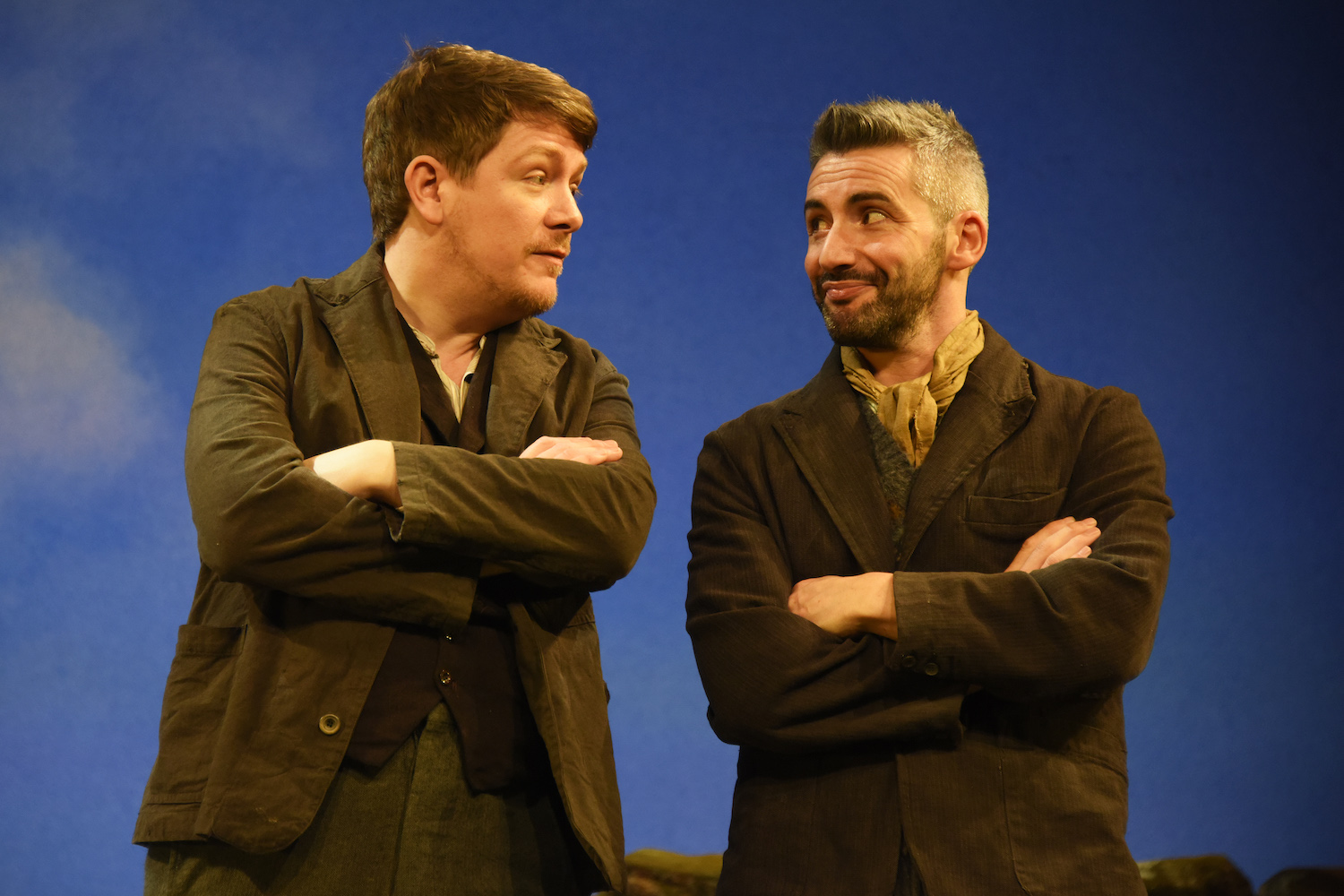
A Midsummer Night’s Dream – full of joy and mirth (Open Arts at The MAC until Saturday 27 April)
Shakespeare sets up an Athenian square of love where no one loves Helena who loves Demetrious loves Hermia who loves Lysander. There’s a father who must be obeyed, an elopement, a rather wonderful play within the play, a fairy king and queen, and some great death scenes.
There’s a lot going on, but colour-coordinated costumes clearly differentiate the different strands of plot. Tuned percussion instruments and a few strings and woodwind provide a bed of eastern-sounding music under many of the scenes.
Gerry McBride’s Puck scoots across the stage with a hair-raising sense of urgency. His master, king Oberon is played solidly by Gareth Smyth, while queen Titania (Michelle Porter) flits around the woods with a troupe of fairy dancers who strike up some superb tableaus draped across the leafy set, and work some beautiful wheelchair choreography into their routines.
Cinzia Savonitti (Hermia), Andy Paton (Demetrius), Rab Nolan (Lysander) and Linda Fearon (Helena) really convey the emotion of their storyline – with some nifty crutch-fighting – while the ‘Mechanicals’ inject lots of humour with their play. Anna Kyle (It Only Takes a Minute) makes a great Bottom, alongside some brilliant moments from Monica Hughes (Quince), Carley Palmer, Darren Murphy, David Parkes and Tim Leathem.
Open Arts attitude towards inclusion and opening up the arts to everyone is obvious throughout the performance which, to quote Shakespeare, is “full of joy and mirth”, conjuring up the sleepy, dreamlike situation, stirring up fresh ironies (Oberon’s invisibility contrasted with the actor’s own sight problems), and adapting the script and action to take advantage of mobility aids and build them into the production rather than just try and work around them.
At the end of a long week in which humanity sometimes seemed stretched and broken, A Midsummer Night’s Dream was a real tonic. A very polished production which worked as an ensemble to blend together diverse abilities: a credit to everyone involved on stage or back stage. You’ve one more chance to catch this great show tonight, Saturday 27 April at The MAC.
Photo credit: Neil Harrison
Friday, April 26, 2019
The Dig – a community digging themselves into and out of an early grave (Movie House and QFT)
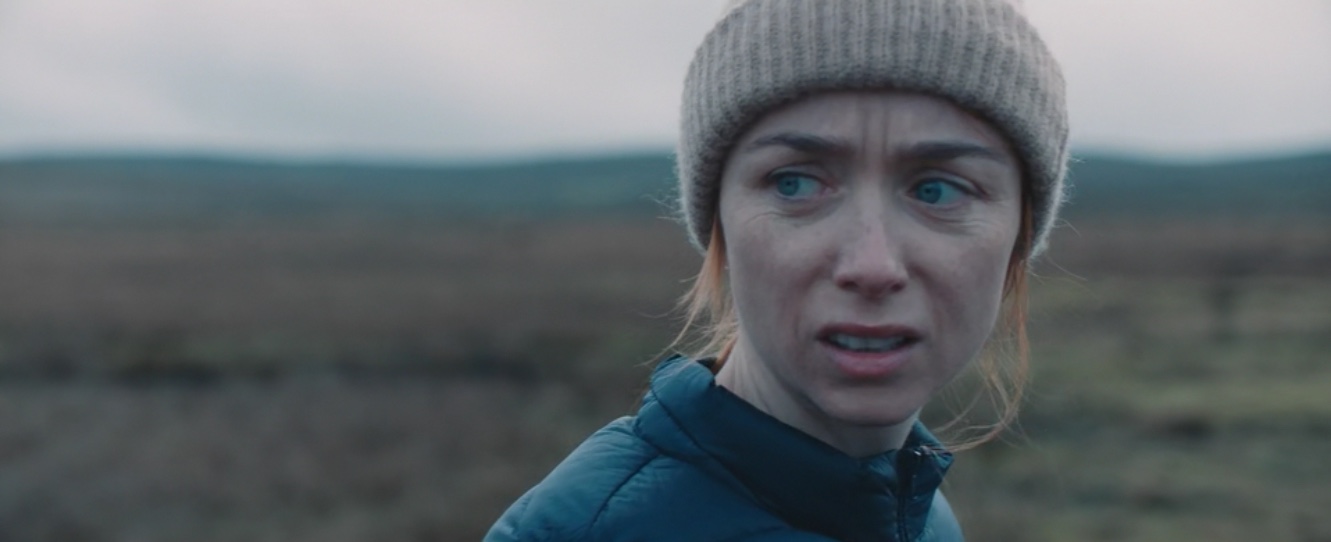
In The Dig, Emily Taaffe plays Roberta, the surviving daughter of Sean (Lorcan Cranitch) who has been creating molehills on the peat bog for the last 15 years searching for his missing daughter Niamh, her disappearance blamed on Callahan.
The futility of excavating to find a body has huge resonance on this island, with the ongoing searches for the Disappeared, requiring sporadic digs as new evidence comes to light. Yet The Dig is not connected with the Troubles.
Roberta has given up her life to keep her father alive, feeding him as he relentlessly digs up the bog with a shovel. Emily plays her pained and drained. Francis Magee plays the tough, vindictive local cop Murphy who dispenses justice with a firm hand and a punch or two.
Alumni of Cinemagic and with the support of Northern Ireland Screen, Andy and Ryan Tohill have graduated from shorts to The Dig, their first feature. There’s some great non-verbal storytelling. The cinematography has beautiful framing, making desolate Ballymena farmland (Slemish appears on horizon occasionally) feel even more bleak and wintery that it must have been during filming. James Everett’s music makes good use of distressed strings.
With such a small cast, the plot twist near the end isn’t such a surprise: there’s so little dialogue you have plenty of time to ponder how the screenplay is going to develop. But the gradual revelation that practically everyone in this small community is digging themselves into an early grave is beautifully constructed and executed.
Moody, bleak, and while totally un-uplifting, The Dig is a great way to take your mind off current affairs and sink into some gritty performances, inhospitable landscapes and the gradual revelation of the story.
The Dig is now playing in the Queen’s Film Theatre and Movie House cinemas.
Thursday, April 25, 2019
Ulster American – a dark and furious comedy about gender, identity, politics and theatre (Lyric Theatre until 28 April)
Jay is a long hirsute Irish American actor who has never been in Ireland, the star attached to a production of a new play. He’s loud, brash, and tall enough to be more than a little intimidating. Darrell D’Silva struts across the stage like a rockstar, randomly interrupting conversation with bizarre and sometimes offensive questions.
Leigh is an English theatre director who cycles around round being consensual, beaten and bullying. The lack of an interval in this one act play keeps the audience as trapped as the on-stage characters in his pressure cooker of a living room. Designer Becky Minto gives him a modern and minimalist room with a beige carpet that should act as a huge warning given Ireland’s history of violence (Summertime, Cyprus Avenue). Robert Jack plays Leigh as effeminate, his trousers a couple of inches too short, speaking through his hand gestures as much as his increasingly hysterical statements.
The remaining vertex of the triangle is Ruth, a Northern Irish playwright who arrives late, quite flustered and quickly has to defend her creative decisions and correct the others’ misapprehensions about her characters, her identity (she’s British but everyone across the water sees her as Irish) and even her politics (a right-wing fundamentalist Unionism viewed with contempt in London). Lucianne McEvoy injects cold stares and displays a dogged determination in the face of the brutish actor and the panicky director.
With even the quieter moments of dialogue full of tension and invective, director Gareth Nicholls keeps adding greater and greater physical movement as the 80-minute play builds up to its crescendo. There are some beautiful moments of mirrored body language, invasions of personal space, and darting glances that add to the richness of the superbly-controlled performances.
While the men self-identify as feminists, they gang up on, belittle, override and ultimately brutalise the one woman in the room. While Jay points his fingers as a gun, Ruth threatens with a more modern drafted tweet on her mobile phone. Though ultimately it is the pen(cil) that is mightier than the sword: another moment of resonance with the funeral of friend Lyra McKee earlier in the day.
The discussion about rape that lingers throughout the play nods towards Anglo-Irish history and politics. The characters at cross-purposes is a reminder that the two largest parties in the north can come out of negotiations with a deal that both sides understand and articulate completely differently.
“What kind of sick mind comes up with something like that?” asks the playwright (Ruth). Having already had a go at critics (“keep the good ones as pets” and kill the rest), actors (infantilised) and directors (commercially-driven), Ireland puts himself in the firing line, echoing the thoughts of much of the audience who are trying to compute whether such extreme sentiment and conversation is necessary to make whatever point Ulster American is intended to impart. At times, Ireland does seem to revel in being a controversialist dramatist rather than a brave and outspoken satirist. He’s fast becoming a modern stage version of Dennis Potter.
Ulster American is deliberately tasteless, sweary, showboat that makes its audience laugh all the more in their discomfort as Ireland piles more and more incendiary material on the bonfire while the able cast fan the flames and douse them with petrol in an attempt to further singe each other’s eyebrows. It’s a masterful and often comedic roller-coaster of a play.
Traverse Theatre Company’s production of Ulster American continues in the Lyric Theatre until Sunday 28 April.
Photo credit: Mihaela Bodlovic
Thursday, April 18, 2019
Sometimes Always Never – the charming and witty story of a Scrabble shark who knows about losing #bff19
Last Sunday night, the front row held the last two remaining seats together in Queen’s Film Theatre’s screen 1 which was showing the sold out Sometimes Always Never as part of Belfast Film Festival. While I feared a crick in my neck, they were remarkably comfortable.
Even better was the film. I’m a sucker for nearly anything Bill Nighy appears in, even if he sometimes plays a single, transferable, hesitant, overly-polite character no matter the film name printed on the ticket. But Sometimes Always Never gives him a chance to work his magic on less predictable characterisation.
It’s a story split over two parts and three generations. The initial road trip sees Alan Mellor (Bill Nighy) as a grandfather and a tailor who travels with his son Peter (Sam Riley) to see if they can identify a body washed up on the shore in a town around the coast from where they live. Staying overnight in an unmodernised hotel, he hustles another guest (Arthur played by Tim McInnerny) into a sizeable side bet around a game of Scrabble.
Then it switches to be a domestic drama, enjoying the injections of Scrabble strategy and wordplay as the generations learn more about each other and straighten out the tensions among the living while the prodigal son remains missing. Alan’s interactions with grandson Jack (Louis Healy) are very positive and eventually explain the titular three-button suit rule.
The women in the Frank Cottrell Boyce’s screenplay are neither central nor disposable. Ella-Grace Gregoire’s minor role as the apple of young Jack’s eye is well acted, while Jenny Agutter’s interactions with foolish husband Arthur and the charming Alan are fun while they last.
Despite the very soft focus throughout the 91-minute film, classic cars, my childhood friend the Dymo label machine, and the patterned and dowdy locations that keep on suggesting that the story is set in the past, Sometimes Always Never is set in the age of smartphones and online word games.
The moral of the story is that we should value the ordinary over the absent, and consider whether we really know our loved ones. The Mellor family have plenty of words at their fingertips but are terrible at communicating.
Sometimes Always Never could easily be reimagined as a stage play. On the silver screen it is a charming, eccentric and witty story of a Scrabble shark who knows about losing. Screened as part of Belfast Film Festival, watch out for Sometimes Always Never’s return to UK cinema screens from 14 June.
Wednesday, April 17, 2019
Woman at War – smart, funny, quirky and possibly the best action film of the year (QFT from 10 May) #bff19
Halldóra Geirharðsdóttir plays the conflicted woman at the heart of the film, torn between an opportunity to adopt a Ukrainian orphan and taking her environmental campaign to the next stage. Geirharðsdóttir portrays a warm and easy-going nature that attracts people to help her character, whether in the choir or her outdoor excursions. The talented actress also plays the role of Halla’s sister Ã…sa.
Jóhann Sigurðarson plays the farmer Sveinbjörn, perhaps a distant cousin, upon whom she grows to rely, while Juan Camillo pops up as a hapless foreign backpacker – wrong time, wrong place – who is persecuted by the authorities, blaming him for much of Halla’s disruption.
Icelandic films often enjoy off-beat humour and a crazy sense of creativity. Benedikt Erlingsson, director of Woman at War, does not disappoint. Much of the film’s quirky score is performed live on-screen by a band (sousaphone, drums and accordion/piano) that pop up in the most remote and intimate locations while the Halla wanders past. The irony of running out of battery power under an enormous pylon is magical. The nipple badge pinned to Halla’s coat gives her the feel of an Amazonian warrior.
The scenes of Halla disguising her infra-red footprint and battling all manner of flying surveillance are worthy of a Bond film. Halla certainly tolds true to her mother’s two pieces of advice: “Moms can do anything” and “Find solutions”.
The cataclysmic climate-conscious climax is apt. Challenging society’s environmental concern that is more tempered by profit than stewardship of the earth as well as a nod to modern surveillance culture, Woman at War asks what we can do “to save future generations”, individually or en masse.
Woman at War is smart, funny, very quirky, and was screened in Queen’s Film Theatre as part of Belfast Film Festival. While Jodie Foster has signed up to direct and star in an English-language remake, watch out for the Icelandic original when it gets a UK cinema release and returns to Queen’s Film Theatre from Friday 10–Thursday 16 May.
Monday, April 15, 2019
Stones In His Pockets – breathless production reminds us how far we’ve come (Grand Opera House until Sat 20 April)
Ostensibly about the experience of two local extras employed to fill out the crowd scenes of a US blockbuster being filmed in County Kerry, the play homes in on the perennial exploitation of the little people by the rich and powerful blow-ins who fill our heads with supposedly unreachable dreams.
Yet the play is running in the Grand Opera House in the week that the last season of Belfast-filmed Game of Thrones begins and opens on the very day (and I borrow phrase from one of many press releases issued on the subject) that the first of six beautifully-crafted, freestanding stained-glass windows that are being installed across Belfast, each depicting some of the most exciting and talked-about moments from the saga.
We have adapted. We have learned to collude with the magic picture-makers. We have learned to ever-so-slightly exploit the filmmaking overlords and play them at their own publicity game. While the tables haven’t completely turned, the cards are no longer stacked against us with the house being able to automatically take advantage.
So while a mention of ‘virtual reality’ indicates that Marie Jones has tweaked the script – though I’m glad ‘saving for a Commodore 64’ survives! – the words of Charlie and Jake have a certain dissonance reflecting how far we’ve come, rather than a relevance to our current situation.
The step and twirl choreographed transitions between characters – the pair of actors play a total of 15 people between them – are among the most stylish in a recent run of multi-roled productions. The Riverdance sequence deserves the laughter and applause it garners.
Kevin Trainor plays Charlie who has turned his back on a failed relationship as well as an Xtravision video rental franchise in Ballycastle to travel south-west and try something new. While the accent is more Glens than Fair Head, it’s consistent and likeable. Owen Sharpe plays the wiry Jake, a local Kerry-man who is a second cousin to nearly everyone in the town that has gone mad for Hollywood. His dalliance with the film’s lead actress Caroline Giovanni turns out to be as phony as her accent. The two actors bounce off each other like a seasoned double act, never dropping a beat. Trainor’s Jock Campbell, Scottish personal security to the film’s lead is a favourite from the minor roles, along with Sharpe’s overly eager to impress, mincing assistant director Aisling.
Peter McKintosh’s lush and verdant set epitomises rural Ireland, though the wispy clouds in the backcloth betray the normal changeable weather. Howard Harrison’s lighting design employs a huge array of different temperatured spotlights to recreate warm sunrises, the midday sun, and sunsets. With a general lack of props and moving scenery, rapid shifts in light signal scene changes.
Lindsay Posner directed last year’s production of Dear Arabella as part of Belfast International Arts Festival and is familiar with the quality and fluency of Jones’ writing. However in Stones, the rapid pace of delivery leaves very little space for the wordy script to breathe, and the emotions of the tragic moment before the interval and Charlie’s own revelation in the second half are senselessly lost.
Stones In His Pockets continues at the Grand Opera House until Saturday 20 April. While some of the script’s observations have dated, having walked past the London run all those years ago, last night was a great opportunity to be reminded how far good writing and a simple set can take a play. And while we may no longer be so vulnerable to being taken in by the charms of the Yanks, with an election or two (or more) around the corner, it’s a chance to evaluate where else in society we allow ourselves to become victims of other people’s dreams and ambitions.
Bathroom – the parable of the claustrophobic circus comedy performers #bff19
As Bathroom unfolds, the audience discover that the novelty of snuggling up on a mattress perched on slats over the bath, cooking on a stove, and storing milk in the shower, is wearing thin. As the weeks turn into months and the agile couple’s first anniversary of incarceration is celebrated, the strains of tiny house living become more and more apparent.
Angelique Ross and Ken Fanning play the angsty and creative Regina and Ronald. A lot of tricks and routines, and even a spot of trapeze work, are crammed into the performance space. A lot of bodies are squeezed into the bath and shower. The physical comedy demonstrates the performers’ strength and control.
While Fanning keeps the inventive yet ultimately risk-averse Ronald following the rules, Ross plays Regina as a somewhat sex-starved self-starter who sees beyond the somewhat artificial boundaries of their confinement and longs to test just how dangerous the hunting Prototypes are.
Fanning claims that the script was devised after the couple endured a week-long residency in the very same bathroom. The single location is certainly built to generous East Belfast standards, though that still means that cinematographer Neil Hainsworth shot a lot of it standing in the bathtub with a light attached to his head. Each scene is a video diary of a day, though some end rather too abruptly.
The opening soundtrack features an unusual yet fitting clarinet and double bass duet, and woodwind instruments feature throughout the 90-minute film which includes a joyous song about overfishing.
Away from the dystopian set-up, Bathroom is a metaphor for the manner in which artists trap themselves against the increasing demands of their decreasingly generous funders, finding themselves forced into producing greater quantities of less creative and rewarding work, often selling out in order to survive. The ‘Council’ could be the Arts Council or any number of other funding bodies. The artists could be extended beyond circus to stretch across the breadth of the arts.
Bathroom is a celebration of circus and proves that the art-form can succeed as effectively under a hot tap as a under a big top. Its light-hearted, unpretentious visualisation of circus mentality is very entertaining, and its allegory overcomes any looseness in the plot.
Shown in the Movie House Dublin Road as part of the 2019 Belfast Film Festival, keep an eye on the film’s Facebook page to hear about future screenings.
Photo credit: Neil Hainsworth
Friday, April 12, 2019
Belfast Film Festival – featuring the absurd, challenging, deadpan, dystopian, surprising, local and international (11-20 April) #bff19
This years festival is host to award-winning international director Aamir Khan, with four of his films being screened in the Movie House Dublin Road at 6pm between Friday 12 and Monday 15.
Some other picks from the programme.
Friday 12
Another Day of Life is the story of an idealistic journalist, somewhat lost and alone, who went to Angola as a reporter to tell the story about the civil war and advent of independence, but came back a writer aware of how journalism limited his expression. Based on the eponymous book by Ryszard KapuÅ›ciÅ„ski. Queen’s Film Theatre at 7.30pm. [reviewed]
Saturday 13
Looking through the eyes of a Barista serving coffee from a kiosk in the centre of Belfast to his customers: office workers, pensioners, people who are homeless, historians and poets. Neal Hughes uses time lapse to create a unique view of street life in The Kiosk which was shot over two summers. Movie House Dublin Road at 6pm.
Sunday 14
Ronald and Regina are the only surviving circus artists in the aftermath of ‘the Situation’. Bathroom is a feature length dystopian sci-fi, lo-fi circus comedy shot in a real bathroom in East Belfast. Movie House Dublin Road at 2pm.
I’m a sucker for Bill Nighy’s always caring, always deadpan, often aloof on-screen personas. Sometimes Always Never is being screened in the QFT at 6pm, with Nighy playing a Scrabble-obsessed Merseyside tailor searching for his son who stormed out of the house years ago after a heated round of the board game: a family with a surfeit of words yet they struggle to communicate.
Daniel Jewesbury’s new film Necropolis asks questions about the living and the cities in which they live by exploring our attitudes to death after decades of dispossession and privatisation in this film essay shot entirely in cemeteries, graveyards and burial grounds in Belfast, Berlin and London. Strand Arts Centre at 6.15pm.
Monday 15
Bed Sitting Room. Featuring Dudley Moore, Peter Cook and Spike Milligan, this 1969 film is adapted from Milligan’s eponymous play with John Antrobus set in a desolate landscape of ruin and ash in a dystopian England three years after nuclear war. Does this absurdist comedy of social collapse have more resonance with audiences in these times of Brexit than it had when it was first released? Beanbag Cinema at 7pm.
Film Devour Short Film Festival will serve up another smorgasbord of local shorts in front of fellow filmmakers and the paying public. The variety and quality is always surprising. The Black Box at 7pm.
Thunder Road, an award-winning and awkwardly-engaging character study of a police officer whose escalating struggles can be suppressed no more as he stands up to deliver the eulogy at his mother’s funeral. A dark yet authentic look at how some people process grief through by writer/director/star Jim Cummings. QFT at 9pm.
Tuesday 16
Woman at War is the follow-up to Icelandic director Benedikt Erlingsson’s hit Of Horses and Men. He combines music, comedy and social justice to tell the story of a warm-hearted choir leader living in the Icelandic highlands with a secret life as a hardcore environmental activist. QFT at 6.30pm (also showing Monday 15 at 4pm).
Wednesday 17
Don’t think heavy metal gets the attention it deserves. Heavy Trip watches what happens when an amateur metal band – Impaled Rektum – pull out all the stops for one last chance to make it into the big time at a huge festival. QFT at 6.30pm.
Eighth Grade is the suburban adolescent story of the insecurities and absurdities of being a 13-year old girl navigating the last week of middle school with a phone in hand looking for online connections to displace the empty everyday life. Movie House Dublin Road at 7pm.
Twenty years since its release, experience a 4K screening of this science fiction classic The Matrix in a venue – the QUB Sonic Arts Research Centre with its 48-speaker truly surround sound array – which can do justice with the Dolby Atmos soundtrack and the added dimension of height channels. SARC at 7.30pm. SOLD OUT
Looking at the world of corporate exploitation, worker solidarity and gender politics through the lens of a day in the life of a nurturing manager who protects the all-female staff in a US ‘sports bar with curves’. Support the Girls in QFT at 9pm.
Relaxer. Can no-hoper Abbie meet his brother’s challenge of playing the perfect game of Pac-Man and completing the fabled level 256. The year is 1999 and this absurd quest echoes the theme of survival in anticipation of Y2K. Beanbag Cinema at 9pm.
Thursday 18
Two brothers plot to murder their stepfather to thwart an unexpected change to their dying mother’s will that will block their inheritance. But can the siblings bear to spend a whole day together to execute their plan? Tragic comedy Brothers’ Nest is screened in the QFT at 9.30pm.
Saturday 20
Nine years after watching Rem Koolhaas – a Kind of Architect, I’m nearly ready for another documentary about the legendary architect and provocateur. Rem Hoolkaas in the Strand Arts Centre at 4pm.
Wednesday, April 10, 2019
Ghost - can the perfect couple and a phony psychic bring the familiar film to life? (Grand Opera House until 16 April)
Rebecca Lowings and Niall Sheehy are strong leads, establishing the affection between Molly and Sam through touch and gesture if not words. Their duets are rich and warm. Lowings’ rendition of With You is stripped back and haunting. There’s a bare male chest or two, but the pottery-wheel scene is not overegged and (strangely) isn’t allowed to become a pivotal moment in the musical.
Very controlled spotlighting neatly differentiates between the unlit ghosts and the still-alive characters. Sam’s killing and walking away from his corpse is a well-executed illusion, followed up with a couple of other nice moments (particularly the gun in the air in the second half). I’m not so convinced about Sam’s ability to be heard through an intercom!
Jacqui Dubois’ phony psychic with her sham palmistry injected energy into the atmosphere of grief and treacherous embezzlement. Lovonne Richards’ subway ghost certainly has stage presence and delivers a superb piece of performance poetry as well as beautifully-choreographed scenes of telekinesis. Much of the ensemble’s office environment dance routines oddly reminded me of the fantasy con sequences in TV series Hustle.
Mark Bailey’s set is busy, but the layers work well, it facilitates very fast scene changes, and its ability to suck the freshly dead into hell impressed and amused.
While technically well-executed, Ghost doesn’t move from screen to stage with the same sparkle as other recent touring productions like Shrek and Legally Blonde.
As a musical, Unchained Melody stands out above all the other songs – its final reprise is the most electrifying – while the remainder of the music alternates between soft ballads and big gospel sound numbers. Last night’s performance was let down by what may just be a first-show-in-a-new-venue problem with the sound balance: sitting in the stalls, at its loudest moments, the seven-piece band drowned out the cast’s vocals in the mix.
If you’ve a strong emotional connection with the Patrick Swayze/Demi Moore/Whoopi Goldberg film, then like a friend further down my row, you may blub your way through the first half, never mind the ultimate finale.
However, as someone who is often moved to tears in the cinema or theatre at the drop of a hat, Ghost’s ending is underwhelming, sapped of energy, neither squeezing out every last ounce of emotion nor swinging back with a big musical number to finish on a high note. Audience members in the rows in front of me had begun checking their mobile phones for messages before Sam had even said his farewells, though these same people then rose to their feet to applaud the cast.
Ghost continues in the Grand Opera House until Saturday 16 April.
Photo credit: Pamela Raith
Tuesday, April 09, 2019
Mid90s – ambitious, shocking yet pretty ‘sick’ coming of age movie (QFT from 12 April)
The first half of the movie sets up the cast of brash, misfit characters. Stevie lives with his once wild now reformed Mum (Katherine Waterston) and sullen yet bullying older brother (Lucas Hedges) who is never far from a large carton of orange juice.
Attracted to a gang of skater boys, he spends his days hanging out in their yard out the back of a skateboard shop. There he meets sullen Ruben (Gio Galicia), until now the youngest member of the gang; Fourth Grade (Ryder McLaughlin) who films everything and occasionally stands on a board; the aptly named FuckShit (Olan Prenatt) – despite what your Mum said about swearing not being clever, in this case it’s very funny; and Ray (Na-Kel Smith), the eldest and most cool with no need for a nickname.
Mop-haired Stevie sits quietly soaking in all he is told, unable to properly filter what is true and what is teenage nonsense. He barely speaks, but when he takes a spectacular tumble – I’m ashamed to say I roared out with laughter at the seriousness of his fall – he earns the respect of the majority of his peers and they start to look after him in their own substance-abusing, law-breaking way. The gang skate well, and Suljic disguises his real-life skill.
The twist comes half way through with the film’s single most problematic scene when we’re expected to swallow his brother revealing a thoughtful side to his otherwise bruising character, speaking out about history repeating itself, with Stevie not falling far from his mother’s tree of poor behaviour and poor company before she cleaned up her act. It’s then a tussle of love between the gang who are helping Stevie grow up all too quickly, and his family who struggle to repair their broken bonds.
Mid90s is shocking and deserves its 15 rating for many reasons: language, substance abuse, self-harm and injuries, never mind Stevie’s acceleration to second or third base. The skater-vibe runs throughout the film which is shot in an old-fashioned TV 4x3 aspect ratio as if captured on a good quality DV camcorder, and sometimes edited like a YouTube video with stunt repeats.
Unlike Stevie’s skateboarding, there are no wobbles in Jonah Hill’s confident feature directorial debut, with a powerful portrayal of longing and belonging, and great performances across its cast. Smith’s paternal side is tender yet believable. Waterston’s softer concluding scene acts as a keystone to lock in the previous 80 minutes. As a coming of age movie about a gang of drifters, the clichés are limited, the soundtrack uplifting, and overall Mid90s turns out to be an ambitious, disturbing yet pretty ‘sick’ film that leaves Lady Bird far in its wake.
Mid90s is being screened in Queen’s Film Theatre between Friday 12 and Thursday 18 April.
Friday, April 05, 2019
The Young Pornographers – concert reading of an exciting new musical work by Conor Mitchell full of brio and panache (Lyric Theatre)
Last night, the Lyric Theatre hosted a concert reading of Conor Mitchell’s The Young Pornographers. Seven performers backed by a fourteen-piece band brought to life this new work in an epic performance that wowed the audience and once more demonstrated the versatility, passion and talent of Mitchell.
The impact of the fences going up in 1953 Berlin is seen through the eyes of Stanislav and Hanna, a photographer and his muse. Trapped in the east, they scrounge a living through pornography. Always under pressure from pimp Ruddy, they trick a talented actress, Margot, into posing for an American magazine photoshoot. Her manager Gerardt has his doubts, but she presses ahead, aware that it’s not legit. But her sudden enthusiasm for the work and invitation for a critic to inspect it throws everyone’s life, safety and future into doubt right at the point Stalin dies.
It’s a Soviet story told through American-styled music, a mashup of cultures and ideologies that mirrors post-war Berlin. Taking full advantage of the considerable brass section, it kicks off with a big band sound, witty lyrics, some simple props and confidently modulates key mid-phrase. It’s big, it’s brash and it’s full on from the very start.
Mezzo-soprano Ciara Mackey plays pin-up girl Hanna, using hand gestures, glances and hard stares to portray her shaky co-dependent relationship with Stanislav (Darren Franklin). Each has a difficult backstory that only emerges later in the show, with Franklin then able to demonstrate the emotional power of his voice.
Zoë Rainey gives actress Margot huge confidence and smiling energy as she first steps up to the microphone to unwittingly enter into the grubby world of Stanislav’s studio. There’s an exquisite three-handed number with Mackey and soprano Rebecca Caine, before the actress’ off-stage playwright husband throws a spanner in her career and job security.
New modern musical theatre often fails the ‘could you hum it?’ test with nothing singable as you walk back to the car after a show. Not so with Mitchell, whose The Young Pornographers throws out song after song that are playful, intelligent, quite humorous and melodic. It’s an Almost Love leads on to the glorious Chaplain’s Coming, with Mitchell dancing along on his conductor’s podium.
Full of secrets, deception, self-preservation and unexpected proposals, the gradual revelation and understanding of the plot isn’t hindered by the concert-style performance which tells its story with brio and panache.
Steven Page’s arts critic Comrade Poliakov – who is later found to be manipulating his artists – gets his own song. The baritone’s lyrics are seeded with suitably review-like words like oeuvre, caprice and transfigured! A bit of Irish history is thrown in for good measure, requiring nimble fingerwork by Keith McAlister on piano. Sean Kearns (Ruddy) and Matthew Cavan (Gerardt) complete the able cast.
For a new work, the detail and subject-matter knowledge packed into the lyrics, together with the dramatic score is impressive. The former state anthem of the USSR pops up at the end of each half of the show with an increasing complex set of harmonies beautifully woven around the familiar rousing melody.
The feelings of being trapped, segregated by physical and political barriers, and manipulated as part of wider agendas, echo strongly around 2019 Northern Ireland and the UK’s shambolic Brexit negotiations.
Mitchell curates excellence in everything he does, and the cast, musicians and creatives for this concert reading are a medley of the very best talent he knows. The Lyric Theatre deserves credit for helping develop this musical through their New Writing Department, and giving it a public airing.
What has Belfast done to deserve Conor Mitchell?! The intelligent plot, the lightness of touch, the richness of the lyrics, the blending of the powerful voices, and the oomph from the orchestra and band made this world première concert reading of The Young Pornographers a real treat for those gathered last night in the Lyric Theatre’s main stage auditorium. A great piece of musical theatre that will hopefully now grow into a full production.
Thursday, April 04, 2019
Bouncers – can you get past the doormen to enter The MAC’s Luminaire Club (Big Telly until 20 April)
The perfect integration between Ciaran Bagnall and Diana Ennis’ arched set, Garth McConaghie’s zoned soundscape, Sarah Jane Shiels’ synchronised lighting design and the glitter cannons and smoke machines is impressive. Yet despite the technical complexity, it all supports the Brechtian non-naturalistic style that Big Telly adhere to in their production of Bouncers with The MAC.
Some of them want to use you / … to get used by you / … to abuse you / … to be abused
For the second time in less than a week, Eurythmics’ Sweet Dreams Are Made Of This is aptly included in a play. McConaghie mixes together so many familiar tracks with original music, and plays with speed and ambiance to create a backing track that lasts the duration of the play and on its own nearly justifies a visit to the theatre to listen to it.
Marty Maguire, Conor Grimes, Ciaran Nolan and Chris Robinson play the four doormen, transforming themselves through stance and pitch of voice into a group of four women celebrating a birthday and four men on a night out. The play is rooted in the 1980s, with mention of LPs and a great play list of songs woven into the action.
The bouncers are lecherous, jaundiced, philosophising misogynists, quite prejudiced and at times homophobic too. They talk about violence but don’t really demonstrate much menace until some well-choreographed fight scenes towards the end of the second half.
Flicking between characters and scenes in the foggy, tunnelled set is fast and effective. The toilet humour, more properly urinal humour, is funny in its vulgarity. Women in the audience laugh a lot more than the men at the antics and the abusive situations portrayed. It’s as if an amusing curtain has been raised into the male mind and macho culture.
John Godber’s script has been gently Norn Iron-ised, with C&A replaced with Dunnes and some local locations thrown in. It’s a deliberately provocative work, which pulls no punches in terms of language, sexualised content and neanderthal attitudes.
While the blokey cast is balanced up by a mostly-female creative team, given the multi-gender, multi-role nature of Bouncers, switching two of the cast for female actors would have revitalised the play’s appeal and the comparisons with 1980s and today, and it might have freshened up the comedy, which at times is (deliberately) as stale as the wet floors in the gents.
There’s no sense that the bouncers are a tight team. They’re co-workers rather than chums, each bringing their own baggage to the night shift. John Godber’s script and Zoe Seaton’s direction paint them as individuals. The first half sets up the three sets of characters, leaving the shorter second half to watch situations of conflict erupt and find resolution.
Lucky Eric is the senior figure, looked up to as a sage head, but carries the burden of separation from his wife and some of his monologues are devoted to his distress at the exploitation and objectification of the scantily clad women who pass through his doors. Marty Maguire was born to be a bounder, and his Eric hides any vulnerability behind a cloak of confidence and bravado.
Judd treads the adult section at his local Xtra-vision and constantly spars with Eric, picking fights as if to pass the time. Ciaran Nolan brings his wiriness and pulled faces to Les. Ralph is quiet one of the bunch and the real thinker in whom Chris Robinson instils a sense of being aloof and the least clubbable of the four.
Together on stage they’re like a boyband, singing while grinding out dance routines to familiar hits. I fully expected that them to pull off their
There’s a definite them and us vibe, with those in the stalls looking down at the hundred or so people sitting around circular tables in front of the stage wondering why they wanted to be treated like VIPs with table service drinks, and the snobs down below looking up and realising that the regular theatre seats are so much more comfortable than the ill-padded chairs they’ve paid extra to sit on.
Bouncers is a quality production, with great physicality on stage matched by an all-encompassing sound, lights and set. The play was written in 1977 and revised in 1983 and 1991. Has the reality of clubland changed much since then? Last year’s rugby trial suggests that some men’s attitudes towards sex and women still fall short of respect. Watching that acted out on stage as 1980’s nostalgia and realising that it’s still true is shocking and takes a bit of the shine off the entertainment factor.
You can get your name down for the door by contacting The MAC box office and be guaranteed entry into the Luminaire Club until the run finishes on 20 April.
Wednesday, April 03, 2019
Happy As Lazzaro – a morality tale of slavery, exploitation and wolves (QFT from Friday 5 April)
The first hour watches as 54 farm workers live in three small homes with a couple of light bulbs between them, growing tobacco and other crops for the Marchesa Alfonsina De Luna. Since a bridge collapsed in the 1977s, the feudal commune believe that they are isolated, with just whatever machinery and vehicles they can keep running to help work the land and survive into the 1990s.
The marchioness’ business agent and a priest use a hoist to pick up crops, though somehow the farm produce never begins to pay off the supposed debt. When the sharecroppers’ boss makes her annual visit, she stays with her son in the relative comfort of house, with some of the farming teenagers waiting upon them and the goings-on providing a soap opera for the remote community.
Filmed on Super 16mm, the sepia quality of the picture helps age the first act, and eases the deliberately confusing transition at the mid-point when a bump on Lazzaro’s head somewhat magically jumps the action forward in time. We can see how the group are now faring in a more urban landscape. It’s safe to say that the exploited have become the exploiting, and where wolves once preying on the slaves, it’s now the bankers squeezing their former overlords.
The concept and conceit behind Happy As Lazzaro is novel and at times unexpected. Rohrwacher’s storytelling is gentle and some levels seemingly unconcerned with structure or significance. The audience build up a picture – in my case with a few false starts – of who the main characters will be over time.
Happy As Lazzaro is a warning that being obedience and biddable is a poor substitute to challenging your environment, and a reminder that the oppressed are only a step away from becoming the oppressors.
While one set of Walkman batteries last a lot longer than normal, what’s more realistic is the possibility that a whole group of people could become trapped in what is really an open prison is a scary reminder of how peer pressure keeps people together and silences those who seek alternatives to the accepted norm.
Happy As Lazzaro is being screened in Queen’s Film Theatre from Friday 5 April. It’s a slow but rather spellbinding experience.