Saturday, May 28, 2022

Between Two Worlds – Exposing the unseen gig economy or exploiting the exploited? (QFT until 2 June)

Between Two Worlds (Ouistreham) could have been a Ken Loach/I, Daniel Blake style exposé of the French social security system, unpicking the heartless bureaucracy of benefits processes, the draconian working conditions sustained by the service sector, and the hard underpaid graft of people who live below the bread line.

Instead the film remains true to the book from which it is adapted, the culmination of journalist and author Florence Aubenas’ six months working and observing the economic crisis through the lives of cleaners in the port of Caen.

Between Two Worlds could really be retitled “Betraying Two Worlds”.

The film’s protagonist Marianne Winckler is quickly recognised by job centre worker who continues to place her in jobs withing the cleaning industry, turning a blind eye to her investigative subterfuge.

We hear internal monologues as Winckler runs over how she will describe situations in her manuscript. Her intention is to expose the low paid, exploited, gig economy underclass to a French society and political system that ignores what it cannot see.

But will she make a difference? Will she end up writing ‘poverty porn’? Will she damage those who innocently take her under their wing and teach how to clean toilets and freshen up ferry cabins (four minutes per cabin to change the bedlinen, scrub and clean).

While the final shot of the correctly focuses in on the real stars of the film, a dark ethical cloud hangs over the screenplay throughout the 106 minutes as the camera stays trained on Winckler (played by Juliette Binoche) as she becomes more and more entwined in the lives of colleagues like Christèle (Hélène Lambert), Marilou (Léa Carne), and the flirting, wheel-changing Cédric (Didier Pupin). They don’t realise that their acts of generosity towards Winckler are ultimately feeding her book royalties rather than nourishing honest relationships. The journalist sellotapes receipts into her notebook to claim back as expenses while her co-workers scrimp and save to contribute towards petrol or buy her a birthday present.

The betrayal ultimately overshadows the dodgy practices and ill-rewarded work that the author intended to spotlight. The film’s lesson is that the ethics of undercover investigations cannot be ignored. Observing from the inside inevitably exploits those who are being observed. The film awkwardly acknowledges that once the ruse is discovered and the book is published, Winckler’s friendship with the resilient and big-hearted women she spent months living and working with is now one of choice and not necessity. She may wish to be friends for life, but her old colleagues are as trapped in their realm of poverty as Winckler is trapped in her own more privileged yet not untroubled world.

Binoche’s performance as a mature divorced ingénue is matched by the non-professional cast around her, women who have done the jobs they’re acting out on screen.

The exploitation of workers by those hiring the cleaners deserves top-billing but the author telling their story holds the reins of power. The English title for the film works, and that failure is perhaps inevitable given director Emmanuel Carrère’s decision to retain the framing of the original book. That said, it’s still an intriguing film to watch and mull over as you leave the theatre. But I doubt it will make your eyes weep and your heart grieve in the same way Ken Loach could manage.

Between Two Worlds is being screened at Queen’s Film Theatre until 2 June.

Enjoyed this review? Why click on the Buy Me a Tea button!

Monday, May 23, 2022

Top Gun Maverick – one of the few sequels that’s worth the wait (UK and Irish cinemas from 25 May)

I’ve seen the trailer for the Top Gun sequel more frequently than the original film.* The teaser for Top Gun Maverick was rolled out every time cinemas reopened over the last two years. And then, time after time, its release would be pushed back. Three and a half decades after the original flew onto the silver screen and served up a feast of Cold War dogfighting, romantic bike rides and tragic deaths, the film turns out to be worth the wait.

Top Gun Maverick catches up with Captain Pete “Maverick” Mitchell, now a US Navy test pilot who is still willing to push boundaries. A complex mission to neutralise a target in a “rogue nation” requires him to head back to the elite naval academy and train up a younger generation of pilots to fly low, fly fast and get home alive.

What follows is a lot better than you might expect. Less cheesy, and potentially quite an improvement on the original movie. Yes, there are shots of risk-taking Maverick (no helmet when he’s on his bike, no lifejacket when he’s on a yacht) who continues to defy orders and promotion. Yes, there are trademark shots of Tom Cruise running. And yes, he still looks great topless. Yes, he turns heads in a bar when, for some unknown reason, he walks in wearing his starched white uniform. And expect some breaking of the rules of engagement and buzzing the flight tower for good measure.

But there is also a modern military storyline that is mostly believable – though could the same missiles that knocked out an airstrip not have targeted the pesky surface to air missiles that every worried could threaten the mission’s safe return? – and acres of flight footage from the cockpits of real jets. Attending a preview screening in the Cineworld Belfast IMAX theatre, chiselled faces and stubbly cheeks filled the enormous screen, and the subwoofers rattled the cinema as the F-18 jets’ afterburners roared.

The Top Gun world is still fairly pale and overwhelmingly male. There are two female pilots in the classroom: one gets a few lines (Phoenix/Monica Barbaro), the other (an unnamed pilot/Kara Wang) just gets to play American football on the beach. While there’s a new love interest – Penny (Jennifer Connelly) who has clearly been burnt by Maverick before – there are also some familiar figures and their relations from the original. Goose’s son Rooster (Miles Teller) supplies the film’s opportunity for redemption. Nerdy backseat weapons operator Bob (Lewis Pullman) deserves a #belikebob hashtag.

Enough of the music from the original creeps into the sequel to evoke memories, though don’t expect every 1980’s hit to be there. I don’t think Berlin will be getting any more royalties: instead, Lady Gaga’s Hold My Hand will be spinning its way up the playlists, though is unlikely to become such a cultural classic.

Top Gun Maverick may not have publicly stated its ambition to “save cinema”. But I’ll eat my hat if it hasn’t waited long enough to persuade people to return to their local multiplexes in droves to see it. And for the most part, they’ll be delighted with the on-screen action that makes 131 minutes fly by.

*Late 1980s, on TV on the evening of Boxing Day or New Year’s Eve, packed into the wee room at ‘Auntie’ Mona’s in Jordanstown, away from the chatting adults in the living room. Also the venue for my first taste of Grease and all kinds of other movies.

Enjoyed this review? Why click on the Buy Me a Tea button!

Saturday, May 21, 2022

Blue Stockings – talented youth cast hold up an 1897 mirror that highlights 2022 inequalities (Lyric Drama Studio until Saturday 21 May)

Jessica Swale’s fast moving play Blue Stockings examines the lead-up to the 1897 Cambridge University vote on whether women should be allowed to graduate. Seen through the eyes of four female students at Girton College, the audience witness the prejudice towards these so-called “Blue Stockings”, with their physical capacity to study and moral motivation of apparently choosing learning over family life called into question. An early quote from the play sums up the prevailing attitudes:

“There are some women who choose to overlook their natural maternal instincts in favour of academia, but the fact of the matter is that women cannot dispense with the physical limitations of their sex. A woman who expends her energy exercising her brain does so at the expense of her vital organs, leaving them unfit for motherhood.”

Elevating the quality of the script is the injection of complexity: not all women share the same views on female education, not all staff at Girton agree on the strategies being employed. And there’s a clash between those wanting to rationally argue for graduation rights and the Suffragette movement, potential allies but seen by some as being far too extreme.

The Lyric Drama Studio’s spring production is always a highlight, showcasing emerging talent and able to stage a play with a larger than usual cast and less need for the doubling of roles. Blue Stockings brings twenty performers into the Naughton Studio space, with seating on three sides of Stuart Marshall’s well realised college courtyard set. Moody lighting (Mary Tumelty) and atmospheric sound effects (Chris Warner) help move the audience through the blizzard of scenes in Swale’s script.

Melanie Lavery imbues astronomy student protagonist Tess Moffat with a bold spirit, intellectual vitality, wit and rage. Cycling around the cramped courtyard is also quite an achievement. Real-life head of Girton College Elizabeth Welsh is ably brought to life by Mary Gyles, steering a stealthy line of least possible offence towards her goal of women’s equality in the university system. Her heartless but strategic treatment of Maeve Sullivan (Sophie McGibbon), a poorer student whose scholarship is withdrawn when her family circumstances change, creates a pivotal moment in the plot that unfortunately removes one of the sparkier students.

Aaron Ferguson (playing undergraduate Lloyd) delivers a powerful second act speech about the history of male rule before switching from bluster to threat when challenged. Liam Rowan keeps the audience guessing whether suave Ralph Mayhew is as wonderful a catch for Tess as he first seems. Kealan McAllister brings out the integrity of Thomas Banks who lives with the consequences of tutoring at Girton as well as the male environs two miles down the road of Trinity College.

We might smirk when a man lists jobs unsuitable for women – running the country, being an engineer, and developing a vaccine for smallpox – but while the storyline is set nearly 125 years in the past, the issues endure today.

I interviewed Dame Jocelyn Bell Burnell last year and edited her contribution to a radio programme. She had to fight to study science at school. A university list of staff once labelled her as ‘Mrs’ rather than ‘Dr’. Her supervisor was awarded a Nobel Prize rather than the student who spotted the pulsar (though research students’ low rank in the academic pecking order played into that decision). But the astrophysicist observes that there is still much room for improvement in the treatment of women and people from minority backgrounds in academia, and has invested her own recent significant prize money into bursaries to address the inequalities. While most scientists speaking out about their areas of expertise around COVID and vaccines have received challenge and abuse, the strength and vigour of online bullying towards some local female scientists has been appalling.

Women still only make up a third of the MPs in the House of Commons and MLAs in the Northern Ireland Assembly. Female MPs are criticised for wearing skirts and crossing their legs, while the campaign of Northern Ireland election candidates were attacked with fake porn.

Gender pay gaps still sustain. COVID lockdowns stalled women’s progression in industry. It was another 50 years before the women of Girton could graduate. Will it take another 50 years – or longer – before gender, ethnicity and disability pay gaps are properly addressed?

The Lyric Drama Studio chose well with this year’s play. There’s a lot of energy, a lot of laughter, and very tight production values, with the cast entering the theatre from unusual directions, often carrying in tables and chairs to reset the stage under the cover of Warner’s booming string stab musical interludes (that wouldn’t be amiss on a current affairs TV show). Director Philip Crawford will be proud of what the cast, creative and production team have achieved in a short time. I doubt it’ll be the last time that many of the performers will be gracing the stage of the Lyric or elsewhere in the city.

Blue Stockings finishes its sold-out run this evening in the Lyric Theatre. 

Enjoyed this review? Why click on the Buy Me a Tea button!

Benediction – dark brooding biopic about Siegfried Sassoon (QFT until Thursday 26 May)

Benediction is one of those films that casts a dark shadow over your soul that lingers long after you leave the cinema. Your gut will churn until the next warning. I’m not sure if that’s the screenwriter/director Terence Davies’ intention, but it’s certainly my experience.

The biopic follows sharp-tongued Siegfried Sassoon through his experience of war, a medical discharge, his criticism of conflict – “too many have died, too much has been destroyed” – and a succession of unsuitable and unsatisfactory male lovers before meeting his wife.

The excellent Jack Lowden hands over to a curmudgeonly Peter Capaldi as the film jumps rather unsatisfactorily up and down Sassoon’s timeline. An early scene shows Sassoon’s conversation to Catholicism: it feels like this craving for redemption could, or should, become a really significant moment in the story, but the script fails to satisfy.

The likely more talented Wilfred Owen (Matthew Tennyson) of Dulce et Decorum Est school English poetry lesson fame crosses Sassoon’s path. Jeremy Irvine is gloriously out and selfish as Ivor Novello. Kate Phillips is the young Hester Gatty who captures his heart, or at least his desire for progeny, played in later scenes by Gemma Jones.

There’s a lot of agonising and inner turmoil. Sassoon is ill at ease with himself; less at ease with many of those around him; and even less with society at large. He sees his own life and his work’s lack of formal recognition as failure, while also bemoaning the catastrophe of conflict in his writing.

Well over two hours long, Benediction is at its best when it gives generous space for Sassoon’s words, often illustrating them with archive news footage as well as recreated scenes. The haunting sense of sadness and loneliness – not entirely novel feelings among poets – could have been a strength, but somehow the darkness ends up drowning the audience, and by the time the credits roll, while I’ve been educated about Sassoon, I really wish I’d spent two hours learning about Owen.

Benediction is being screened at Queen’s Film Theatre until Thursday 26 May.

Enjoyed this review? Why click on the Buy Me a Tea button!

Friday, May 13, 2022

Three confessions and a funeral (or two) … Agatha Christie’s The Unexpected Guest (Belvoir Studio Theatre until Saturday 14 May)

Oh what a tangled web we weave … and there are quite a lot of tangled webs to choose from at the minute.

The mystery of who will be the second DUP MLA for Lagan Valley was solved this afternoon with the surprise announcement that former Belfast South MP and MLA Emma Little-Pengelly was being parachuted in to replace Sir Jeffrey Donaldson who had appeared on last Thursday’s ballot paper and topped the poll.

There’s also the mystery of the lost Whatsapp messages and the phone lost overboard that has reduced the evidence available in Rebekah Vardy’s libel case against Coleen Rooney in London’s High Court. Often referred to in tabloid newspapers as the “Wagatha Christie trial”, that one’s set to run for a while longer.

And then there’s Belvoir Players’ production of Agatha Christie’s 1958 play, The Unexpected Guest.

A crashed car on a foggy night brings Michael Starkwedder (Aidan Hughes) into the Warwick home, stumbling upon the dead body of Richard Warwick (a suitably stiff performance by Robbie Irwin) still sitting in his wheelchair. Written for the stage by Christie, the majority of the first act is a lengthy and somewhat confessional conversation between the stranger and Richard’s wife Laura (Sinead Fox-Hamilton) which also introduces provides handy pen pictures of the other household residents.

Among those not crying about the death of the gun-obsessed, insomniac, fond-of-a-drink, heavy-on-the-accelerator, child-killing monster, we meet the family matriarch (Beth McNair), the all-seeing housekeeper (Maggie Gorman), the all-remembering half-brother (Chris Pegg) who fears being placed in a care home, the light-sleeping nurse (Jonathan Brown), and a politician (Gareth McGimpsey) who is liberal by party and liberal by nature. As you’d expect, any one of them could have the motive and maybe even the opportunity to have pulled the trigger. By the start of the second act, the south Wales police have arrived in the shape of Inspector Thomas (Joseph Quinn) and Sergeant Cadwallader (Deirdre Johnson) bringing with them the early fingerprint analysis from the crime scene.

There’s no single investigator, no Miss Marple or Hercule Poirot to hold up a figurative magnifying glass and hunt down the truth. Instead, Starkwedder and the police conduct parallel independent investigations. The ‘aha’ moment drew gasps and a few whispered swearwords from the audience.

Johnson has great fun with Sergeant Cadwallader’s mannerisms and confectionary priorities, while Pegg delivers the standout performance as the underestimated man-child whose stoked-up rage provides much drama and distraction as someone who is vulnerable becomes a victim in the third act leading up to the big reveal.

While some of the descriptions of disability clash with 21st century sensibilities, this is a text in which patriarchy is subverted and Christie gifts her women characters with an inner steeliness while allowing the men to become victims of loose stereotyping.

It’s a script that relies on words not action, so the audience have to work hard and listen to the barrage of clues and red herrings. Playing along is encouraged with the Cluedo-style pack handed to audience members when they arrive. There’s no room for actors to hide or fumble, and on the opening night it was clear that the cast had been drilled until they were very confident with their lines.

There’s just one location – the sitting room, complete with stuffed animals on the wall – and it’s as if Christie had written for a time such as Covid, minimising the number of people on stage at any one time, largely confining scenes to two or three people at a time.

While the satisfaction of being surprised – or smug – is fairly short-lived, The Unexpected Guest is a well-produced whodunit, and director Jessie McGreevy should take credit for the play being performed with confidence by a talented cast who looked like they’d been doing this night in night out for weeks rather than tonight being their first performance.

The Unexpected Guest finishes its run at Belvoir Studio Theatre on Saturday 14 May.

Photo credit: Melissa Gordon

Enjoyed this review? Why click on the Buy Me a Tea button!

Monday, May 09, 2022

An Cailín Ciúin / The Quiet Girl – a story of summer blossoming in rural 1980s Ireland (QFT Friday 13–Thursday 19 May)

Cáit is alone in the middle of an already crowded and noisy household that is about to welcome another mouth to feed. She’s a middle child who is neglected at home, and lacks confidence and is withdrawn in school. When a family cousin agrees to take her in for the summer, she’s bundled off to live some three hours’ drive away with two older strangers who last saw her as a baby, without so much as a hug or a tear. In fact, her excuse for a father (Michael Patric) – his only skill seems to be that his virility isn’t affected by his heavy drinking – drives home forgetting that his Cáit’s small suitcase of clothes is still in the car boot.

“There are no secrets in this house” says her vacation mother figure Eibhlín (Carrie Crowley), repeating it in case no one viewing An Cailín Ciúin (The Quiet Girl) has noticed the red flag being hoisted up the plot flagpole. Cáit has swapped one farm holding for another, gained an attentive and tender maternal figure, but retained a somewhat distant male (Andrew Bennett). Yet Seán’s standoffishness thaws as he wrestles with the couple’s own demons and begins to enjoy his new capable and willing farm hand. Meanwhile, the gentle enigma of whether Cáit’s mother (Kate Nic Chonaonaigh) engineered this summer retreat to rescue her daughter is hinted at, but like much in this film, does not need to be resolved for the film to make its impact.

Adapted from Claire Keegan’s short story Foster, director Colm Bairéad gives the 1981 rural Irish tale space to breathe. Much is said, but little is spoken … that is until a nosy parker of a neighbour stage manages an opportunity to interrogate young Cáit and lets a few skeletons spill out of the closet.

First as something of an urchin, then as a shy girl soaking in the love and attention, and finally as a young person who is now much more aware of what she’d like out of life, Catherine Clinch is brilliant in the role of Cáit. There’s a solid assurance in this screen début that allows Kate McCullough’s lingering shots to capture the visible evolution of the central character’s maturity.

Conversations between characters gently switch between Irish and English, which reminded me of the observation that some County Antrim farmers were said to speak broad Ulster Scots to people who came in the back door, but would revert to a posher English dialect when anyone rang the front doorbell. The use of language may have a deep significance to the meaning of the film, but if it has, it’s underdeveloped and sunk as deep as whatever lies at the bottom of the farm’s fresh water well that Cáit stares into.

At one level, An Cailín Ciúin is a study of neglect and of a state that is disinterested in the welfare of children. It’s also a story about solitude, loss and love. The cinematography emphasises looking from afar, peering through half-closed doors, characters vanishing from sight. While there are few surprises in the storytelling, the unhurried pace and the incredible performance from Clinch over the previous ninety minutes give the final scene an unexpected emotional charge.

An Cailín Ciúin is being screened in the Queen’s Film Theatre from Friday 13 until Thursday 19 May.  

Enjoyed this review? Why click on the Buy Me a Tea button!

Thursday, May 05, 2022

No Citation – a piano man finally faces up to his life and loves (Lyric Theatre until Sunday 8 May)

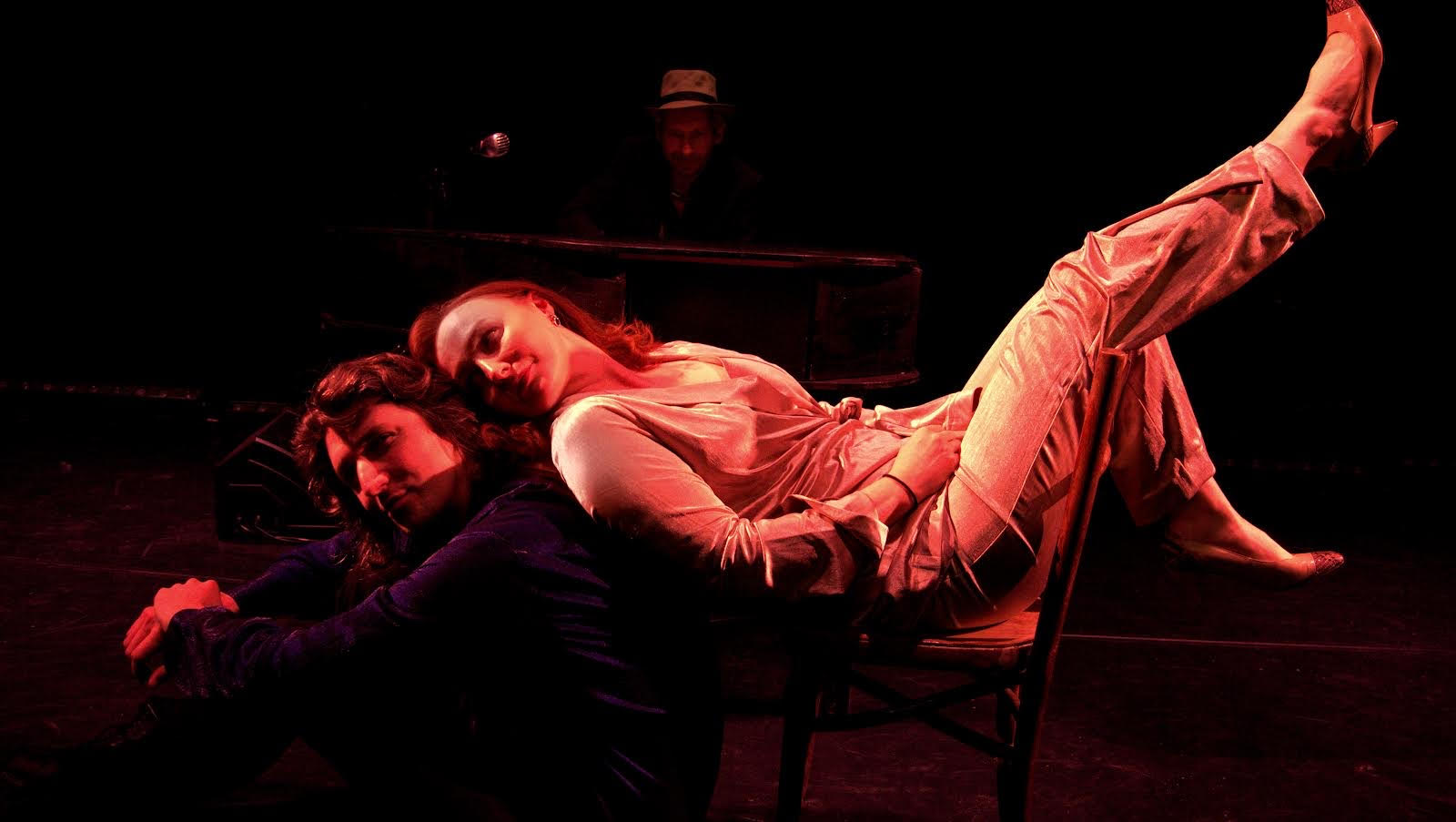
As Jeremy Wolfe McCarthy sits down to turn out some tunes, the silky-tongued piano man (played by Kyron Bourke) finds himself confronted by his past, in particular, the women that he schmoozed and smooched, used and abused. It quickly becomes a battle of wills with an aloof Everywoman (Maeve Smyth) who walks the unreconstructed musician through his errant encounters and challenges him to consider his actions.

No Citation is a voyage of imagination, a real musical ‘trip’ – in all senses of the word – as McCarthy reacts to the mirror held up to his life. Sitting behind a piano, playing while the audience take their seats and finish their conversations, a silver microphone waits to capture the central character’s husky tones. Soon it will be revealed whether we are McCarthy’s audience, or merely noisy customers in his jazz bar.

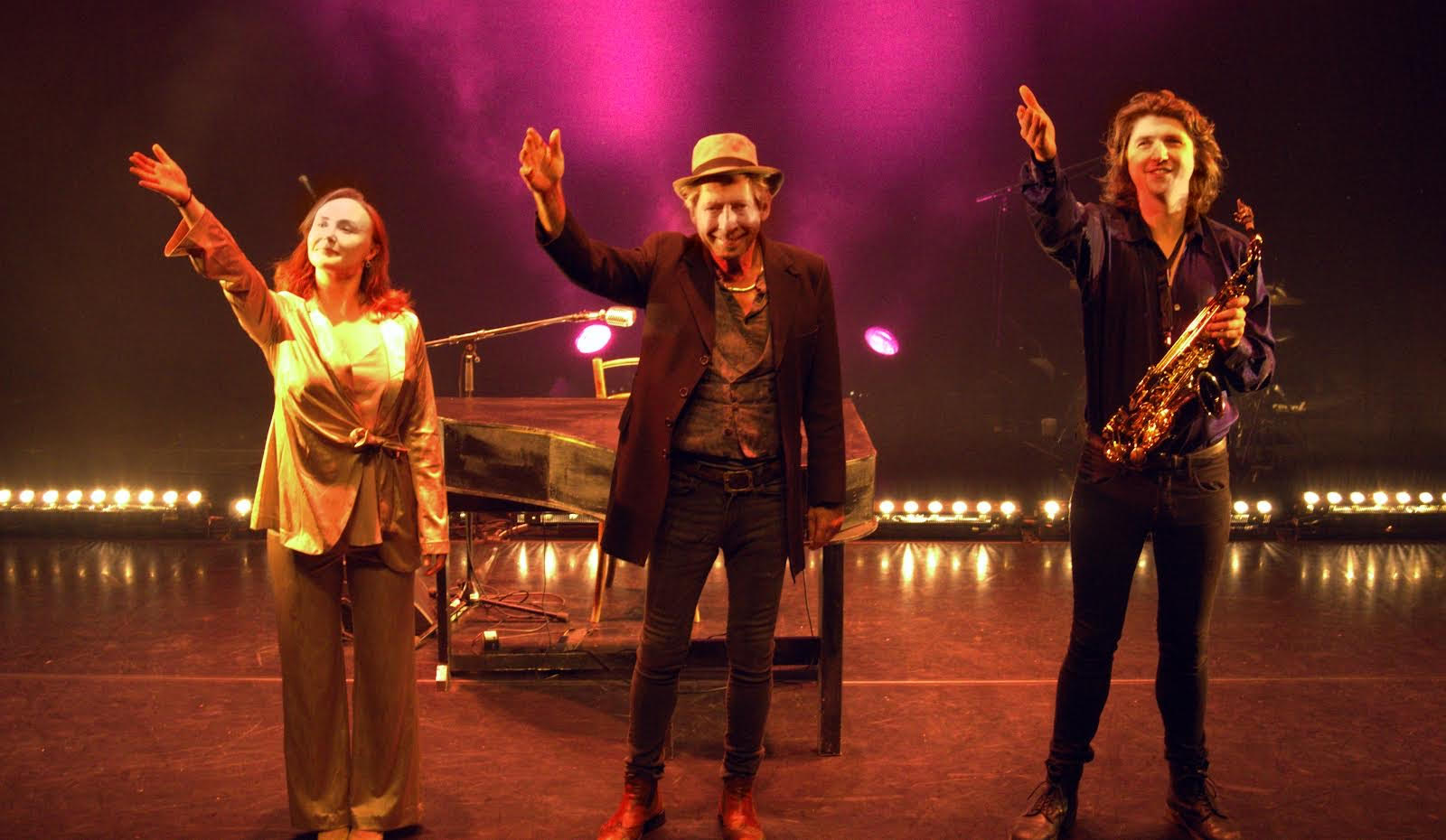
Sarcasm drips from Everywoman’s commentary and Smyth’s soulful voice is a match for Bourke’s magical bass (and his fine falsetto), the pair blending like some of the fictional lovers who know each other’s gorgeous curves and instinctive moves. Pádraig Dooney joins their musical dance as McCarthy’s one-time saxophonist, while a backstage band (drum and trumpet) accompany the pianist’s melodies. At times, it’s tempting to close your eyes and lean back into the embrace of the comforting jazz.

Nessa Does the Blues is an early introduction to the team’s talents. Later lyrics contain a mixture of re-creation and reflection, with some funny moments thrown in: “yes it was me who left the toilet seat up … who left the butterknife in the marmalade”.

About two-thirds of the way through the 65-minute show, the mood shifts as a more unsettling encounter with Marguerite is uncovered. It’s the moment for the audience to decide whether McCarthy is now a good man with a colourful past, or is a selfish philanderer beyond redemption.

Baby I’m a Fool simply, yet rather profoundly, wraps up McCarthy’s spell in limbo before the more up-beat When I Was Young.   

No Citation is an unexpected and unpredictable tale, engaging and entertaining. Director Rhiann Jeffrey allows the show to experiment with form and style. It’s a treat, albeit one with some adult themes, a universal what-if, asking what happens if opportunity and self-indulgence collide, and whether when wrecks are abandoned at the side of the road, there can be a journey to recovered. Spend an hour in the musical company of Kyron, Maeve and Pádraig and enjoy their warm hug of jazz even while the unsettling story catches up with the gorgeous music, and you can make your own mind up at the Lyric Theatre until Sunday 8 May.

Enjoyed this review? Why click on the Buy Me a Tea button!

Tuesday, May 03, 2022

Wild Men – off-grid comedy where everyone is losing the run of themselves (QFT until 12 May)

In this deadpan and sometimes dark off-grid comedy about escapism, Martin can no longer live in the modern world that he finds overwhelming. Yet, clothed in pelt and hunting for food, he can’t really survive without foraging for groceries in a remote filling station.

If Wild Men’s somewhat delusional Martin (Rasmus Bjerg) is running away from himself, many of the other misfits he encounters on his adventure through the Norwegian countryside are also evading reality and playing some form of adult dress-up. There’s an old police chief (Bjørn Sundquist) in deep grief for his wife. A village that promises an authentic Viking experience … in exchange for a swipe of your credit card. A police dog whose leave allowance isn’t to be sniffed at. And Musa (Zaki Youssef), a criminal who stole from his former accomplices and is now relying on Martin for security and transport.

Together they leave a trail of blood, dead animals and stolen cars across the pristine Norwegian countryside in a misdirected search for a mindless model of masculinity.

Martin’s wife (Sofie Gråbøl wearing a jumper The Killing would have rejected) is the most grounded – and the most underused – catching up with her gormless husband and giving him a piece of him mind. Though the stress of being responsible for two children and a fugitive rabbit could lead her to abscond if a ‘Wild Women’ sequel is ever made.

Directed and co-written by Thomas Daneskov, Wild Men is a mild tonic for these serious times. It’s never laugh out loud, but it does artfully balance the ludicrous and the absurd with a few moment of moderate terror. And don’t miss the start of the end credits for a pleasing conclusion to one of the plotlines.

Wild Men is being screened at Queen’s Film Theatre from 6 May until Thursday 12 May.

Enjoyed this review? Why click on the Buy Me a Tea button!

Sunday, May 01, 2022

Translations – Friel’s unorthodox script and structure continues to powerfully speak about identity and language (Lyric Theatre until Sunday 29 May)

If the script of Translations was pitched to a producing theatre today, I wonder would it be returned with the electronic equivalent of red pen suggesting that it was too baggy, had too many characters, too many unresolved plot points, and needed a complete rewrite of its fade-to-black ending.

Yet, this lack of conformity in Brian Friel’s play, first performed in 1980, perhaps exposes the beauty of the subtext that so strongly runs underneath the dialogue. The play’s form is nearly secondary to its concept.

Today, as in 1833 Baile Begg, language can be divisive, or at least used to divide. Cultures can be respected or undermined. The meaning of words and events can be changed of forgotten. The urge to colonise can be resisted or ignored. People asserting power over others can pivot from patronising to threatening in an instant. So it goes, to borrow Kurt Vonnegut’s refrain.

I’ve often heard and read radio and newspaper commentary about the play and its original production by Field Day Theatre Company in Derry. But until yesterday, I’d never seen a production of Friel’s Translations. That may seem implausible, or embarrassing, but it’s not staged that often, and during the interval I was somewhat relieved to bump into a theatre producer who also admitted this was his first time seeing the play. Phew. I wasn’t alone.

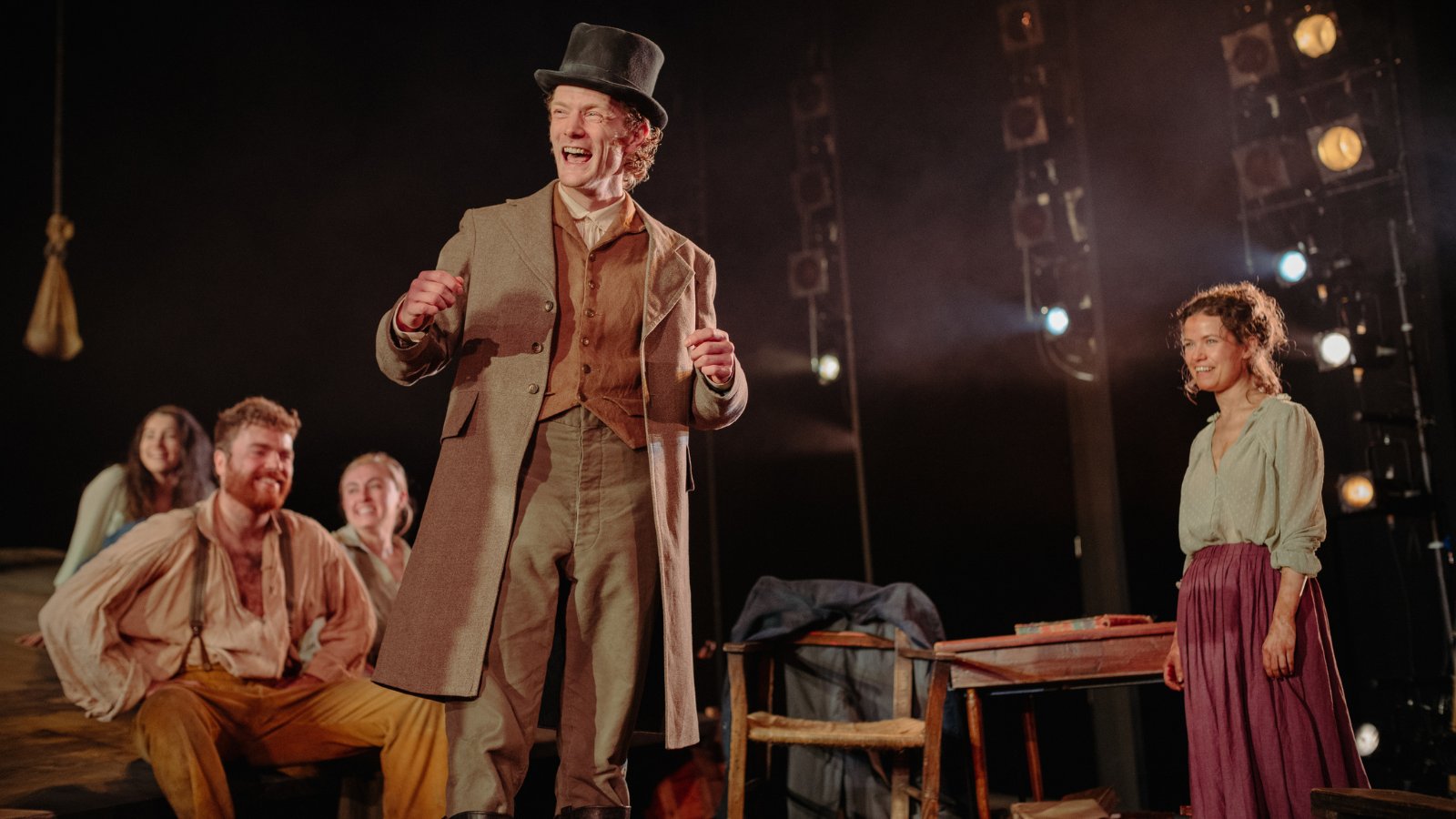
One of the things I loved about visits to the Lyric Theatre as a child was the open stage. As you sat waiting for a performance to begin, the set – or at least the parts that were visible – were already starting a dialogue with the audience about their shape and form and who might inhabit the empty space. Joanna Parker’s slanted set in the Abbey/Lyric production immediately speaks out about the very landscape being unstable. Every piece of wooden furniture is wonky, while an enormous plumb bob hangs ominously over the school teacher’s desk.

The opening scene introduces the Irish-medium ‘hedge school’. And the audience are quickly aware that we’re hearing the characters’ Irish conversations in English, later hearing English conversations and delighting in the misunderstandings and deliberate misinterpretations between languages. Throw in some Latin and Greek and it’s like a 19th century Open University summer school with young and old brought together by their love, or need, for learning.

Hugh (Brian Doherty) imposes his style of etymological quizzing on the students, while his academically talented son Manus (Marty Rea) manages much of the practical operation of the school unimpeded by his lame foot. Ronan Leahy captures the poet in his portrayal of older eternal scholar Jimmy Jack whose head is constantly in the mythological clouds. The evasive Doalty (Andy Doherty) provides the first sense of the unease with which the indigenous community view the Ordinance Survey operation to map out the island of Ireland and standardise – ie, anglicise – the placenames.

The two uniformed sappers bring a splash of striking colour to the stage. While Captain Lancey (Howard Teale) has the job of persuading the locals that there’s nothing to fear about the mapping exercise (before turning nasty), Aidan Moriarty has much more fun playing Lancey’s younger colleague Lieutenant Yolland who is falling in love with the local poteen, the Irish language, the stories behind the place names, and perhaps even one of the local women. Acting as translator and collaborator for the English mappers is Hugh’s younger son Owen (Leonard Buckley), an entrepreneur who knows and freely shares the significance of his home culture but no longer appreciates it, preferring the rich cash of his overlords.

Some of the most fascinating characters in Translations are the women. They assume roles of service – feeding, clearing up – and there’s a stack of misogyny – from being flirted with, fondled, and being eyed up to keep the men ‘jigged up’. Like so many of the backstories, Friel doesn’t bother to explain Sarah’s difficulty with speaking. Suzie Seweify’s Sarah is fully integrated into the school room, and so fluently contributes to conversations with her signing and gestures. Her guttural scream is the equivalent of several pages of dialogue. It’s by far the most haunting moment in the play.

Brigid represents rural superstition and is thick as thieves with Doalty and equally opaque about possible acts of resistance towards the English mappers. She’s played by Ruby Campbell, ably understudying an injured Holly Hannaway.

Milkmaid Maire has more perspective and a greater urge to escape than anyone else in Baile Begg. She knows that the new national English-language school threatens the cosy learning environment run by Hugh. Her betrothal to Manus is hampered by his lack of get up and go, and she’s not afraid to tell him. She can see over the horizon to opportunities in America. Zara Devlin fills Maire with longing and a yearning for more, and her pivotal “Don't stop, I know what you're saying” scene with Yolland brilliantly mixes passion with placenames, delivering comedy and upset in equal measure.

Making absolutely no attempt to wrap up the loose ends – What did happen to the Donnelly twins? Was Yolland found? Did Manus make it to Mayo? Did Sarah find her speech? – Friel instead leaves the audience to ponder his statements about identity, like “civilisations can be imprisoned in a linguistic contour that doesn't match the language of fact” and “words are signals, counters – they are not immortal”. Words can trap us despite their shifting meaning and our shifting sensibilities. And they can also make space for accommodation and new beginnings. Just ask local political leaders about that!

Friel’s play has lost none of its potency and the Lyric Theatre and Abbey Theatre production gives it space to speak. The 80-minute first half is followed by another 55 minutes after the interval. You could map most of Stranmillis in that time …

Caitríona McLaughlin’s direction makes good use of the skewed set and builds up a feeling that a catastrophe – agricultural, educational, or political – is just around the corner. The musical interludes between acts are apt, though it feels out of character for Sarah’s character to be singing when her speech is so slight. Translations is blessed on paper with a clever ending, but one that nearly defies direction. That the Saturday matinee audience didn’t know the performance had ended when Hugh’s voice faded along with the stage lights suggests that a radical reimagining of those lines isn’t out of the question for the next company brave enough to stage the play.

Translations continues at the Lyric Theatre in Belfast until Sunday 29 May. It transfers to the Abbey Theatre in Dublin over the summer from 13 June–13 August, before touring through Limerick (16–20 August), Galway (23–27 August) and Donegal (30 August–3 September).

Photo credits: Johnny Frazer

Enjoyed this review? Why click on the Buy Me a Tea button!