Saturday, October 29, 2022

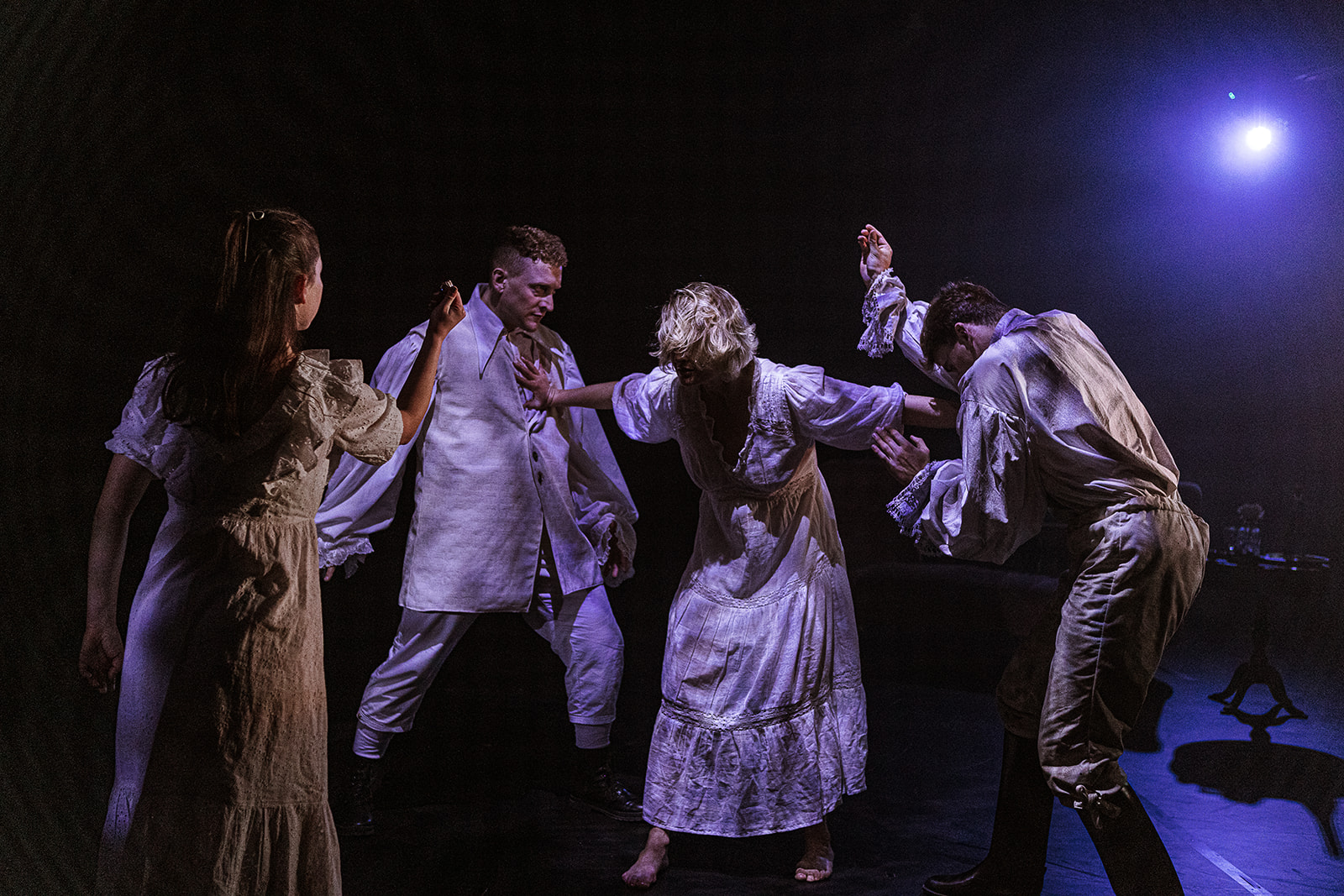
Big Man – bravura performance by Tony Flynn in Paul McVeigh’s new play (Lyric Theatre until 13 November as part of Belfast International Arts Festival) #BIAF22

Big Man is Paul McVeigh’s first play for 20 years, and marks his return to theatre after a career that morphed into comedy before shifting towards short fiction and the publication of his award-winning debut novel The Good Son in 2015.

Big Man is also the moniker given to the 50-something narrator by the lad, half his age, who catches his eye and shakes his soul in a Belfast nightclub after a fallow decade free from love. The first twenty minutes – the strongest and most climactic act – deals with their meeting (“the future came towards me, pint in hand”), greeting and the journey home from The Spaniard that night. The precision of the landmarks and street names conjures up the route.

Life can’t all be Dusty Springfield and Kate Bush, so the second act skips through the months that follow. The physical fissures in Tracey Lindsay’s floating set are soon linked to the cracks that form in the relationship between Big Man and ‘himself’. A glitterball hangs above a dark hole in one quadrant of the stage: the former spins when we’re in a nightclub; the latter allows actor Tony Flynn to sit down, though this symbolic dark heart oddly isn’t where he heads when times are most obviously bleak. The thrust stage keeps the audience very close to the performer, easily heard even when his back is turned. James McFetridge’s razor-sharp lighting adds a real sense to drama to the propless performance.

The final scenes interrogate the conclusion of the relationship, and a beautifully ambiguous ending leaves as much room for hope as it does for doubt. I’m sure there was a debate in the rehearsal room about the line which finally gives a name to himself, but I’ll come out firmly on the side of being disappointed that detail was revealed.

Flynn is in his acting element as the vulnerable, self-preserving himself, and is master of McVeigh’s unforgiving script. The rapt audience sit in total silence – a rarity for post-pandemic theatre where the stalls are now full of chit chat as if watching a boxset on a sofa at home – as the actor guides them through the Gobbins-like twists and scary turns of Big Man’s time with himself.

Director Patrick J O’Reilly’s has an eye for small movements – the rolling of an eye or shifting of weight on a foot – which keeps everyone’s attention on the storyteller even before Flynn begins to pound around the tectonic plates of the set. Stuart Robinson’s sound effects are kept to a minimum with a subdued sonic palette, reminiscent of science fiction cinema.

At times, the script feels closer to a novel than a play, particularly in the opening scenes when adjectives and vivid descriptors rain down on the swollen script like a waterfall of cornflakes dropping out of a family-sized cereal box and landing in a generously proportioned Denby stoneware bowl. Comedy helps embrace the necessarily racy moments that make Big Man sound authentic and the audience are tickled by the mention of ‘lumbering’ and the apt comparisons of gay culture with straight experiences. Though the “the hairs on my neck stood up like little erections” and “we created a new language through touch” are a bit Mills & Boon. There’s a sense throughout the whole middle section that Chekhov’s deadly gun has been cocked but never ends up being fired.

Big Man is the story of a relationship, layered on top of an analysis of vulnerability, loss and the difficulty to find and sustain love. The play’s premiere run at the Lyric Theatre continues until 13 November, part of the theatre’s season of new writing, and presented as part of Belfast International Arts Festival. Check out the preview post from a few weeks ago to find out what other treats the festival is serving up between now and 6 November.

Photo credit: Ciaran Bagnall.

Enjoyed this review? Why click on the Buy Me a Tea button!

Wednesday, October 26, 2022

Navy Blue – speaking and dancing to the personal, sectoral and societal challenges of modern life (The MAC until 26 October as part of Belfast International Arts Festival) #BIAF22

Oona Doherty has a history of producing pieces of dance theatre that are full on, high energy, provocative, and body-stretching. Navy Blue builds on this legacy with an exciting new production that rages against modern life, the state of the arts, and the mental health of artists.

Out of the darkness emerges a line of twelve dancers. This is no Riverdance. Dressed in blue shirts and trousers, they make frenzied, shaking movements, yet also glide slowly across the stage. At first, they seem to be incredibly in sync with each other, creating perfect lines, waves, then breaking out into circles, scrums and back. Yet there’s individuality among the troupe. Look carefully, and each dancer brings a different personality to the swarm of movement.

The easiest to spot is a balding dancer whose brow is furrowed and eyeline wanders, unlike the regimented stare of the others. He conveys a sense of malaise with his world, questioning the motion or the motives behind the motion. As the twelve sprint around the stage in circles, he falls behind. Others have more subtle mannerisms. But as the piece progresses, it’s clear that these are not minor acts of choreographical error, but deliberate flaws and expressions of humanity bolted into the piece.

A second scene punctuates Rachmaninoff’s Piano Concerto No. 2 with gunshots. Each time, a dancer will fall to the ground, while the rest carry on, threading their motion through the mounting body count cluttering the stage, and acting more nervously. The felled dancers are ultimately swallowed up by a blue sea that fills the stage, opening up the way for an extended piece of performance poetry. Are we watching the death by a thousand cuts of the arts? Is it a metaphor for the creative sector soldiering on while comrades and companies lose funding and stop producing? Or maybe we’re also watching how poor ideas and bad attitudes can pervade the whole world?

A quick aside. On Valentine’s Day on 1990, as the Voyager 1 space craft sped past the boundary of the Solar System, it turned so its camera could snap a portrait. The Earth – some six billion kilometres away – appears as a bright blue pixel in the image. Cosmologist Carl Sagan coined the phrase “the pale blue dot”, having requested that NASA spin the spacecraft around to take the photograph, sensing that it would give humanity a perspective on home. The film The Farthest is well worth watching to catch more the story. (Warning: expect to cry!)

Doherty picks up on the imagery, placing her pale blue dots (dancers) on a pale blue dot (the Earth). Her narration (written with Bush Moukarzel) questions human purpose, the role of dance, the cost of expression, the (in)significance of life. Copies of the script are made available to the audience.

Having established that we’re all the same yet individual in the opening scenes – which turn out to be mere appetisers for Navy Blue’s main course – Doherty contemplates how “every saint and sinner in the history of our species” (and even “corrupt politicians”) has grown from a baby-sized “small pink dot”, even if do some go on to turn “this pale blue dot into a pale red dot”. And then she turns to herself, contemplating “the poison of privilege”, the essential blue-collar worker “labouring to keep this inessential story going”, and concludes that insignificance, unimportance and nothingness are significant, important and not nothing after all.

It’s a cry from the heart, dogged by the pandemic blues and the increasingly uphill challenge of producing work. Unusually, the production budget for Navy Blue is woven into the monologue.

While the words on their own wouldn’t feel out of place at a poetry slam, the movement on stage is even more sublime. Doherty’s own energy always impressed in her earlier solo shows. She has now built a whole troupe of dancers who can engage with and expand her trademark moves and discipline. Their individual and collective spatial awareness and timing is extraordinary. William Smith and Jamie xx’s scores pump out a nearly continuous beat.

As the sea of blue shrinks, the twelve disciples once again find their space to perform squeezed, darting across the remaining lit section of the stage that is now occupied by a single dancer, throwing themselves into the spotlight, some even opening their shirts as if to suggest that a hint of bare flesh might be what’s needed to find an audience in desperate straitened times. We’re back to the metaphor for conditions creative sector.

“You’ve come a long way, a really long way. Four and a half billion years. That’s a long way to come to see a show. But I appreciate it. It means the world to me.”

Whether speaking to the personal, sectoral or world-wide societal, Oona Doherty has much to say in this production that enthrals, and ensures her enduring significance as an artist, creator, performer and producer.

You can catch Navy Blue’s final local performance tonight at 7.45pm followed by a post show Q&A, in The MAC as part of Belfast International Arts Festival. Check out the preview post from a few weeks ago to find out what other treats Belfast International Arts Festival is serving up between now and 6 November.

Photo credit: Ghislain Mirat

Enjoyed this review? Why click on the Buy Me a Tea button!

Sunday, October 23, 2022

Another Lover’s Discourse – an abstract multi-media interrogation of love (until Sunday 23 October at The MAC as part of Belfast International Arts Festival) #BIAF22

Another Lover’s Discourse is a truly multi-media solo performance by Palestinian artist Riham Isaac, combining crafts, film, song, dance, interviews, fashion, objects, live camera work, and some personal diary reflections. It’s rare to see quite this breadth of elements contributing to a single show. The piece was commissioned by Belfast International Arts Festival, and delayed by the pandemic, has finally made it to these shores for a couple of performances this weekend.

Riffing off the black and white Egyptian romantic comedies of her childhood, Isaac visually introduces the audience to her internal conundrum about the nature of love in relation to shmaltzy romanticism, the desirability of marriage.

There’s never just one thing dominating the stage, a film playing will be augmented – or perhaps, distracted – by watching Isaac thread paper hearts onto a string. Video bounces between an old TV set, the theatre’s main projector screen, and a vertical monitor mounted to one side of the stage.

A video triptych of Isaac dancing is visually arresting. Singing a new accompaniment over the top of silent footage from a black and white film fires synapses and kicks of thoughts as you try and piece the actions and emotion together. The recording of her discussing love with her mother offers intimate reflections on a parent’s hopes for their child. A white skirt that could be from a wedding dress physically consumes the artist, leaving her crawling across the floor like a giant veiled turtle.

If the live performance aspects had been prerecorded and were projected the full size of the back wall of one of The MAC’s gallery spaces, Another Lover’s Discourse would allow visitors to sit or stand between the screens, peering at some of the larger objects while being consumed by the sounds and atmosphere. It wouldn’t look out of place on a Turner Prize shortlist.

Yet as a piece of commissioned live theatre, Another Lover’s Discourse leaves its interpretation, and much of the sense of narrative, very firmly in the hands of the audience. Isaac conveys a sense of passion and longing during the untranslated sections – not everything is surtitled – but ambiguity is the order of the day. Closer to dance than theatre in terms of its abstract storytelling.

I was somewhat disorientated, unsure of the real distinction between the artist’s mindset at the start and the end of the process. Had the romantic comedies really coloured the culture around her so much as a child that those ideals lived on with her as an adult? Had her journey to interrogate love come to any sure conclusions that were life-changing during the making of the piece?

In the post-show Q&A on opening night, Isaac referred to the final sequence of the 70-minute performance which is less costumed, less ornate in its telling, as she delivers her personal manifesto on love to the audience. Maybe I was distracted by the quantity of stereotypical pastel-coloured hearts that kept reappearing on the set throughout the performance: they might represent the true love that would always have to be sought out. But it felt out of character with the conclusion that one should be committed to the search for who you really are, and be more concerned about how to love rather than being worried about defining what love is.

Plenty of food for thought, and certainly a feast for the eyes and ears: it’s a joy to see international work being performed in Belfast after the pandemic disruption. You can catch the final performance of Another Lover’s Discourse this afternoon at 3pm in The MAC before the show transfers to the PalArt Festival in London (29–31 October).

Check out the preview post from a few weeks ago to find out what other treats Belfast International Arts Festival is serving up between now and 6 November.

Enjoyed this review? Why click on the Buy Me a Tea button!

Friday, October 21, 2022

Exploring the language of dance through two French performances at Belfast International Arts Festival #BIAF22

I can rarely claim to fully understand what’s being said, or feel secure that I know what I’ve heard, at contemporary dance performances. The grammar is often illusive. The meaning is hidden behind gestures and movements that may have symbolism that carries through from some of the traditional repertoire, but I see so little of it that not enough has permeated into my subconscious to be a useful decoder.

Tonight’s double bill of performances in The MAC as part of Belfast International Arts Festival featured French works choreographed by Noé Soulier that speak about the storytelling of dance.

In The Kingdom of Shades – Signe Blanc, Vincent Chaillet purposefully deconstructs both ballet steps and, later, the mimed hand gestures that dancers so frequently use. Thirty-six spotlights beam down around the circumference of the totally bare stage … a sure sign that deconstruction is afoot. The former Principal Dancer with the Paris Opera Ballet works through a glossary of ballet steps; then pieces them together in a routine; then leaves out all but the linking steps, an altogether flatter performance; then just the artistic steps, a shorter but more vigorous sequence. Without the linking movements, the main steps have less space to breath, less time to tell their story. The performance is silent, accompanied only by the dancer’s panting and the sound of his ballet shoes sliding across the rubber floor.

Chaillet then plays with form by running together excepts from 19th century ballets – crossing between masculine, feminine and fairy characters – and despite us knowing to look out for what we expect should be recognisable elements from ‘The Swiss Milkmaid’ or The Sleeping Beauty or Swan Lake, the moves merge into one contiguous piece with no obvious boundaries or changes of style. We’ve been foxed.

His final routine shifts the focus to hand and arm gestures. We’re first taught a dictionary of French terms, in alphabetical order (they appear in English as surtitles behind the dancer). But then he transgresses, saying one word but performing the action of another. In time, the audience catch on to this deliberate misbehaviour. The contradiction begins to tell a different, confused and dissonant story, abstract yet not with full meaning.

The stage is quickly reset – a grand piano slides out from the wings and a glittery-coated pianist/singer sits behind it – and it’s the turn of Portrait of Frédéric Tavernini. The eponymous dancer is also playing with story, but with a more personal focus.

“Fred has eight tattoos” chants the pianist while he stabs out chords. They document a family breakup, his love for his daughter, how he copes, his feeling that nothing will be the same. The music makes it a lighter work to follow, though the narration (in English this time) nearly overpowers and overrides the more abstract storytelling of Fred’s movements. We chuckle when the pianist pipes up again to reveal “Since we made this piece Fred has another nine tattoos!” 

Later his fingers do their own dancing in a pool of water – the front row feel more than a few splashes – before he jumps in with his whole body.

When a dictionary and its grammar are agreed, storytelling can be universal. Without agreement, then signs, gestures and movements can end up telling different stories to different pairs of eyes. Something that the former Chancellor and former Prime Minister of the UK may be reflecting on – given their problematic economic announcements that spooked the markets they were meant to encourage with a message about future growth – as they sit on the green subs bench for the next period in Parliament. And something that the young dancers in tonight’s audience may also reflect upon as they work towards their next public performance and practise the choreography intended to convey a particular meaning to their audience.

Check out the preview post from a few weeks ago to find out what other treats Belfast International Arts Festival is serving up between now and 6 November.

Enjoyed this review? Why click on the Buy Me a Tea button!

Thursday, October 20, 2022

Decision to Leave – insomniac investigation with more U-turns than a Truss government (Queen’s Film Theatre from Friday 21 October)

The success of Parasite (both in colour, and then the even better black and white print) seemed to push the door open to screening a wider range of South Korean cinema in the UK, rather than just reruns of the first-class rabid-transport hit Train to Busan.

Bong Joon-Ho’s Memories of Murder was re-released in 2020 and provided a fresh approach to police procedurals, not just with the cultural references that feel novel when judged against Line of Duty and Bloodlands, but also the quirky characterisations and backstories.

New release Decision to Leave follows Detective Hae-jun (played by Park Hae-il) who is easily distracted from a prolonged and so-far-unsolved district case by the apparent suicide of a lawyer out rock climbing. As the police go through the motions of eliminating his Chinese wife Seo-rae (Tang Wei) from their inquiries, small details in some of her responses to their questioning don’t quite add up. Soon Hae-jun is embroiled in this new case, prising it apart, sewing it back together, and ultimately opening up the old wound for another look.

Hae-jun can’t sleep. He’s living during the week in Busan, driving back and forth at weekends to the foggy, coastal town of Ipo where his wife lives and works. The film’s English title hints at the fraught nature of his marriage, but also at the relocation of some of the characters, and the film’s final, bitter twist.

We learn that everything in the fallen climber’s life seems to be monogrammed, from his backpack to his wife who bears his tattoo along with much bruising. We watch as the sleepless officer obsessively stakes out his prime suspect’s apartment, imagining himself present in her life and in her living room as he watches from afar through binoculars.

The sense of unease builds, explodes, wanes and rebuilds in this 138-minute-long epic that nearly comes into land before embarking on a half hour coda that throws everything that seemed settled – good and bad – back up into the air. Director Park Chan-wook is king of the cinematic surprise.

Neither of the lead characters in this noir drama is a hero. Neither is above suspicion in the criminal or fidelity departments. There is love without sex. (Well, one scene that is so deliberately mechanical that the couple involved have averted their own eyes never mind those of the audience!) There is crime without punishment. And truth remains slippery throughout.

Hae-jun’s younger sidekick Soo-wan (Go Kyung-Pyo) smokes two cigarettes at a time, likes to carry a gun, but is useless in the frequent chases that in South Korean films inevitably involve running up flights of steps. He’s one of a number of secondary characters placed in the action to inject humour into unexpected moments. There’s a rooftop chase scene that could be straight out of the Bourne franchise, except Yeong-wook Jo’s score is pared back and better balanced with the fraught intensity of the action.

Watching people text each other has killed the pace of many movies. Decision to Leave uses it intelligently, and we learn more about what makes the characters tick than just what they’re saying. The sparing use of mobile app translation to compensate for Seo-rae’s lack of confidence with Korean vocabulary is effective too. A later scene watching through the glass phone screen as someone texts is nearly beautiful enough to forgive the film’s lumpy ending.

Decision to Leave is a love story mixed in with a police procedural about love, death, surveillance, infidelity and what motivates people to take life-changing actions. It’s also South Korea’s entry for the Best International Feature Film category at the 2023 Academy Awards. It will be a serious contender. Catch it at Queen’s Film Theatre from Friday 21 October.

Enjoyed this review? Why click on the Buy Me a Tea button!

Wednesday, October 19, 2022

The Queen In Me – a passionate and entertaining plea for an end to stunted diversity in the world of opera (The MAC until Wednesday 19 as part of Belfast International Arts Festival) #BIAF22

For 231 years, The Magic Flute’s Queen of the Night has been going around in circles, with similar casting choices, similar direction. Stuck in a rut, the Queen is having no more of it. And so begins The Queen In Me, a 50-minute dissection of how opera has by-and-large become stuck in a whole series of ruts.

The curtain rises and Teiya Kasahara occupies the centre of the stage, wearing a distressed black dress with tarnished gold detailing that merges with the material bunched up around the podium below. Joanna Yu’s design – costume and set design are one and the same thing – adds long rubber sleeves, perhaps some six metres in length, that flow from the shoulders down to the ground, disguising the performer’s arms and hands for much of the show.

Behind the solo performer, Laura Warren’s video wall is gently pulsating, its animations supporting the words and the colour scheme setting the mood, picked up by the spotlighting that catches the Queen’s dress material so effectively. Visually, it’s quite a spectacle.

The iconic Der Hollë Rache aria from the second act of Mozart’s The Magic Flute – the one with the fast-running quavers that you’d be able to hum to – quickly establishes Kasahara’s talent and technique. But then Kasahara halts the song and the hilarious monologue starts to strip away the pretension and problems with the opera scene.

There’s the limited dramatic range of women’s roles in the traditional opera canon. By the end of the performance the main female character should expect to have been raped, pillaged, killed … or merely married off to someone twice their age. None of these frequent conclusions are fulfilling for the character or the cast member. There’s never a chance of someone being left to live a fulfilled singleton life.

But it’s not just about the characterisation. Certain looks are more likely to get a performer through to the other side of auditions to play these parts. Costumes and stage directions lazily cry out for a character to ‘be more sexy’. The monologue suggests that casting can be racist, ableist and filters out people with some sexual orientations. Many companies tend to be predominantly white, male, heteronormative and elitist.

Accompanied by pianist David Eliakis, the vocals are captivating with the included arias and excerpts – from works by Puccini, Verdi, Strauss and more – demonstrating Kasahara’s range and versatility. In the Q&A afterwards, Kasahara explained that many of those roles would not be regularly offered to them: so it’s a bit of a treat to build them into the show and perform them.

Kasahara’s bottom line is that there is a lack of imagination, inclusion, innovation in the world of opera. So expect a takedown of the worst aspects of opera – particularly, but not just limited to a performer’s perspective – and then expect a twist as Kasahara makes it personal and steps out from the dress that has thus far dominated proceedings.

As the Queen quips early on, don’t expect an expensive nap at this opera. The Queen In Me is fast-paced, entertaining, and aptly challenges the status quo of an artform that sometimes isolates more than it innovates. And it celebrates this Queen’s talent and potential in a way that is neither dismissive or dehumanising. Perfectly suited for opera lovers and opera loathers alike: everyone will get something out of the message and the performance.

You can catch the second performance of The Queen In Me on Wednesday 19 October in The MAC as part of Belfast International Arts Festival. It’s a co-production by Amplified Opera, Canadian Opera Company, Nightwood Theatre and Theatre Gargantua. Directed by Andrea Donaldson & Aria Umezawa.

Check out the preview post from a few weeks ago to find out what else the festival is serving up between now and 6 November.

Enjoyed this review? Why click on the Buy Me a Tea button!

Monday, October 17, 2022

The Ghost House – bringing ambitious promenade theatre to fresh audiences (Cahoots at City Side as part of Belfast International Arts Festival) #BIAF22

Once upon a time, long before a retail and leisure park was built at City Side, the highwayman Black Hearted Benjamin lived in a house built on the fields. Legend says that the structure becomes visible once every hundred years. And as luck would have it, if you head down to the shopping mall over the next few weeks, and walk confidently with your ticket towards Home Bargains, you’ll spot a small door, and someone from The Ghost House will come out at the appointed time to meet you and help you track down the story of Benjamin and his ghost.

Anticipation builds as the audience adventurers step through into a long corridor. Background music subtly starts to transition from the retail mall to a world of imagination. We assemble on benches in a tented room, the first of four locations, to be introduced to the legend and the opportunity to cross a time slip into the past. Objects appear, disappear and move of their own volition. Doors open and slam shut. All perfectly normal for a Cahoots show, but it definitely builds the creepy anticipation to the extent that one underage participant (the show is marketed as being suitable for 8+) slips out and heads back to the light.

Through narrative scenes and a very effective extended wordless dance performance, the audience are taken back in time to piece together the clues that will reveal what really happened to Black Hearted Benjamin and his family. A cast of ten pop up at intervals throughout the journey: Hugh W Brown, John Paul Connolly, Maggie Cronin, Harriet Ellis, Allison Harding, Declan King, Caolan McBride, Olivia van Niekerk, Harvey Schorah, Chris Vann.

Behind the scenes, there is an extraordinary level of technical control over dark and light, slipping actors in and out of rooms unnoticed, non-verbally (mis)directing the audience’s attention, actors interacting with video effects, creating multiple layers of focus. Even to the trained eye, at times it’s impossible to be sure what’s live action and what’s not. And the audience meandering through this bespoke piece of promenade theatre in a disused shop unit are never even aware that another group is adventuring through another part of the same production a couple of rooms ahead/behind them.

Few will forget the apprehension of being asked to walk in small groups into a dark corridor that seems to lead to a dead end, lit only by a single candle. Yet, a series of twists and turns later, directed only by the careful positioning of a candle or two, we navigate the darkness and arrive safely in the next location. (Rechargeable LED candles for theatres even have flickering wicks in 2022: we live in amazing times!) The bed stunt – I’ll not spoil the surprise – took me back eight years to Patrick J O’Reilly’s Damage in the 2014 Outburst Queer Arts Festival.

The Ghost House is a big step up from The Grimm Hotel that ran in the same location last Halloween. This time, the audience capacity has doubled and the illusions are much less staged for show but instead are there create a sustained sense of unease and normalised otherworldliness. The use of dance to tell the story is to be applauded, introducing fresh, young audiences to a range of styles of theatre in a friendly, unrarefied and untraditional venue.

Tickets for The Ghost House can be booked up until Monday 31 October through the festival website. Check out the preview post from a few weeks ago to find out what else the festival is serving up between now and 6 November.

Enjoyed this review? Why click on the Buy Me a Tea button!


Sunday, October 16, 2022

Frankenstein’s Monster Is Drunk And The Sheep Have All Jumped The Fences (Big Telly at Brian Friel Theatre until 22 October as part of Belfast International Arts Festival) #BIAF22

You’ll already know the story. The one about Frankenstein’s monster who was resting after the collapse of his Hollywood career and in was only years later when a 24-year-old confirmed spinster spotted his hand sticking out of a melting glacier that he was dug out and started living a new life. You remember the part of the monster’s back story where he lost the sheep, ran a hotel, and played bingo in the local pub? Och you do!

Even if you don’t, head along to see Big Telly’s love story slash gothic horror slash tale of acceptance and forgiveness that’s running this week. You’ll find four of the best local comedy actors, a giant dark wood armoire (think ‘heavy wardrobe’ on wheels) and four piles of props that come together to tell a fresh version of the monster’s life.

Narrated in chapters by Chris Robinson and Vicky Allen, Frankenstein’s Monster Is Drunk And The Sheep Have All Jumped The Fences follows the monster (Rhodri Lewis) and his missus (Nicky Harley) through the ups and downs of their marriage and life together in a rural village on the slopes of a mountain in eastern Europe.

Director Zoe Seaton’s bedside table must be weighed down with literary genius as she has a real knack of finding amazing source material for Big Telly’s shows. Frankenstein’s Monster Is Drunk And The Sheep Have All Jumped The Fences is adapted from Owen Booth’s award-winning short story of the same name. Stuffed full of small but surreal details, the charming tale clearly tickled the imagination of the director and performers, and in turn provokes much laughter and shrieks from the theatre audience.

It’s great to see Harley back on a Belfast stage, albeit briefly, before the show heads over to London at the end of the month and then hits New York in January. She’s in her element as the monster’s freakishly tall wife who has her own monstrous baggage to process while adapting to having a full-time man in her life.

Lewis is another all-in actor, sporting a haircut that is as good as a monster mask. His whole body takes on the other-worldly persona, a huge beast with a powerful body, yet also one that can show tenderness and compassion.

Allen and Robinson revel in relating the story in a way that takes account of the audience reaction yet also still hits the cues triggering Garth McConaghie’s score and sound effects that bring to life invisible props, and the unexpected reverb that can shift the action to new locations. They nip in and out of characters and costumes in a flash. There’s no room for error

The armoire is almost a fifth cast member, repeatedly spun round on its axis to create new rooms and portals into new situations. Only Big Telly would build a hotel reception desk in the roof of a wardrobe, elevating the action – along with the humour – to a higher plane.

The audience, who have been soaking up the implausible scenarios, are caught off guard by a stunning and sad revelation in the final chapter. The central couple have been hiding something from us for the preceding hour. It’s a very moving and humanising moment, all the more powerful for the cast’s ability to switch emotion on a dime. It draws the whole effort together in a rewarding and painfully memorable way.

It’s well worth heading through the door of Queen’s Film Theatre and on into the Brian Friel Theatre. Sit down, let your imagination run as wild as that of the cast and crew for 70 minutes, and enjoy the laughter and the tears as you find out why Frankenstein’s Monster is drunk, and why the blue sheep have all jumped the fences.

The show is running as part of Belfast International Arts Festival until Saturday 22 November, before transferring to the Omnibus Theatre in Clapham (25–29 October) and 59E59 Theaters in New York (11–28 January 2023).

Photo credit: Neil Harrison

Enjoyed this review? Why click on the Buy Me a Tea button!

Saturday, October 15, 2022

Thaw – inclusive theatre for audiences with profound and multiple learning disabilities (Replay Theatre)

Thaw sees a group of six intrepid adventurers join an expedition to repair a piece of advanced machinery that might slow the melting of the glaciers and begin to reverse the climate crisis. But under the surface there be another more personal quest that is driving Professor Julia Anjo’s journey.

Her team of interdisciplinary scientists and documentarians steer cushioned wooden sleds through the icy landscape as the young theatregoers watch the northern lights in the sky above them, meet some of the animals, and hear the stories of the place and the people that accompany them. Watch out for snowballs, feathery fowl and indigenous cultures that may know better than the western explorers.

Replay Theatre’s Thaw creates a very personal, at times one-on-one, theatrical experience for the participants and their interns (teachers, assistants or parents). Gliding around in the cocoon-like sleds, propelled back and forth so smoothly it’s exciting but never fearful, wrapped in soft blankets, with sensory lights, calming music and lots of time and space to adapt the performance to help the audience to enjoy the show.

Thaw has been developed for the enjoyment of children with profound and multiple learning disabilities. With a spare space in a sled on the show I attended at The MAC, from my laid-back vantage point I could watch with admiration as the cast tailored the environment and their performances for their audience. The intentional inclusivity along with the patience and tender approach was awe-inspiring.

For some in the audience, the motion and the auditory and visual stimulation may make the strongest memory. Others may recall the scientists who face up to fears or learn to listen. Some of us will remember the soft snowball hitting us and the sense that something rather wonderful was happening in the lives of young people for whom theatre is rarely a welcoming place.

Thaw is performed by Adam Dougal, Christopher Grant, Brona Jackson, Michael Johnston, Rosie McClelland and Mary McGurk. Written by Fionnuala Kennedy and directed by Andrew Stanford. Having trekked through Omagh, Derry and Belfast, this season’s tour of Thaw finishes next week in Armagh’s Market Place Theatre. Contact the team at Replay in you want to check to see if there are still free places that your school or your child could take up.

Friday, October 14, 2022

Extraordinary Times – Linen Hall Library commit to publishing a chapter a year of Rosemary Jenkinson’s border poll novel for 32 years

Given the political instability in Northern Ireland and the UK, you might well ask when are we not living through ‘extraordinary times’? (I write this as the Tory Chancellor’s plane has just done a U-turn over Surrey as it comes into land at Heathrow … he may well have joined the Former Chancellors WhatsApp group by the time you read this.)

Extraordinary Times is also the title that local author and playwright Rosemary Jenkinson has taken for her new novel set in the fortnight leading up to a future, fictional referendum on Irish unity.

We could be waiting a long time – or maybe not so long, depending on which political tea leaves you read – for an actual border poll to be called. But in the meantime, Jenkinson’s second full-length novel explores how sex interlocking individuals navigate the final throws of campaigning and get caught up in violence to disrupt the poll. And we could be waiting a long time for the final chapter of the story.

In a curious parallel with those who don’t feel that they have a proper home the north-east corner of a partitioned Ireland, Jenkinson finds herself without a home for her full-length novels. The first (A City Like No Other) was going to be printed by Doire Press, but the publisher walked away in the aftermath of Jenkinson’s scathing critique of her writing peers in Fortnight magazine and elsewhere).

Her second novel is going down the Charles Dickens’ route of being published episodically, but, true to form, with a Jenkinson twist. While the finished book is complete, locked and will not be changed, only a single new chapter will be released each year … meaning that the whole story won’t be out until 2054. (In the event of a border poll, the publication of whatever remains of the novel will be brought forward, allowing the real events to be compared with Jenkinson’s 2022 imaginings.)

The Linen Hall Library are taking on the mantle for this novel stunt of slow publishing. The library already hosts Jenkinson’s living archive, including dole letters proving that an author’s lot is not always a well renumerated one. Extraordinary Times is a small part of their digitization project that is properly integrating their digital assets with the library website. Jenkinson says:

“I’ve always chosen posterity over prosperity and am delighted therefore to unleash this living futuristic novel into the world.”

Chapter one has now gone online. In a world with an ever-shrinking attention span, it’s a bold move to eke out a 32-chapter book over such a long time. The characters David and Kyle are introduced in the first installment, so it could be a while before readers are familiar with the whole cast. Let’s hope it’s not a trend that catches on.

Thursday, October 13, 2022

Propaganda – truth, lies, politics, survival and a brilliant night of musical theatre (Belfast Ensemble and Lyric Theatre as part of Belfast International Arts Festival until Saturday 5 November)

It’s rare to go to the theatre and be confronted with the full package. When the pinpoint lighting and the projection are fully integral to the storytelling, when the wingless stage floating on top of scaffolding built up from the subfloor below the orchestra pit is an essential part of the discourse, when the music has emotional impact as well as an arresting stylish dissonance with the subject matter, when the lyrics and dialogue all come together to sell the plot to the audience.

From a couple of minutes into the performance, it’s apparent that Propaganda: A New Musical is a very special piece of musical theatre from the pen of Conor Mitchell. The main cast of seven are supported by a band of 14 players, some of whom are four metres down below the action, the rest tucked out of sight of all but the audience in the side balconies.

It’s the late 1940s and parts of Berlin are under Russian Blockade. Slavi and Hanna, a photographer and his muse, scrounge a living by selling glamour shots. Always under pressure from their photographic publisher and profiteer Ruddy, an American smuggler whose silver tongue circumvents the closed supply routes, Hanna con(vince)s a talented actress, Margot, into posing for a glitzy photoshoot. But her sudden enthusiasm for the stunning talent behind Slavi’s portfolio brings the artist and his work under the critical microscope, throwing everyone’s life, safety and future into doubt.

The action never leaves the elevated apartment, with characters entering via a staircase from below. After fifteen minutes the audience discover that there’s also a ramp running across the width of the back of the stage, providing a second stage for the B story to develop.

Musically, all seven principals have great voices that can carry Mitchell’s lyrics. Slavi and Hanna’s co-dependency is modelled by Darren Franklin’s depiction of an aggressive and stressed snapper with Joanna O’Hare taking her character on an adept journey from vulnerability to confidence. Their first act What Kind of a Life is This, Hanna? showcases the pair’s vocal talent.

The orchestra rarely stop playing, booming out big band numbers, soulful Soviet songs, big anthems and even Mitchell’s riff on simple piano scales, all under the enthusiastic baton of Bob Broad and heard through the crystal clear PA and Ian Vennard’s sound mix.

While former concert pianist Magda is heard to play in her downstairs flat, Rebecca Caine’s character is forever popping up to the upstairs apartment-cum-studio, wearing glamorous attire from her heyday. Celia Graham’s Margot is a savvy operator, making pragmatic tacks when the waters around her get choppy. Both women have fabulous voices, teaming up with O’Hare for the particularly memorable Comrade Chaplin.

Gerhardt is the willing butt of Margot’s jokes, but there’s a twist in his tale and Matthew Cavan’s solo Oh, Rodina in the second act is a spine-tingling performance. Oliver Lidert’s Del Boy character is somewhat neglected in the middle of the first act, but Ruddy returns with vengeance and vocal power in Don’t Panic and later in the unexpected but apt 1916.

Sean Kearns’ first speech introduces the concepts of truth, facts and lies into the show, the standards against which the other characters should be judged. Later we discover the role that his Comrade Poliakoff will play in manipulating the artists and creating a truth that suits his purposes.

I’m unsure why Slavi and Hanna speak with Irish accents, sounding more like they were liberated from a concentration camp in South Armagh rather than Ravensbrück. It’s an odd stylistic choice that jars amongst the other characters’ accents, instead of defaulting to a spot of received pronunciation or a nondescript European accent. Though it does set the scene for a glorious second act demonstration of Soviet-style Irish historical revisionism.

Having enjoyed the original concert performance by the Belfast Ensemble back in April 2019, my bar for Propaganda was set very high. I was not disappointed. Mitchell has found a way to tastefully direct what seemed three years ago like an impossible to stage opening scene. The Russian anthem at the close of Act One is perhaps more muted, but no less powerful as the stirring theme is wrapped around the characters whose lives have abruptly taken a difficult turn. The rejigged ending ditches the temptation for a flash, bang, wallop finale and instead stays true to how the characters are learning to handle their own truth, lies and freedom.

Aside from the holistic production values, what makes Propaganda stand out is the multi-layering of the story. You could simply enjoy it for the character story: a young couple ambitious for each other and willing to put themselves in harm’s way to protect their lover. The analysis of the politics of the time and place also bears examination. And then there’s the meta-narrative about the relationship between truth, lies and propaganda. It’s like biting into a rich cake and not always knowing which taste or texture to savour first before the next sensation hits you.

Some shows are written with the cleverness proudly exposed. Propaganda is more laid back in its brilliance, letting the audience feel good about connecting the dots of how the balance of truth and lies is shifting across the characters, and sniffing out the scent of modern resonances some seventy years after the action, whether in post-conflict Northern Ireland or Russia’s at war with Ukraine.

It’s a complex juggling act, and while there’s room for a nip here and a tuck there to tweak the flow or accentuate a blin-and-you’ll-miss-it clue in future runs, the balls are never dropped, it feels incredibly mature for a first run. (Particularly when compared with some West End shows that are currently touring around Britain and Ireland and carry with them enormous plot and pacing issues.)

The dialogue and lyrics are littered with word play, fast-paced witticisms and sacrilegious statements that tickle the audience and play up farcical scenes. A dance break adds elegance to I Could Take It All Away which beautifully combines two different couples’ conversations into one continuous piece of storytelling.

Truth, freedom and lies that can protect, enslave, destroy and liberate. The characters all prove to be artists and actors. Their lives are living theatre. So when all Mary Tumelty’s spotlights clunk off and the working fluorescent lights above the Lyric stage flicker on, it’s a sign that it’s maybe time to ‘spill the T’ … or will it just be an opportunity for a creation of a new revisionist truth? Or a sign that the act of staging a performance in a theatre is also propaganda? Yet another layer to deconstruct.

Propaganda’s plot puts imperfect and broken people under severe stress. Everyone seems to be living a lie, twisting survival around their ambitions, covering for each other, unpicking the truth from the debris around them. Collusion and collaboration become the norm as “life is just a game” of survival.

It’s a masterpiece, probably Mitchell’s best work to date. And Propaganda didn’t roll off a ferry in a couple of articulated lorry. It was formed here in Belfast, with local talent on stage, in the pit, and behind the scenes. It jumped from concert version to full production with the investment of local money. Funding for new professional musical theatre doesn’t come easy to The Belfast Ensemble, but they deliver every time.

Propaganda: A New Musical is produced by The Belfast Ensemble and the Lyric Theatre and is running until Saturday 5 November as part of Belfast International Arts Festival.

Photo credit: Ciaran Bagnall

Enjoyed this review? Why click on the Buy Me a Tea button!

Monday, October 10, 2022

Citroen Ami – diminutive quadricycle that’ll struggle to break a speed limit and attracts friendly waves

Spending most of my time tootling between Lisburn and Belfast, I’ve always valued driving a small car that maximises the chance of finding a free parking space. Having driven a Toyota Aygo until it reached the Mary Rose stage of life (where everything starts to be replaced except the number plate), back in 2017 I looked at getting an electric car. However, the range of the smaller vehicles on the market was prohibitive, as was the price and the availability of public charge points. The first of those has been addressed in the subsequence five years, the other two have not.

This afternoon I took what is probably the smallest four-wheeled electric vehicle on the roads in Northern Ireland for a test drive. Open the door of a Citroen Ami and you feel like you’re stepping into a cartoon car. Technically it’s a quadricycle, though needs proper car insurance (more about that later), and I’m not sure where it stands in regards to using bus lanes.

The driver’s door is hinged at the back – like a Rolls Royce – and the passenger door is front hinged. Same part on both sides. The front and back panels are identical too: there’s a lot of cost-saving symmetry in the build.

Even before you start the engine, the acoustic inside the car hints that there’s not much in the way of sound-absorbing fabrics or panelling. The seats are firm, moving forward and back, but don’t expect a height adjustment. Nor should you expect the height of the steering wheel to adjust. But you’ll not be driving long distances in an Ami, so comfort is nearly secondary to the utilitarian pursuit of getting from A to B in the cheapest possible manner. Power steering is also a no no, but quite unnecessary with a car so light.

The driver is effectively sitting at the back of the car, looking out over the footwell and the electric battery. The front windscreen is totally out of reach. So the panoramic sunroof helps with viewing traffic lights which would otherwise be hidden from view. There’s no sunshade to protect you from the late afternoon sun. Side mirrors are small and round, manually adjusted from the outside. And you’ll soon discover there’s no central rear-view mirror (though they’re available as an aftermarket option, presumably to affix with suction to the sunroof).

The Ami is automatic, with the D N R buttons at your fingertips at the left-hand side of the driver’s seat and what feels like an oversized handbrake in the middle. Limited to 28mph, the Ami cannot be driven on a motorway. The car offers a range of 46 miles on a full charge. There’s a two pin European plug and a type 2 adapter: whichever plug you use, it’ll take three hours to charge the car from empty. And from home in Lisburn I could get back and forth to either Belfast airport, or to Banbridge and home (no doubt to the annoyance of anyone else on the dual carriageway).

Bumbling along the Lisburn Road, the suspension is nearly as firm as the seats. Other drivers gawk in the window at you. Pedestrians smirk and goofily wave as the duck egg blue bubble car whirs past. You just have to embrace the novelty. Inside the car, there’s a fair amount of road noise. There’s no built-in car radio: though there’s plenty of space in the full-width shelf between the wheel and the windscreen to set a radio. There’s a single USB port, a phone holder, and a cup holder that could fit a travel speaker!

On a flat stretch of road, the Ami will go from 0–28mph in about 10 seconds. It’s nippy at traffic lights or a roundabout. But it soon maxes out. The gentle rise of the Tates Avenue bridge did slow its acceleration. When the battery range hits 8 miles, it seems to start progressively reducing the maximum speed to eke out the last few miles and get you home: driving down Boucher Road at 24mph with the foot to the floor was a humbling experience. On the other hand, you’ll never break the speed limit unless you drive past a school or through the small 20mph zone in central Belfast.

There are no airbags – hence the insurance group seems to be higher than the car’s size and price would suggest – but the low-speed urban driving makes violent collisions less of a risk.

Having driven a Smart Roadster for six months (it was the only company car available for immediate pickup from the Mallusk depot, honest) I’m used to less commodious vehicles. You could fit a few cereal boxes or a small rucksack behind the driver and passenger seats. The passenger footwell is deep – and netted off from the accelerator. With no passenger, I could get my live-streaming kit and tripods into the car, only the handy trolley wouldn’t fit. But then I could probably reverse the car in through the door of most buildings …

The biggest downside, which became apparent as I reversed the Ami back up against the Citreon dealership, is the lack of parking sensors. A car this short just begs to be squeezed into tight spaces. Yet, sitting with your back right up against the rear window and with only side mirrors to judge distances, it’s very tricky to gauge what’s behind you. The soft spongy bumpers couldn’t harm a fly, but you’d be much more confident with a bit of beeping.

Drier than a scooter, but more spartan than any car you’ve ever driven, is there a market for the Citroen Ami? If you lived on your own, going back and forth to the shops, or never needing to bring more than one passenger with you, then the Ami’s probably a steal at less than £8,000 bearing in mind that Electric cars are typically nearly twice the price of petrol models. (Also available from £20/month with a £2,750 deposit.) And no fuel cost other than a few pence to charge it up.

Owning and driving an Ami might seem like it comes with too many compromises and constraints. But in the days leading up to the test drive, I did start thinking about the joy of living more slowly.

The speed limit means you just can’t set off late and put your foot down to still get there on time. The lack of motorway driving (which gets me from Lisburn to Belfast in 15 minutes off-peak) means that the speed limit isn’t such a problem as you’ll be expecting a gentle start/stop down the Malone Road or Lisburn Road.

Driving an Ami would require a slower and minimalist mindset, a way of living that chops and changes less frequently. Potentially it might require knowledge of friends with a garage or outdoor power point in their driveway for emergency charging. Fewer gadgets plugged in to charge. Less clutter.

But it would mostly mean doing less, more slowly, and with a constant audience of friendly passers-by wanting to join in the glee of purring along. Maybe not a car for this year, but I’ll expect to see a lot more of them on the road by the time by current vehicle reaches the Mary Rose stage of its life. 

Update - Several hours later and the dopamine hit is still going. You can’t drive along the street with loads of people looking at you and grinning as if you’re a clown with a red nose, a huge wig and big braces without smiling back. GPs should add ‘test drive a Citroen Ami’ to their social prescribing list of options!

Saturday, October 08, 2022

Dinner With Groucho – absurd, fantastical, surprising new work from Frank McGuinness (b*spoke theatre company at The MAC as part of Belfast International Arts Festival) #BIAF22

Groucho Marx and T.S. Eliot walk into a bar … well, a restaurant, and they don’t walk in, they just appear after a flash of light cleverly blinds the audience who have up until now been listening to an older woman (Ingrid Craigie) talking in what seems to be her one table, two chair restaurant.

In real life, the comedian and the poet did correspond for three years before meeting for lunch. However, Frank McGuinness’ new play Dinner With Groucho is disconnected with reality in many different ways and I doubt the men’s experience was anything like what has been unfolding nightly on the stage of The MAC this week as part of Belfast International Arts Festival.

The pair verbally spar with quick-fire wise-cracks, funny voices, and gentle jibes. Ian Bartholomew has enough recognisable mannerisms to be a convincing Marx. On the other hand, I’m sure I was not alone in the audience of being less certain what Eliot (Greg Hicks) was like in real life.

Paul Keogan’s mostly subdued lighting brilliantly design turns on a pin, switching to bold, garish colours as much more absurd, fantastical scenes emerge in the blink of an eye, like something Dennis Potter might have scripted, except with none of the naughtiness. Though, there is perhaps the hint of a darker vein of wickedness as the men deliberate over the Jewish champagne.

Adam Wiltshire’s set at first seems simple, but lurking in its darkness are surprises, some sparkling, and others that try hard to remain concealed from the glare of the audience. A single musical number adds energy, but is never repeated.

McGuinness has written an old-fashioned type of play (and that’s not a bad thing). It revels in its own cleverness, the themes from the men’s work and background that are woven into the meandering dialogue. Repetition allows sequences to be reset and rerun. Phrases are played with, ideas are tossed around to see what they can do. It’s playful … right up to the point it becomes tedious.

With a seventy-minute runtime, after 35 you’ve seen most of the tricks – yes, Eliot amuses, maybe bemuses, Marx with some close magic – as well as the repertoire of dialogue devices and the ever more puzzling entrances of the restaurateuse.

The performances that director Loveday Ingram squeezes out of the three-handed cast are strong; the chemistry between the characters can be intense; the set, lighting and sound design always have one more surprise up their sleeves; yet the story runs out of steam. The delusional reveal is not altogether unexpected, but it is – quite possibly, deliberately – confused by the playwright’s unwillingness to stop writing new words, with the final scene elongated until the earlier poetic, playful and even soulful moments are smudged by doubts of misperception.

Dinner With Groucho is an unusual play. Aspects feel set to be imprinted in my memory for a long time to come. But it ended up feeling like I’d lost the firm grip I once thought I had on its story, slipping through my fingers and onto the floor of the restaurant. Dinner With Groucho finishes its run in The MAC on Sunday 9 October. Check out the preview post from a few weeks ago to find out what else the festival is serving up between now and 6 November.

Enjoyed this review? Why click on the Buy Me a Tea button!

One Saturday Before The War – about the first time Glentoran brought home a European cup (Bright Umbrella at Sanctuary Theatre until Saturday 15 October)

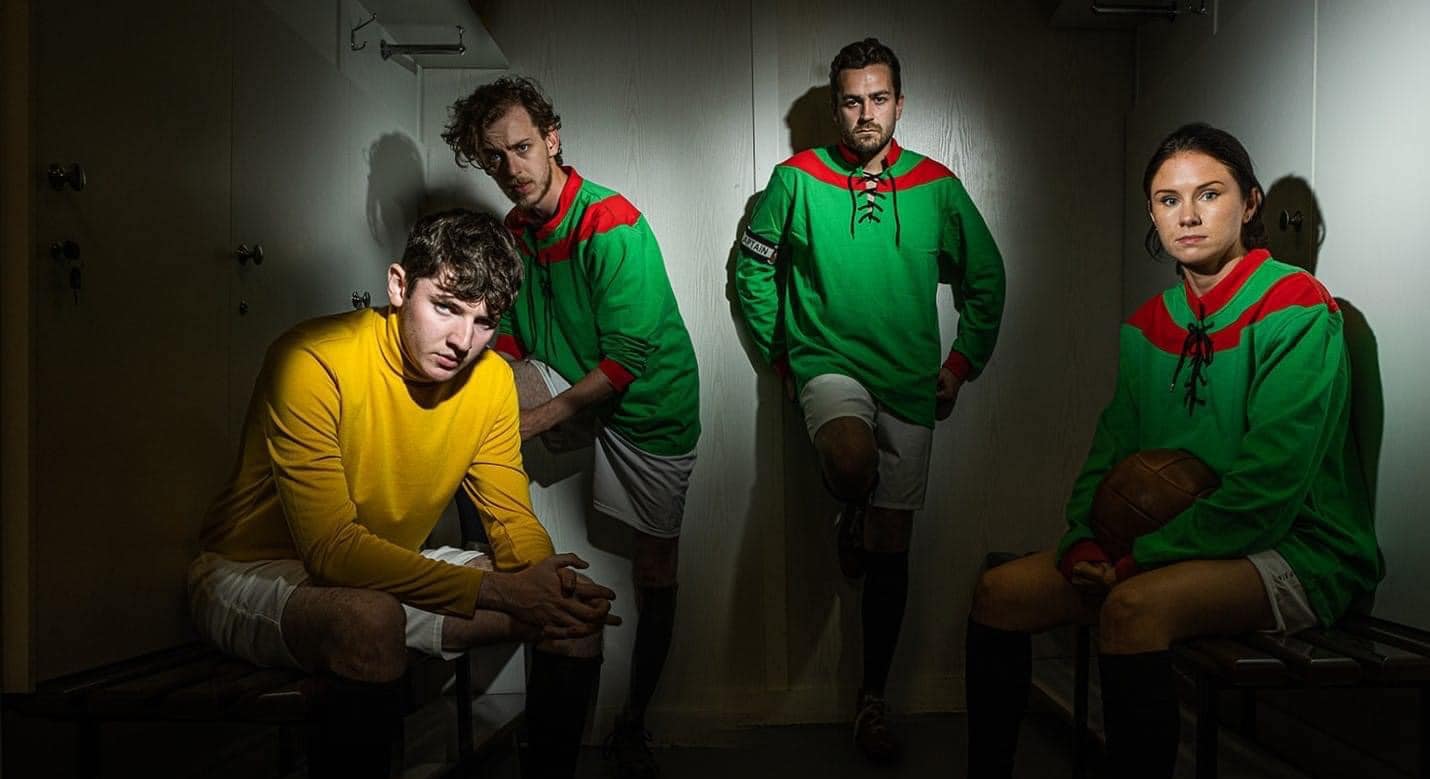
“Vienna, my hole” is how one player reacts to the suspicious looking invitation for the east Belfast football side to play the best of Europe in the spring of 1914. One Saturday Before The War turns the clock back to that year when the Irish Cup champions Glentoran’s players were given two week’s paid leave from their shipyard jobs to tour through Europe playing a series of football matches, ultimately winning the Vienna Cup with a comprehensive victory over a Vienna Select XI side on 30 May.

Working with the eponymous history book’s author Sam Robinson, director Trevor Gill has imagined a series of scenes that explore the team, the time and the people over a two-hour show. There’s a real mix of styles, with the fourth wall increasingly broken and the audience brought into the world of the players. But with the east Belfast Sanctuary Theatre’s stalls filled with Glentoran fans, it’s hard to go wrong.

The 1914 team’s captain Paddy McCann (Thomas Galashan) – who switched from hurling to play soccer for Belfast Celtic and then picked up a job in the shipyard as a bonus for transferring to Glentoran – lives with sectarian abuse on the pitch. Forrest Bothwell plays Jack Boyd who is chased across Europe – presumably only in this fictionalised account – by his mother (Phillipa O’Hara) who berates him for setting off without his piece. O’Hara also plays team member Davy Lyner who may have had a familial link with the German Kaiser.

The elephant in the room throughout the footballing adventure is the deteriorating political situation across Europe, and several scenes visit the front in France where some of the players have returned to fight in the months after their victory in Vienna. Jack Watson’s Reike Voight brings an outside perspective to the battle on the pitch and afterwards in the trenches.

Remarkably, the script manages to poke fun at Linfield, and the cast sing rowdy Glens’ songs, use a choreographed dance routine to tell the story of a match, create a mesmerising silhouette as the young soldiers go over the top, and reduce the audience to tears as we learn about the poor health that plagues Paddy McCann’s family home.

One Saturday Before The War is brilliantly sweary in places, and contains a particularly convincing hairdryer moment as the manager berates the underperforming team at half time in the 1914 Irish Cup Final. Club banners adorn the walls of the theatre, branding the whole venue with team colours. Misbehaving moustaches add to the frivolity. There’s a real sense of farce as the team disappear into a bar instead of boarding their train to Larne.

The cast of four keep the show’s energy up throughout, and their cheeky interaction with the audience is rewarded. The video inserts are perhaps overly generous in length, baggy when compared with the tighter direction of the on-stage action. The closest the performance gets to scoring a home goal is the play’s ambitious conclusion which has more false endings and surprises than a Bond film. But that can all be fixed.

One Saturday Before The War brings a community’s history to life. It’s accessible, ambitious and reaches local audiences with nuanced storytelling that doesn’t shy away from uncomfortable truths. The production continues at the Sanctuary Theatre until Saturday 15 October

Enjoyed this review? Why click on the Buy Me a Tea button!
Friday, October 07, 2022

How To Fail As A Popstar – a Canadian artist explains why a star isn’t born (Belfast International Arts Festival at The MAC until Saturday 8 October) #BIAF22

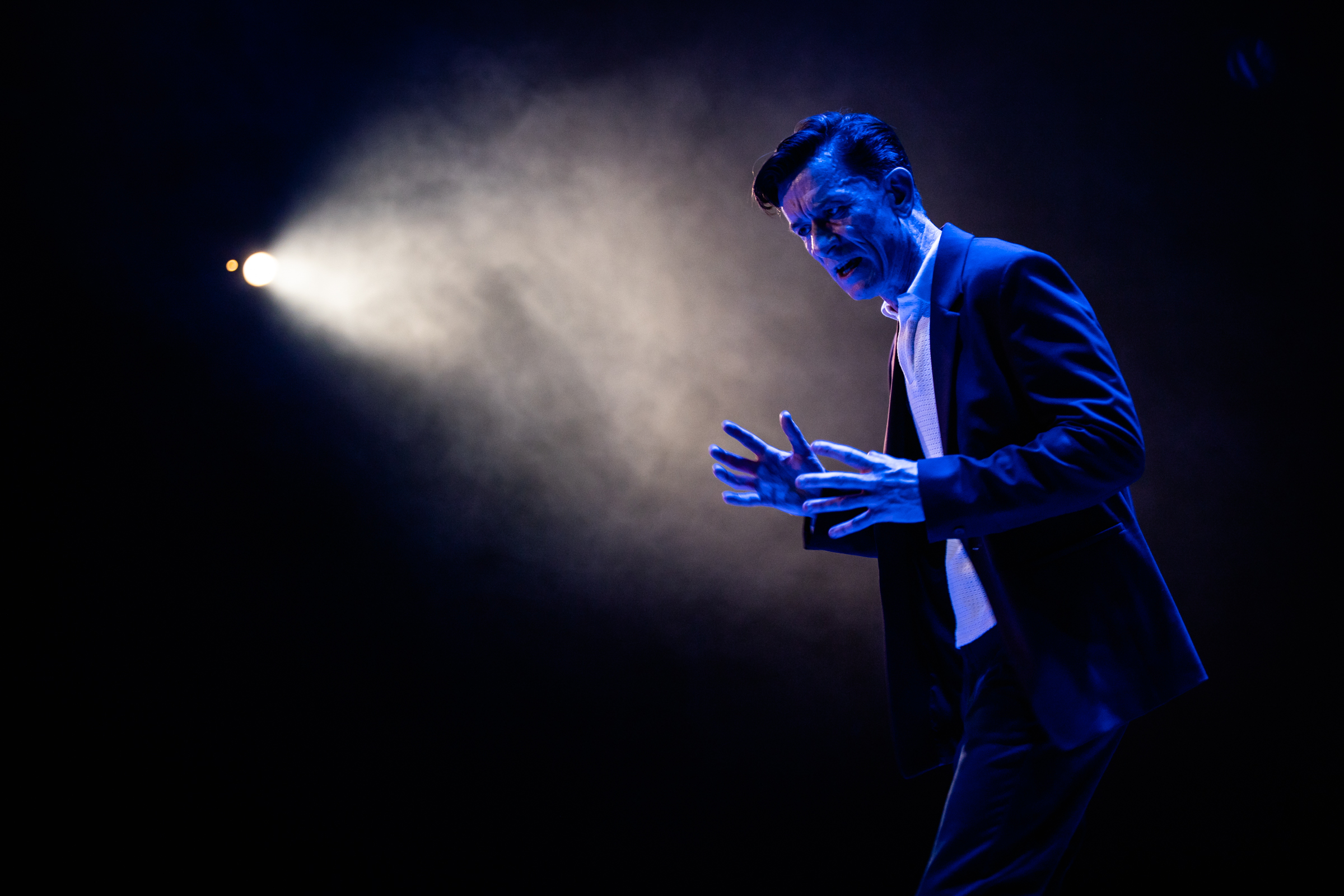
The Indian child on The Mickey House Club wasn’t given the same prominence as the white kids who launched themselves off the Disney TV extravaganza’s springboard into big careers on stage and screen. Instead, Vivek Shraya tried out for local Edmonton talent shows, paid over the odds to record an album that showed off the producer rather than the talent, and spent time in Toronto and Paris sliding down the greasy pole of showbiz stardom instead of ascending to greatness. Not that being the opening support act for a north American Tegan and Sara tour isn’t a pinnacle beyond the reach of most people in this evening’s audience at the MAC.

How To Fail As A Popstar is a show about naming failure, owning up to unfulfilled ambition and reflecting on opportunities lost, taken and swerved.

Dressed in a short black jumpsuit accessorised with a shimmering golden cloak, Shraya spends much of the 95-minute show performing inside a circular stage whose circumference is marked out by LED rope lights. A guitar is picked up and strummed just a couple of times. Some well-crafted soundscaping is built into the show’s choreography to set the mood, dropping in some amusing musical gags, and adding a lush reverb to some of the singing (though it’s noticeably missing at other times).

For a show about failing to break into the stratospheric heights of true pop stardom, the musical interludes are surprisingly short. Plenty of two line riffs, a verse sung here and there, but no three minute ballads to demonstrate to the audience that Shraya actually had what it might to have taken made it big in Canada and beyond.

Instead, the show relies on the spoken word. Brendan Healy’s direction gives Shraya distinct places to gaze for each beat of the somewhat overwritten script. At times the delivery feels manufactured, having lost the sense of raw emotion and vulnerability that clearly underlies the incredibly personal tale. It has much more of the feel of a play than a confessional piece, as if Shraya wrote a great script and then Healy auditioned a completely different actor to perform the role.

Some great one-liners tickle the audience funny bones throughout the show. Shraya is also a great mimic of his friends and ex-colleagues. The final list of 40 reasons why Shraya failed as a popstar is the clear zenith of the show. The delivery is unhurried. The lights are brought up over the audience to remind us that we too will be living with our own lists of excuses. It’s a moment of surprising reflection. Understated yet moving.

Growing up queer. Finding a tribe. Escaping a hometown. Wrestling back control from disappointing producers. Overcoming the lack of leather pants. Shraya may know how to fail as a popstar, but she’s also learned to step out of the circle and move on.

There’s a final opportunity to hear Vivek Shraya’s story on Saturday evening in The MAC as part of Belfast International Arts Festival. Check out the preview post from a few weeks ago to find out what else the festival is serving up between now and 6 November.

Photo credit: Dahlia Katz

Enjoyed this review? Why click on the Buy Me a Tea button!