Thursday, August 31, 2023

Passages – from ecstasy to emptiness (QFT until 7 September)

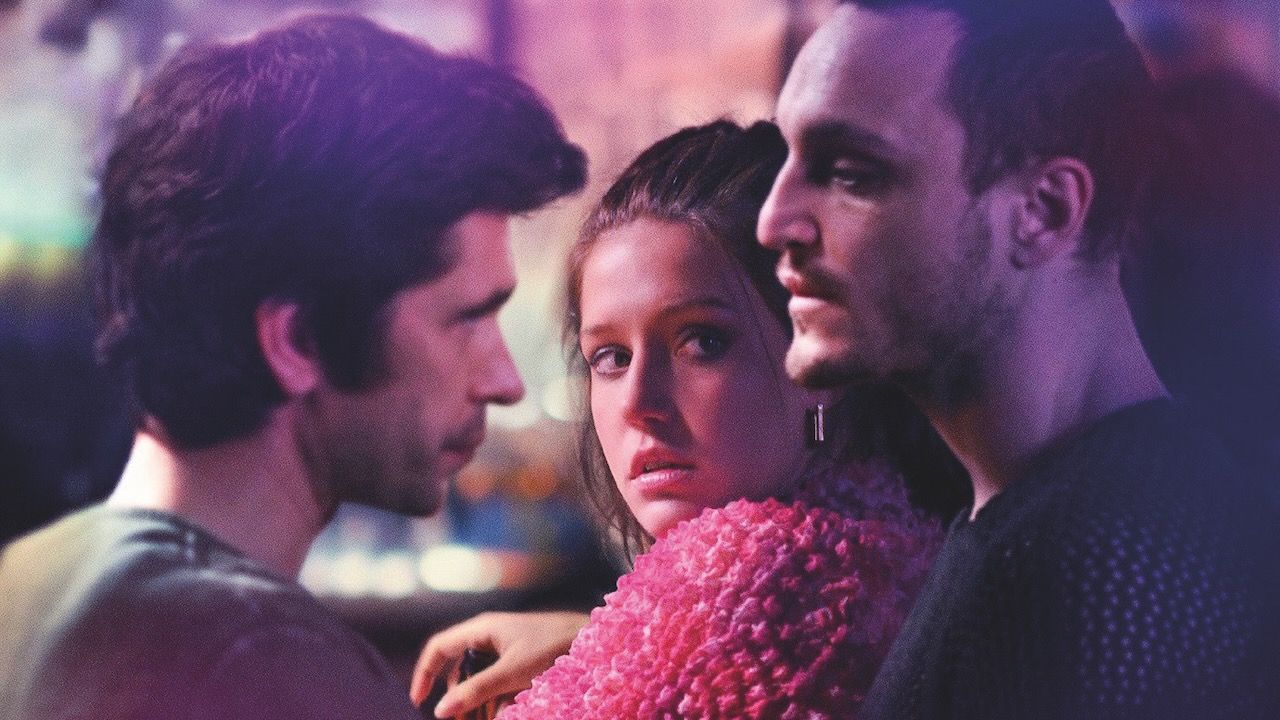
Passages is a relatively dark drama directed by Ira Sachs and co-written with Mauricio Zacharias. Tomas (Franz Rogowski) is on a high having wrapped filming on his latest project. Partner Martin (Ben Whishaw) rolls – somewhat grimly – with the punches that come for free with his tumultuous relationship. “We’ll be fine” he asserts in what feels like famous last words near the start of the film.

From the moment Adèle Exarchopoulos appears on-screen as Agathe it’s clear what will happen next. Her smouldering eyes, her dancing shoulders, all signal that Tomas is about to jump onto an unfaithful helter-skelter – a passionate, sweaty and noisy affair – that will disorientate his so-called loyalties. What is the nature of a healthy relationship? What constitutes an unhealthy coupling?

Passages starts out as a study of an obnoxious, egotistical man who is in love with himself more than his existing husband or his new mistress. Two thirds of the way through we linger in a bedroom with Agathe, lying on her mattress alone, listening to Tomas fighting and then canoodling with someone in the room next door. And despite spoilerific circumstances that I’ll not divulge in the review, in that moment she comes to terms with what had passed as a relationship and takes back control.

The film’s name offers little hint at meaning, although the font used in the opening credits should be credited for being so gorgeous. This Parisian tale could easily be retitled “Starting again: Déjà vu”. While Tomas may be the dominant bottom of the couple, Ben Whishaw’s peachy bottom is perhaps the dominant takeaway of the 92-minute movie – men are objectified much more obviously than women in this French cinematic delight – with wiggling and jiggling and thrusting that helps earn the film its 18 certificate and adds a flutter of mystery in that moment about what Martin might do next.

The tone is grim, yet some of the more incidental characters offer light relief. Agathe’s mother (Caroline Chaniolleau) asks some pertinent questions over a meal that upset Tomas. Erwan Kepoa Falé plays an author, Amad, who no longer wants to write more novels now the freedom of his anonymity has been evaporated by his debut success (a great topic to explore in a spinoff). That’s not the only thing Amad reveals by the end of the film.

Passages finishes with Tomas back on his bicycle, riding through the streets of Paris at speed. His facial expression is beautifully enigmatic: heartbroken, self-reflective, content, or even liberated. Each audience member can decide for themselves. And audiences will also have to decide whether – or how – the story could have been told without such strong sex scenes. Passages is being screened at the Queen’s Film Theatre until Thursday 7 September.


Enjoyed this review? Why not click on the Buy Me a Tea button!

Footloose – dancing the night away in a backwater where such things are banned (Ravara Productions in The MAC until Saturday 2 September)

When tragedy hits a small town, the local minister veers towards social conservatism and uses his influence over the Bomont town council make dancing illegal. Into this repressed backwater enter two outsiders, Ren and his mum Ethel, moving out of Chicago after a family breakup. Can Ren earn the respect of his peers in school? Can the minister be convinced to listen to his family, never mind the other townsfolk? Can Bomont boogie once more?

Ravara Productions’ summer youth show Footloose takes an enthusiastic cast and puts them through their paces. The musical opens with a choreographed ensemble dance number that establishes the cast’s ability to deliver high energy routines. A six-piece band play live in one corner of the stage.

Shane Ferris portrays the stern Rev Moore who lays down the law even when there isn’t an opportunity. Anna Guest is the goody-two-shoes preacher’s kid in church, and literally pulls off that façade when Ariel sneaks off at night behind her parents’ back. Ben McCamley brings to life Ren’s feeling of being an unwanted misfit, sings and skips at the same time, and after the interval begins Dancing Is Not A Crime with a confident rap. Ariel and Ren’s duet Almost Paradise has great chemistry and musicality.

Mama Says is another good illustration of the harmony vocal talent of the cast, and a scene which benefits from one of a fleet of colourful sofas that are wheeled on and off the stage. But the show stealers are the will-they-won’t-they pair, fast-talking dungaree-rockin’ country bumpkin Willard (Harrison Gordon) and velvety soul-voiced Rusty (Serena Smart) who constantly add colour and comedy to the production. Neve Wilkinson (Wendy-Jo) and Sophie Teal (Urlene) ably support Rusty as Ariel’s friendship group while David Campbell neatly switches roles between Uncle Wes, the cruel coach and a cop as well as ensemble duties.

Footloose the film has somewhat dropped out of the cultural consciousness, and as a consequence performances of the stage adaptation are few and far between on the local stage. However, the 100-minute musical proves a good showcase for the teens and twenties under the direction of Kerry Rodgers, all achieved within in a very tight rehearsal timeframe. And it’s tale of standing up to religious beliefs that spill over into social constraint that is quite apt for 2023. Footloose continues at The MAC until Saturday 2 September.

Photo credit: Gorgeous Photography - Melissa Gordon

Enjoyed this review? Why not click on the Buy Me a Tea button!

Wednesday, August 30, 2023

The Man Who Swallowed A Dictionary (Green Shoot Productions at Lyric Theatre until 10 September + NI tour)

Robert Niblock’s new play about the life of David Ervine follows the east Belfast man from cradle to grave. As the title suggests, it riffs off Ervine’s fabled wordiness and uses a neat device to pause and reflect on the definition of various words, sometimes leaving it to the audience to put two and two together, sometimes getting in a round of laughs, like the light-hearted examples of ‘polarity’.

The Man Who Swallowed A Dictionary quickly reveals Ervine’s mother’s fervour for Paisley, and his dad’s more secular and left wing leanings towards the Northern Ireland Labour Party. He falls in love with Jeanette. But deadly days like Bloody Friday also push him towards making a life-changing commitment to a paramilitary organisation. Mates Bo and Junior follow him through the drama of his adolescence, into the UVF, in and out of prison, and are still knocking about the east Belfast bar when he becomes a politician, leading the Progressive Unionist Party.

Actor Paul Garrett is a great fit for the role, a skilled mimic – he has Rev Chris Hudson’s accent down a tee – and at a distance visually similar to Ervine, balding with a bushy moustache and attired in a dark grey suit, tie and pipe.

David Craig’s set is simple but hefty: two enormous open books over which Garrett clambers. While it’s a great three-level playground providing height and good places to sit, the amount of movement in some of the shorter scenes tends to distract. The script is replete with zinging one-liners, working class and sometimes loyalist retorts that wouldn’t have gone amiss in the Dundonald Liberation Army parody plays that this show’s director Matthew McElhinney stars in.

The words and influence of Gusty Spence – who renounced violence while incarcerated – are also significant to the story and add to the play’s authenticity. While in Long Kesh, Ervine was challenged by Spence’s logic that republicans needed to be understood and that ultimately progress would come from dialogue rather than conflict. The UVF’s murderous attack at Loughinisland is condemned on stage by Ervine, but it’s a point of contention in nearly every Troubles drama whether enough emphasis is given to acknowledging the bloody deeds of paramilitary organisations before praising their political representatives’ pursuit of peace. The script does highlight the military and political differences between the UVF and PUP in the years before the 1994 loyalist ceasefire. Lives were undoubtedly saved, though many lives were also needlessly cut short.

The Man Who Swallowed A Dictionary is an interesting companion piece to Owen McCafferty’s Agreement which ran on the same Lyric stage throughout April. That seven-handed play largely ignored the role of the smaller political parties in the talks that led to the Belfast Agreement.

This new play has real heart and a lot of potential. It’s unusual to be invited to review what was almost a preview performance on Monday, its first night in front of a paying audience. A disco soundtrack somewhat over-powers the description of the plenary session called by Senator George Mitchell at the conclusion of the talks in Stormont’s Castle Buildings. And the constant walking around the pile of books can leave the actor in the shade. But the rough edges should be smoothed off within a couple of performances.

The show’s sucker punch comes towards the end of the second act when personal tragedy hits the Ervine family. Less than three years later David Ervine himself is dead. Tributes at the time by the UUP’s Reg Empey described him as “a unique, charismatic and uncharacteristically spin-free politician” while the SDLP’s Mark Durkan said that “David emerged from a paramilitary past to pursue a peaceful future”. Hearing Ervine’s own words played at the end of the play is a powerful reminder of how keenly his absence has been felt from Northern Ireland politics over the last 16 years, particularly with the constipated process of standing down paramilitary structures.

The Man Who Swallowed A Dictionary is playing at the Lyric Theatre until 10 September, before touring through Larne, east Belfast, Downpatrick, Coalisland, Newry, Ballymena, Lisburn, Newtownabbey and Derry. Say a little prayer for the set builders ...

Enjoyed this review? Why not click on the Buy Me a Tea button!

Monday, August 28, 2023

Les Misérables - teenagers wow in BSPA senior youth performance at The MAC

It’s an audacious undertaking to rehearse and stage Les Misérables with children aged 12–18 over a three- or four-week period. As a sung-through musical, it’s not the most forgiving of shows for the cast, even with the cuts made to the newly available official School Edition. There are a lot of emotional beats to hit. And there are a lot of time shifts that require characters to quickly show signs of aging. Yet BSPA’s Saturday matinee performance at The MAC was a triumph.

Released from prison into an unforgiving world where he can’t quite shake off the long arm of the law, years later Jean Valjean takes founding Cosette under his wings when her mother Fantine dies. The action switches to the student barricades on the eve of revolution. Cosette is now caught up in a love triangle, unwittingly battling with her former guardians’ daughter Éponine for the affections of student leader Marius. All the while police inspector Javert doggedly pursues Valjean to bring him to book, and Éponine’s pantomime parents keep popping up to demonstrate that they are among the true villains of the story.

Over the three hours of the show (including the interval) the pace rarely slowed. Large scale scene changes – with tables and chairs being carried on and off the stage – must have looked messy in the bright light of the rehearsal room but disappeared into the dim behind spotlighted actors singing out front. Strategic colour in costumes popped characters into the foreground. The bluish lighting reflected the troubled times. The two-level set was versatile … although the ladders looked nearly as perilous as the steps up and down the barricade! The choreography constantly propelled scenes and lines of actors forwards (mere centimetres away from the first row of audience members) and suited the relatively shallow stage.

But the magic didn’t come from the intelligent light or the set design. It was from the quality of the performances that director Peter Corry, musical director Ashley Fulton and choreographer Sean O’Neill had drilled into the talented cast. Jack Cairns shone as the central Jean Valjean, striding around the stage with purpose, conveying his character’s growing sense of justice and mercy, despite the best efforts of Javert (Michael Nevin) to shut him down. Bring Him Home had real presence and demanded the sold-out audience’s full attention.

Jackson Allen and Grace Conroy (at Saturday afternoon’s performance) played the musical’s comedy sidekicks – the Thénardier family – a kind of Mr and Mrs Fagin, delightfully over-the-top at all times, and particularly superb in Master of the House. (Their wit and jesting behaviour also underlines the English language version’s Cockneyfication of the truly French story.)

Rebekah Devlin impressed as the impoverished Fantine, as did Grace Woodward who played Éponine at Saturday’s matinee, looking truly heartbroken by the end of Act One when she realised she’d become the third wheel to Marius (Sean Carron) and Cosette (Blanaid Hughes). Éponine’s death and the singing of A Little Fall of Rain with Marius was eye-wateringly emotional.

There was a maturity to performances right across the cast. Everyone in the ensemble was in the moment, concentrating on their part in the scene and no one looked lost. The eyes of the actors told the story of their characters’ feelings and motivations. Some solo singing was occasionally a bit pitchy at key moments, but overall the musicality was excellent. The slow-motion death scene at the barricades worked well, and the simple staging of the Valjean’s death was very effective. Such is the talent at BSPA’s disposal that four girls shared the roles of young Cosette and Éponine, while four boys played Gavroche and there were two Madame Thénardiers across the six performances.

While the cast motioned towards backstage during the bows, it wasn’t clear to me until afterwards that a 14-piece band had been hidden behind the black backdrop. A real shame they hadn’t been able to rush out with instruments in hand to be seen by the audience at the end. While the cast may have found being on stage quite intense, the rich music never stopped with one song often running straight into the next. Bravo to the band.

Les Misérables is familiar territory to director Peter Corry who spent three years performing Javert on the West End and UK Tour, and staged a concert version – the show’s Northern Ireland premiere – in The Odyssey Arena back in 2001. In the middle of a cost-of-living crisis, when the wealth gap seems to be widening and social disadvantage deepening, the themes of social justice and redemption and looking out for the vulnerable seem very apt in 2023.

Photo credit: Neil Harrison

Enjoyed this review? Why not click on the Buy Me a Tea button!

Scrapper – joy and grief, resilience and second chances (QFT until Thursday 31 August)

Georgie’s dad disappeared a long time ago and now her Mum has died. But this is a feisty 12-year-old survivor (Lola Campbell) who raises enough money by wheeling and dealing to keep up rent payments and fools the authorities into thinking she’s living with her uncle. Georgie isn’t living in squalor, but death has brought about a loss of innocence. Best mate Ali (Alin Uzun) is her partner in crime. But then her father reappears and her almost Enid Blyton-like existence is disrupted.

Scrapper is Charlotte Regan’s confident – and at times quirky – feature debut. The audience are never asked to feel sorry for Georgie. While the cloud of grief hangs overhead, her attitude is filled with life and resilience. The main action breaks off for stylised inserts which imagine what other children, teachers and social workers might be thinking about Georgie. (Her situation is far-fetched but that won’t spoil the story.) Keys, doors and locks are a recurring theme of the film. There’s also a sense of escapism, of the immaturity of a young mind amid all the adulting she faces.

When Jason (Harris Dickinson) jumps over the back fence and a father figure reenters Georgie’s life, it’s clear he’s the man child and she’s the grown up. His appearance somewhat unsatisfactorily crowds Ali out of the script for much of the second half. Parent and child travel go on a journey – an actual rather than purely metaphorical trip – and Jason slowly melts Georgie’s hardened heart, and she lets him glimpse inside her fertile imagination. The possibility that Jason will once again disappear into the night – Ibiza is his hideaway of choice – looms over the latter stages of the film.

Aftersun and Rocks are two other films which deal well with rekindling a relationship with an estranged parent and the death of a parent respectively. Scrapper could have been a grey, depressed tale of solitude, a foundling abandoned by family. Instead, Regan writes and directs a hope-filled 84-minutes of cinema that opens up the process of grieving by creating a vital character who refuses to be defined by sorrow (or any number of other labels that could be attached to Georgie). Scrapper is being screened in Queen’s Film Theatre until Thursday 31 August.

Enjoyed this review? Why not click on the Buy Me a Tea button!

Wednesday, August 23, 2023

Dirty Dancing: The Classic Story on Stage – standing up for other people’s rights in a fast-moving musical production (Grand Opera House until 2 September)

The musical theatre adaptation of the hit independent film Dirty Dancing firmly roots the action in 1963, a time of change in the US as old ways were challenged and civil rights were asserted. The real socio-political moves happen in parallel with the fictional shifts in the Kellerman’s family resort where jaded holiday pass times were holding back more modern pursuits.

Frances ‘Baby’ Houseman is holidaying with her sister and parents. She intervenes to help one of the resort’s dancers Penny, ends up filling in for her at a nearby dance event, and falls in love with the tall, dark and handsome dance teacher Johnny.

The screaming and swooning of much of the audience suggests that a lot of film fans were in the house, mouthing along with the lyrics of the soundtrack and trembling as Johnny showed off more and more skin. Michael O’Reilly has stage presence. He struts on stage as Johnny, a cross between Patrick Swayze and John Travolta with an in-your-face accent. First in a vest, then bare chested, then down to his tighty-whities, O’Reilly and his performing pecs give a good show. But there’s a lot more going on in Dirty Dancing: The Classic Story on Stage, a production which has aged much better than some of its touring rivals.

If the holiday is a coming-of-age experience for Baby (Kira Malou – no stranger to the Grand Opera House stage having appeared in a Peter Pan pantomime), it’s also a season of maturing for Johnny who realised that he’s the one being used by the women throwing themselves at him on while on vacation. Both are standing up for other’s people’s rights. While Baby has the access to cash to help others around her, Johnny is living precariously while looking out for his dance partner Penny (Georgia Aspinall), and some of the resort staff are planning to travel to southern states to be ‘freedom riders’ (interracial groups riding public transport together as permitted by the 1960 Supreme Court decision but a scenario still met with violence from white mobs in some locations).

Whereas some musical theatre would need a page or two of dialogue to complete a scene, Eleanor Bergstein – who incidentally spent her family holidays dancing in the Grossinger's Catskill Resort Hotel while her parents were playing golf – needs just three or four lines to hit a beat and move the story on. It’s almost televisual, stripping away any superfluous lines to leave the bare bones story. Scenery flies in and out as fast as the lights fade down and up. Combined with Federico Bellone’s direction and his superb set design – for the two cannot really be split apart – this allows a very fast-paced first act to whistle through the plot, with barely a moment’s break. It’s incredibly slick and should be studied by other shows to understand how it can be achieved.

The band play on-stage, adding to the live vibe of the show. And by the moment they crank up The Time of My Life, Malou has stopped pretending that Baby has any difficulty dancing and hits the trademark lift with confidence. The off-stage chemistry between the two leads – much like Bat Out of Hell: The Musical – adds to the on-stage familiarity and cements the strong eye contact as Baby and Johnny fall in love. While the principals steal much of the spotlight, the wider Houseman family also impress after the interval. Daisy Steere delivers a bravura no-holds-barred Hula performance, while Jack Loy and Taryn Sudding take every chance to animate the initially flat parents’ characters.

Johnny is objectified, men are shown to be scoundrels, and women are three dimensional. It’s quite a refreshing take for musical theatre! Dirty Dancing: The Classic Story on Stage is playing in the Grand Opera House for two weeks, ending on Saturday 2 September and heading to Dublin for a fortnight and then a week in Derry

Photo credits: Mark Senior

Enjoyed this review? Why not click on the Buy Me a Tea button!

Wednesday, August 16, 2023

Buddy: The Buddy Holly Story – lots of music, not as much drama (Grand Opera House until Saturday 19 August)

Buddy: The Buddy Holly Story. The very title hints at a split personality. And there are two discernible halves to this touring musical production that ran for more than a decade on the West End and has been seen by 22 million people across the world.

The strongest part is a 12-piece tribute act that rocks the final quarter of the show, playing song after song from Buddy Holly’s final concert in the Surf Ballroom in Clear lake, Iowa. That’s ‘the day the music died’ as Don McLean phrased it in American Pie, the night that Buddy Holly, The Big Bopper and Ritchie Valens all perished in a plane crash along with pilot Roger Peterson.

They’re a tight musical group, with fast fingered AJ Jenks playing the lead role, backed by drums, bass, rhythm guitar, a great brass section, backing singers, Bopper and Valens. Earlier on, the first act finishes with Oh Boy and show-stealing stunt double bass playing by Joe Butcher (Joe B Mauldin in the band). Drummer Josh Haberfield (Jerry Allison) impresses throughout, as at home behind his kit as when he’s idly slapping out the rhythm of Everyday on his thighs. Jenks has the glasses, the mannerisms, the vocal tics and the tilting guitar moves. The unplugged version of True Love Ways comes with free goosebumps. He portrays a musician who is clearly impulsive, but never quite developed an infectious public magnetism.

However, this isn’t simply a tribute concert, even though that would have been a wholesome intention. It’s billed as the story of Buddy Holly’s short 18-month career. Bouncing between radio and recording studios, Thomas Mitchells narrates much of the story. But Alan Janes’ script is flimsy (repeated jokes about Holly’s mum’s obsession with what he’s eating), the scene changes default to just turning down the lights for 30 seconds, and the choreography is unremarkable unless there’s music involved. While the set is redressed for the final concert, the curtain descends and Mitchells leads a series of audience callouts – it feels like pantomime season has arrived four months early when we learn the names of Leanne and Paul from Antrim in the front row of the stalls – just the latest in a series of moments of audience participation that pad out the runtime and attempt to reinflate the atmosphere after some of the more pedestrian scenes.

Don’t get me wrong, most of the Grand Opera House audience were having a great time, humming along with the songs, a few even getting to their feet to dance during key moments. Miguel Angel’s rendition of La Bamba in his role of Ritchie Valens is a highlight. Looking along the row in which I was seated, there were huge grins of people’s faces. But I’d argue that they were connecting with the music and not the story. Holly’s death is marked simply and effectively before the final few songs. But it’s not a sad moment. Having watched his accelerated courtship (measured in hours), we learn that his new wife was pregnant by the time he went out on his last tour. But we only see Maria Elena the once. Every group needs a manager to take advantage of them. But there’s only a blink and you’d miss it back reference back to Norman Petty’s financial chicanery.

The sound mix is excellent, favouring the wired mics and instruments of the 1950s for the musical performances. The lighting is strangely uneven, with the faces of major characters sometimes left in the gloom unless they were blessed with the single follow-spot.

Overall, I found Buddy: The Buddy Holly Story to be full of rhythm but a bit soulless. It’s a musical blast, but the storyline fails to grip. I’m clearly in a minority with the show running for more than a decade on the West End and more than 22 million people attending performances worldwide. But it never reaches the heights of musical storytelling of a show like Beautiful: The Carole King Musical.

Buddy: The Buddy Holly Story continues in the Grand Opera House until Saturday 19 August.

Photo credit: Rebecca Need-Menear

Enjoyed this review? Why not click on the Buy Me a Tea button!

Monday, August 14, 2023

DruidO’Casey – one day, three plays, 18 actors, 45 characters, and 375 minutes of great theatre (Druid at Lyric Theatre until 19 August)

One of my English teachers at school – Philip Orr – staged a Sean O’Casey play every other year in the amphitheatre style assembly hall. We sat on the hard wooden benches, peering down at the open plan set on a wingless stage, immersed in a foreign time and an unfamiliar place that the history lessons in the nearby classrooms didn’t cover.

On Saturday I got to see all three plays from O’Casey’s ‘Dublin’ trilogy once more, in a glorious act of endurance theatre dubbed DruidO’Casey that stretched from lunchtime (The Plough and the Stars) through afternoon coffee (The Shadow of a Gunman) to evening (Juno and the Paycock). Six hours fifteen minutes of drama a nine-and-a-half-hour visit to the Lyric Theatre. They’re performed in order of the timeframe in which they were set, rather than the order of writing (Shadow, Juno, Plough).

The experience is akin to binge-watching a boxset or watching a film franchise back-to-back … except there’s no pause button, and liquid intake needs to be planned carefully along with strategic bladder emptying. A traditional evening performance of a play might be followed by conversation in the car on the way home and a night in bed disturbed by your brain mulling over the meaning of the on-stage action. While the time for reflection is curtailed by the arrival of the next performance, you get a real sense of the time and place, a broad understanding of the competing moods and motivations, and an appreciation for O’Casey’s traits as a playwright.

We titter and giggle at the dialogue and some of the dramatic situations, at a safe centenary distance from the events being described. A very different reaction to the original staging, fictionalising history sometimes not even ten years in the past. O’Casey’s take on people’s motivations and their loyalties is unflinching, largely challenging, often comic and always complex.

About three quarters of the company of actors appear in each play. Francis O’Connor’s hinged set wraps around the stage, bending to each scene of each play, full of surprises. Any number of familiar pieces of the set together with individual props are reused across the three plays.

O’Casey’s pen was undoubtedly sharp, but director Garry Hynes lifts the words off the page and propels them out towards the audience through the cast with much wit and vigour. The accents are broad enough that you’ll notice when your ear has tuned in after ten minutes and less dialogue is being missed.

The Plough and the Stars sets the pace (hurried) and the political scene. It’s 1916 and Dublin is on the brink of rebellion. An increasing use of red in costumes (Francis O’Connor) foretells the coming death toll. Liam Heslin and Sophie Lenglinger anchor much of the action as the newlyweds Jack and Nora Clitheroe.

Of the triptych of plays, The Shadow of the Gunman is my favourite. It’s probably the simplest, based in a single location with a comedy door that reveals a succession of unwelcome, larger than life characters. Over a snappy 90 minutes with no interval, a great air of mystery is built up around Donal Davoren (Marty Rea). His flirtatious encounter with Minnie Powell (played by the enchanting Caitríona Ennis) sets up the later jeopardy. Sean Kearns embraces Adolphus Grigson’s outing as an Orangeman with a slick choreography which keeps finding new movements to ramp up the hilarity. When the room is searched, its contents are flung around, with cans of food chaotically rolling around the stage. The rising moon creates beautiful visual. (Much more satisfying than the descending satellite in a previous Abbey/Lyric production.) The staircase reveal is a lovely touch. (The Shadow of the Gunman is the only show that isn’t sold out – so grab matinee tickets for Wednesday or Friday before you miss it.)

By 8pm, the auditorium was still completely full as we got our first peek at the third play’s set. Many in the audience had travelled much further than usual to attend a Lyric production. Juno and the Paycock is a very different beast to the two that have gone before. Much more character-based than political commentary. The work-shy ‘Captain’ Jack Boyle (Rory Nolan) and his mucker Joxer (Aaron Monaghan) are feeling the heat from Juno Boyle (Hilda Fay) who has the measure of nearly everyone who comes in through her front door. Daughter Mary (Zara Devlin) has the best of her Mum’s spirit, with the added learning of not being a pushover.

“It’s better to be a coward than a corpse” explains the Captain. Different times to The Plough and the Stars. The Boyle’s hand to mouth existence is disturbed, and their tenement flat is uplifted, by news of an unexpected inheritance. This good fortune leads, of course, to their downfall.

O’Casey is fond of letting his working class characters mispronounce long words. It’s funny though a bit petty. His other tell is the repeated use of songs in his plays. Mary and Juno’s duet of Home to Our Mountains is by far the most unexpected and moving of the day.

In the final scene of the day, a door is once again key to the action, delightfully mirroring the first scene in which a door is being fixed. It’s a fitting end to a day-long cycle of plays that have captivated and entertained.

While it’s hard to imagine the mechanics of one director rehearsing three plays across 18 actors and 45 characters, the end result is sublime. The total familiarity with the work is obvious, particularly as the cast gently roll into some of the back and forth confrontations without a hint of forced staccato delivery. The quality of the acting and direction is second to none. The set works hard too, along with the lighting (James F. Ingalls) which is precise without ever drawing attention to itself. Bringing all that together with the movement and the sound design creates a total experience that wows. Druid Theatre are surely Ireland’s equivalent of Schaubühne.

The cycle of plays began its run in Galway, and it leaves Belfast’s Lyric Theatre on 19 August to head to Dublin (sold out), New York and Michigan.

Photo credit: Ros Kavanagh

Enjoyed this review? Why not click on the Buy Me a Tea button!
Wednesday, August 09, 2023

Project Children – well written, well directed and very well acted (Brassneck Theatre at St Comgall’s until 13 August)

It was a bit of a mad idea. Not perfect by any means. But one that came from the heart. Denis Mulcahy emigrated to the US in 1962 and joined the NYPD. From his side of the Atlantic he formed a different perspective on the conflict in his homeland. And he decided to do something practical about it.

Why not make it possible for some of the children most affected by the Troubles to get a few weeks’ respite? Children would stay with American families, a holiday of sorts, but also a programme of activities that would intentionally mix them together and try to challenge any toxic views that they held about each other’s different backgrounds.

Project Children started with six children in 1975, then 21, eventually 100, and over 40 years, 23,000 children from Northern Ireland spent six weeks with one of 1,500 host families in the US.

Fionnuala Kennedy’s new play Project Children captures the genesis of the exchanges, with Monica and Sally working as volunteers on the ground persuading school principals to select the most disadvantaged children who wouldn’t otherwise ever get this kind of opportunity. The script captures the experiences – good and bad – of some of the children: bewildered, awestruck, challenged, homesick, occasionally politicised, and usually spoilt rotten overcome with kindness.

It’s never worthy. Even when it gets dark, it always has a laugh around the corner. It balances its sense of theatre with the work of documentary. The writing has the confidence to explore what it was like for children to be questioned about life at home, and to engage with how they filtered their answers depending on who was asking. While it pays tribute to the project’s successful social engineering, it never suggests everything was perfect. (And to be frank, while the scheme made a huge difference to NI children, and inspiring reflections from participants have been filling column inches in newspapers over recent weeks, there are questions to be asked about whether they were sheltered from the conflict that existed and continues to exist in US society. Those aren’t questions or topics the play needed to answer, and the fact that they can float through your head while watching suggests that the on-stage narrative didn’t try to shut down that conversation.)

Project Children is performed in a square covered courtyard at the centre of the recently opened St Comgall’s centre in west Belfast. The natural acoustics are harsh – Phil Coulter wouldn’t have had much need for the sustain pedal on his piano at a recent concert given the natural reverb of the room! – and makes the talented cast really project their voices. Group scenes are interspersed with chunky monologues as children, parents, host families and volunteers share their recollections of the project. Light moments rapidly switch to shade conveying a sense of the children dropping back into the heavy atmosphere of a society and sometimes their families in conflict.

We can see the figurative light go on as children remark upon what is ordinary in their lives back home and realise that their normal is really quite abnormal. Living in America gave Denis Mulcahy perspective, and the cast convey the reality that Project Children did change the perspective of many of its young participants.

The set is based on the Statue of Liberty’s crown with the same 3.5m radius, though the set’s spikes are even larger than the original. There are no wings so the cast rest at the side of the stage before re-entering the fray by walking up the points to the central dais. However, the lack of raked seating means that the back half of the audience can’t see the clever metaphorically rich set design. Effective use of black and white archive footage illustrates different stages of the Troubles.

Among their many roles, James Doran plays Denis Mulcahy while Laura Hughes and Mary Moulds portray two of the Northern Ireland volunteers (Monica Culbert and Sally Brennan). Terence Keeley leaps around like a lad half his age, while Nicky Harley captivates as a thran Derry wan and then sings her heart out. The versatile adult cast of five all bring enormous exuberance to their roles, as comfortable playing a playground of young children messing around as they are bringing to life parents or some of the older Project Children volunteers. A younger actor joins them for a poignant scene that gets to the heart of the project’s mission. There’s a real Come From Away energy to the piece that grabs the audience and emotionally connects them with the stories being played out on stage.

Director Tony Devlin takes a small cast with a very simple set and creates a production that feels much larger than the sum of its parts. That seems to be a product of Devlin’s vision, Kennedy’s script and the abundant acting talent. Project Children’s run as part of Féile an Phobail continues until Sunday 13 August. It’s well worth catching one of the tickets remaining for the last couple of performances.

Enjoyed this review? Why not click on the Buy Me a Tea button!

Monday, August 07, 2023

Shrek The Musical Jr – the one about the grumpy ogre who sets out to clear his swamp of refugees (BSPA)

Shrek Jr cuts down the popular musical (based on the even more popular films) to a shorter and tighter plot and runtime, while retaining favourite characters and moments.

During the show’s opening number – Big Bright Beautiful World – the BSPA cast quickly establish that they’re great ensemble singers and can dance as a group while staying in character. Shrek’s quiet swamp home has been disturbed by the arrival of a large number of internally displaced fairytale figures, forced to move out of the Kingdom of Duloc by Lord Farquaad. In order to restore calm, Shrek agrees to travel to Duloc and challenge the wannabe king to restore calm to his formerly peaceful abode.

Grumpy Shrek and Princess Fiona are confidently played with a lot of charm and vocal clarity by Nicole Craigan and Daisy Hamilton. Meghan McSorley injects excitability and enormous quantities of sass into Donkey, with a great solo and apt mimicry of Shrek near the end. And Aaron Fisher has the measure of the towering colossus Lord Farquaad, playing the role for laughs throughout. Throw in a dragon puppet, the host of fairytale creatures, and a pack of little rats, and you have a production that captures the joy and energy of the Dreamworks film on stage.

As an amateur production, it’s a joy to have the focus on great performances rather than a flashy hired-in set. That said, there is some great detailing in the props, like the straw, wood and heavy brick briefcases carried by the three little pigs. It’s the little things that can add polish and warmth to a production.

Director Nik Parks along with choreographer Sean O’Neill and musical director Ryan Greer have got a lot out of their seventy-strong cast in a short period. While the show is aimed at younger audiences, the themes of displacement, duplicitous governments, and hiding your true self (the song Freak Flag is very contemporary) should certainly ring true with older audiences. If Lord Farquaad had had a hotel barge to hand, Shrek might never had become a human fairytale rights advocate!

BSPA’s short run of Shrek Jr finished at the weekend. The theatre school’s next show will be the school edition of Les Misérables with a nearly sold out run at The MAC between 24 and 26 August. (Limited availability at time of posting for the Friday 25 matinee.)

Photo credit: Khali and Me Photography

Enjoyed this review? Why not click on the Buy Me a Tea button!