Showing posts with label London. Show all posts

Saturday, December 30, 2017

Hamilton: it's great to be in the room where it happens (Victoria Palace Theatre, London West End)

It’s very unusual to sit through a theatre production in an auditorium packed full of people who already know that they love the show before a single actor walks onto the stage. But that’s the case with Hamilton in London’s West End. Every seat sold for the first few weeks (maybe even months) of the run is occupied by people (and their friends/families) who booked back in January 2017 when the tickets went on sale.

I’ve been walking past the Victoria Palace Theatre – or what was left of it behind the scaffolding – monthly for the last two years. In November and even early December, there was no hint that there was a finished theatre in behind the ongoing construction works. So I was somewhat surprised when the delayed previews were able to go ahead and Hamilton opened a few days before Christmas.

Stepping inside the restored theatre on Thursday afternoon, past the friendly-looking sniffer dog, it was a relief to see no sign of builders wearing hard hats indoors, though a fire warden did continuously tour the aisles and corridors (when the show wasn’t on) so there must be a fair amount of unfinished work.

The hip-hop musical takes liberties with the life of American founding father Alexander Hamilton and his contemporaries as it creates a dramatic narrative around his rise to power and premature exit from the political stage. The deliberate multi-racial casting presents a vision of modern-day America rather than the whiteness of political and military movers and shakers in the late eighteenth century.

It’s a story of a driven man – “I am not throwing away my shot” – who climbs the ladder of power, chooses the post of Treasury Secretary over control over the State Department (thereby creating a much longer and harder-to-unpick legacy of structural change rather than fickle and reversible foreign policy) yet in the end is a kingmaker but never the king.

The character of Hamilton in the musical – and in real life according to historical biographies – was no saint. It’s somewhat ironic that his legacy was only secured (and promoted) through the actions of his cuckqueaned wife Eliza after he pays the price for being competitive and losing everything at the hands of his convictionless competitor Aaran Burr who introduces himself as “the damn fool that shot him” in the first song.

Technically, the West End production of Hamilton was impressive and incredibly precise. Given the steep ticket prices and the waterfall of lyrics to follow to keep up with the plot, the quality of sound was both reassuring and essential. While the micced-up performers were fed through speakers dotted around the auditorium close to the audience, the live band boomed out from the base of the stage, keeping the lyrics crisp and every word intelligible. The lighting rig often bathed the seemingly simple wood and brick set* with warm and natural hues, throwing unexpected shapes (one of which hit me quite emotionally – a bit of a first!) and even created subtle movement during scene changes. [* the back wall of the set may not be quite as static as it looks!]

After witnessing the brute force necessary to manually rotate the Lyric Theatre’s stage in two shows this Christmas, Hamilton’s smooth and effortless rotating stage with independent inner and outer rings was a revelation. The automation that brought little wagons of candles on and off stage, guided by a groove in the floor, showed the attention to detail (and the money available to pull off such a design). Yet I’ve no idea why two ropes were anchored to one side of the front of the stage at the beginning, only to be removed and never used.

Success, failure, forgiveness, leadership, ambition, death, politics, economics, military strategy, migration, rights, human relationships … at times, Hamilton was closer to an opera than musical theatre. There was an intensity to the performance that never let up.

Jamael Westman physically towered above the rest of the cast playing Alexander Hamilton. He was rarely off-stage, and commanded attention as he dashingly strutted about in his boots, clashing with Giles Terera’s Aaron Burr (the clear baddie dressed in black).
“Why should a tiny island across the sea regulate the price of tea?”

Even if you’ve been experiencing Hamilton vicariously through the Broadway cast album and Youtube clips (as we have been subjected to in our house), the level of hilarity was totally unexpected as the live cast injected personality into the music.

The West End’s King George III was ridiculously effected and played to marvellous extremes by Michael Jibson who wandered around the stage, inserting looooong pauses into his songs and jabbing his finger in the direction of the audience while promising to send a fully armed battalion to remind us of his love. He also voiced the tongue-in-cheek pre-recorded mobile silencing announcement at the start: for once, the instruction was obeyed.

With much of the cast double roling, Jason Pennycooke stood out as a gloriously laughable and impish Lafyette in Act I, before morphing into a more serious Thomas Jefferson after the interval. The controlled slow motion choreography in the eye of the hurricane was just one example of its artistic quality.

The three Shyuyler sisters – Eliza, Angelica … and Peggy (Rachelle Ann Go, Rachel John and Marsha Songcome at the performance I attended) – provided the non-political thread to bind together the rest of the show. Songcome was impressive as Maria Reynolds in Act II. While the female characters were in a sense underwritten (though still critical to the plot), then gender mix in the ensemble dancing was refreshing and beautifully arbitrary.
“Don't modulate the key then not debate with me!”

There were little moments of endearing self-awareness that winked at the audience and acknowledged that this was theatre and not a straight history lesson.

Why a musical about an American founding father should work as a show in London is down to the quality of the Lin-Manuel Miranda’s writing and the wholehearted performances delivered by the entire cast rather than the actual events upon which they are based. Hamilton is similar to Evita in taking a relatively obscure story and giving it a dramatic and musical flourish (the running piano phrases that step out of so many of the songs are magical) that delights rather than confuses.

Hamilton is a musical that has been carefully designed to maximise its chance of success. Investment is on show everywhere, from the sumptuous costumes that set the tone of each scene (even if the knee breeches look like jodhpurs and make you wonder whether one of the ensemble dancers will soon enter stage right on a horse) to the automation, lighting and sound design. Musical Director Richard Beadle’s head and occasionally his hands popped up from the orchestra pit to keep the chorus starting and stopping together, even conducting the bows at the end of the show and giving the instruction for the cast to leave the stage.

Yet despite the level of programming and control, Hamilton was a show that emotionally connected. No one on stage was just going through the ritual of phoning in their performance (like I found at Fame one afternoon in the West End while on honeymoon some fifteen or so years ago). It was performed as much as it was produced, with and had heart and soul, energy, rhythm as well as an engaging way of telling a story that resonates on many different levels: racially, economically, politically and culturally.

Hamilton is not perfect. If your concentration wavers for a more than a few seconds you can miss a lyric and be left wondering who a character is, or what the significance is of an action on the stage. There are moments when you wonder whether the symmetry and plot twists are just a little too contrived. A mic was left muted for 20 seconds when King George III walked onto the stage, and one singer struggled with high notes. But those niggles barely add up to anything.

The enormous ambition of Hamilton is very definitely achieved, and achieved through the skill and talent of a wide range of people behind-the-scenes as well as up-front on stage. If you can afford tickets and can make it to London you’ll experience an example of musical theatre that sets the bar high even for the West End. It certainly left me wanting more.

Saturday, October 08, 2016

The Nest - stretch marks in a strained relationship (Lyric Theatre until 22 October, then Young Vic)


The Nest is Conor McPherson’s new translation of Franz Xaver Kroetz’s play Das Nest. It’s a tense two hander in which a young couple prepare for the birth of a baby and adjust to the changes that follow. All the while, intolerance grows like the weeds in their magical allotment.

Martha (played by Caoilfhionn Dunne) is a pregnant cleaner, no longer fit for the physical work and squeezing in some telemarketing from home while awaiting her due date. She apparently has an eye for the finer things in life, though oddly the chrome kettle is the shiniest part of their dingy bedsit.
Do you want for anything?

Just my husband.

Kurt (Laurence Kinlan) is an HGV driver and a petrol head, proud to be the breadwinner and to proud to deliver whatever the expanding family unit needs. His insecurities about the relationship and the strain on their finances are hidden behind a bluster of giving approval for purchases and taking on vast amounts of overtime. The infrequent laughs betray the script’s German roots and build up the tension.

And it’s that compensatory willingness to provide that proves to be his vulnerability when one special load has disastrous consequences for the family.

The director Ian Rickson has somewhat indulgently given the play a lot of air to breath – it has the feel of an episode of ITV’s Broadchurch in places – but perhaps overly elongates one character’s disturbing breakdown and stretches it over ten minutes when five would have been dramatically sufficient in the no-interval performance.

Caoilfhionn Dunne brings to life the complexity of Martha as she switches from attacking her ape-like mate for being obsessed with bringing home the dough to applauding his instincts when she realises he’s necessary for the longer term survival of mother and child. The storm clouds grow, the pressure rises and Dunne sheds real tears.

After his emotionally gripping scene, and as Martha’s strength weakens, Laurence Kinlan captures the changes in Kurt as he wrestles back control of his destiny and faces up to his actions. Kroetz/McPherson’s ending tidies away loose ends, understandable given the turmoil in the previous hundred minutes, but far too convenient for the mismatched couple.

Alyson Cummins’ ambitious inside/outside raised set works well with its tall trees and magical allotment. It’s the first time I’ve seen a production use the red brick walls of the Lyric Theatre’s McNaughton stage as a back drop. When combined with Gregory Clarke’s subtle sound design and its spatially accurate strains of traffic and birds, set and sound really add to the set up of each scene.

While only having a cast of two simplify matters, the well constructed original play was written with stagecraft in mind, with the actors requiring very little movement during scene changes. It must make the process of blocking a lot more straightforward than normal.

The Nest sticks to the personal rather than the political, sounding a klaxon as a timely metaphor about our Western materialistic desire to generate profit at the expense of others while underplaying the profiteering at the expense of the environment. It’s also about how we undervalue the less financially tangible worth of deeply rooted relationships and human decency.

The Nest runs in the Lyric Theatre in Belfast until Saturday 22 October before transferring to the Young Vic in London (Thursday 27 October – Saturday 26 November).

Photos by Steffan Hill


Thursday, January 14, 2016

A story of solo dining, loss and lemon chicken ... Tenx9's food night.

Tenx9 has a simple format. Nine people with ten minutes each to tell a true story. Once a month, Tenx9’s co-creators Paul Doran and Pádraig Ó Tuama select a topic and two hundred people fill the Black Box to hear the tales, three at a time before a short break to recharge glasses at the bar.

Last night was like a free nine course pot luck supper. Succulent stories, savouring the flavours of other places and other times, insight into the ingredients of the characters behind the microphone. Above all, everyone enjoying the freedom to earwig on other people’s experiences (and often their unintentionally comical misfortune).

Taking the subject of ‘Food’ to coincide with the Out to Lunch Arts Festival, each of the storytellers took a different approach. Here’s my story which long time blog readers may recall from my posts in 2007. You can taste a few more crumbs from the evening over in my post on Sugarpiece.  Tenx9 is back on Sunday 21 February in the Black Box with a “Back to the Future” theme for NI Science Festival. Paul and Pádraig would love to hear your story.

- - -

“You’re back. You’ll have your usual then? Lemon chicken, fried rice, a can of Diet Coke wasn’t it, and I’ll bring you some mixed hors d'oeuvres to start.”

No menu was offered. There was never any need. No questions about whether I was waiting for someone to join me, or whether I wanted to see the wine list. No fuss. Just a table for two, and a set of cutlery removed.

I travelled a lot to London over the years with work, staying two or three days at a time. I had some really good colleagues and bosses over the years, but I’m an introvert. Myers Briggs would give be a big capital I. So I need ‘me time’, time to myself away from constant conversation about work, fantastical dissection of the office politics and senior manager shenanigans, and all that frivolous stuff.

So I had a routine. Every town or city that I visited in over twenty years with BT, I’d no more than a handful of restaurants that I’d select from. Places of comfort. Places where a solo diner could slip in and out without being hassled.

The first time was always awkward, but if the waiting staff’s shifts matched up with my typical pattern of visits, they get to know you.

Fish and Chips in the Loch Fyne in St Albans, with Adi the waiter who could find me a seat if I caught his eye even when the manager had already said they were fully booked.

Ipswich was a tough city. A van reversed into the best restaurant and it had to close due to the structural damage. Nowhere else was ever as homely.

The third visit is the key one. If they don’t raise their eyebrows that you’ve just ordered the same thing for a third week in a row, I know I’m onto a winner. A new haunt has passed the test and been added to the list of safe places to eat.

So I walked the length of the main Chinatown thoroughfare in London. It had to be somewhere within a few minutes of the Curzon Soho – London’s version of the QFT, or should that be the other way round? – with proper films, independent and world cinema, only a few hundred yards from the big chains in Leicester Square and their weekly red carpet premieres.

The other requirement was the starter. I love sesame toast. It’s probably not very healthy. Definitely not healthy. But as your front incisors take a bite, your tongue feels the sesame seeds on top, and then you catch a taste of the prawns sandwiched between the slices of bread. Divine. They’ll serve sesame toast in heaven and it won’t put an inch on anyone’s waistline.

The sesame toast might even come with the bonus of a bit of crunchy green seaweed that you chase around the plate, unable to pick it all up, and a spring roll. Maybe even a bit of chicken on a skewer, or one of those yucky ribs that messes up your fingers. Urghh.

But on the menus in the windows or displayed on stands outside most of the restaurants, the words “mixed hors d'oeuvres” were immediately followed by “minimum 2 persons”, in brackets. One by one the potential eating places dismissed themselves from my evening dinner.

I was disheartened, and increasingly hungry. I reached the end of the main street and spotted a few more outlets facing me, running along Wardour Street. And there it was. Yungs. It was anything but glitzy with none of the gold mirrored fixtures and fittings that tarted up the other identikit restaurants. But it had ten or so tables downstairs and another 15 upstairs. And crucially it said “mixed hors d'oeuvres” with no brackets and no exclusions.

“You do the plate of starters for one?” I checked before sitting down. “Yes!” the waiter answered as if it was a stupid question.

And that’s how it started. Probably once a fortnight over four or five years I’d wander down the London street. More often than not, the tall young waiter would be standing in the doorway, trying to attract trade into the dowdy restaurant. He’d simply step back, push open the inner door and usher me to a table.

Sometimes I’d sit with a book or a magazine, or a thick bundle of treasury tagged papers for Audience Council that I needed to read for later in the week. Plates would be set down on the table wherever there was room. There was no rearranging: I owned the layout of the table, not them! There was no small talk. A few times I spotted a bit of chittering between staff: I was definitely on the eccentric watch list, but no matter. Asking for a VAT receipt to put into the expenses envelope was a complicated request: like many taxi receipts, sometimes I was left to fill in the slip of paper myself.

I walked past one night and the restaurant was dark. My heart sank. There was a note in the door. Family bereavement? Illness? Power cut? But the darkness was more sinister. The darkness that smoke and fire leaves on the inside of a window. The night before there had been a blaze in the kitchen and they couldn’t open. “Hopefully open in two weeks” said the notice.

Each time I’d walk past, but it was never open. I stopped passing as regularly, never replacing it with another Chinese – that would be disloyal, and besides no sesame toast and seaweed for one anywhere else. The Angus Steakhouse on the next street was soulless. The gourmet burger bar was noisy. I switched to eating in Covent Garden and then hightailing it back to Leicester Square (it’s faster above ground than taking the tube) and into the cinema.

While I’m that introvert who is happy to eat alone, I do enjoy the feeling of being on the outskirts of community in these remote locations. A home away from home to be accepted as you are into someone’s kitchen – okay, restaurant – to dine. There’s a sense of belonging when you get to feed football results to Adi in the Lock Fyne who had a book running with some of the other waiters and the chef.

But the loss of Yungs was a bereavement. Gone too soon. A relationship with a nameless waiter cut off. No more sickly lemon chicken.

Seven months later I walked past – out of habit rather than hope – and there was still no one standing in the doorway. But there was light inside. I went up the step, pushed open the door and the red padded chairs and furnishings were back. Musak was playing. Coming down round the narrow bend of the stairs was the young tall waiter. He smiled!

“You’re back. You’ll have your usual then? Lemon chicken, fried rice, a can of Diet Coke wasn’t it, and I’ll bring you some mixed hors d'oeuvres to start.”


Wednesday, August 11, 2010

Streets Ahead - aMazing

Maze built in London's Trafalgar Square

Recently a 30m x 20m labyrinth of laurel and thuja hedges was built in London's Trafalgar Square. (I'm glad to see that this public space is still being used for madcap schemes!) People were being encouraged to enter the maze and explore the different parts - named after areas of the West End - and make their way to the entertainment being showcased in the middle.

Belfast's city centre has turned into is a bit of a maze too.

It takes a lot to re-route parades in Belfast, but the Department of Social Development's four year Streets Ahead project to tart up Belfast's street-scape has managed to keep both the Twelfth marchers as well as Gay Pride from walking up Royal Avenue past the front of Marks and Spencer.

These days, trying to navigate your way from Burger King to WH Smith and then across the road to Boots nearly requires the kind of GPS set-up you can see in my previous post.

(Photo by Ian Nichol via Flickr)

Tuesday, July 13, 2010

Spot the anachronism?

Spot the anachronism in the history of computing section of London's Science Museum?

Pegasus computer plus an anachronism!

Given the Acorn/BBC Computer Literacy Project get together in 2008, and rumours of an upgraded display, the computing section was disappointing, despite the decent history and exploration of the contributions of Charles Babbage and Ada Lovelace (which includes Babbage's brain and several machines built using Babbage's plans).

Monday, July 12, 2010

David Cameron in ... police escort?

It's hard to believe that I haven't been in London since last November. We travelled in from Sussex to central London this morning to wander around a museum or two, and allow Littl'un to see some of the sights.

The view of Westminster (the tower holding Big Ben) as you come up the stairs on the way out of Westminster tube station

There's an imposing view as you come up the steps out of Westminster tube station.

David Cameron passing by near Parliament

When he came to power as the new Prime Minister in early May, David Cameron suggested that a police escort was unnecessary, and that he would take his chances in the London traffic. The police protested, and the story disappeared from the news agenda. As we crossed the road this morning from Parliament across towards Portcullis House, police outriders appeared, blowing their whistles to warn and control the pedestrians and clear the road for PM's car to pass. It definitely looked like David Cameron sitting sideways as the car swooshed around the corner. Half the size of escort that used to accompany previous PMs ... so some sign of recession!

Police outrider escorting David Cameron part Parliament

Thursday, November 05, 2009

Two photos taken 24 hours and several hundred feet apart

Wednesday November 4. The junction of Oxford Street and Tottenham Court Road, where the Christmas lights are now attracting late night shoppers to a street that used not to have as many empty units.

Oxford Street Christmas lights

Thursday November 5. As we took off from Gatwick tonight, the pilot kept a (relatively) low altitude for the first fifteen minutes as we flew over the South East of England. With little cloud below us, it was a scene of darkness and amber street lights, interrupted with glittering sparks as fireworks exploded above houses. Transient flickering. Fireworks, so low down compared with the height of the plane. Guy Fawkes night is definitely the best night of the year to be up in the air and in a window seat.

South

Sunday, October 25, 2009

The Black Void - Miroslaw Balka - How It Is - Tate Modern (The Unilever Series)

I used to spend quite a lot of time with work in London. One upside to the travelling was the ability to keep track of the kind of cultural events that you normally hear about on the news but never stand a chance to experience in Northern Ireland. One such annual tease is the opening of the latest exhibition in the Tate Modern's enormous Turbine Hall.

Back in October 2006, I stumbled upon the press preview of Carsten Höller's Helter Skelter slides and got some early snaps of adult playground.

The next year, Doris Salcedo's Shibboleth consisted of a large crack running the full length of the Turbine Hall's floor. I completely missed last year's Unilever Series exhibition.

However, last week, I spent two days in a workshop in a building that has great views of the Tate Modern across on the other side of the River Thames. So one day at lunchtime I wandered over the Millennium Bridge to investigate this year's madness.

Miroslaw Balka box in the Tate Modern's Turbine Hall

Set on stilts, and called How It Is, Miroslaw Balka has built a huge steel box in the back half of the Turbine Hall, away from the sunlight that streams in the open entrance at the other end. You enter by walking up the gently sloping ramp, and then proceed into the dark void.

Up the ramp into Miroslaw Balka's box in the Tate Modern's Turbine Hall

As you move in, your eyes adjust to the darkness, and you start to make out other people inside the space. Its walls are covered with soft felt, its roof some eleven or more metres above your head. I walked, drawn into the structure, curious what was at the far end.

Darkness in Miroslaw Balka's box in Tate Modern's Turbine Hall

For me, the far end arrived with a surprise and a bump as I literally walked into the back wall. And there I stood for a while, looking back at the other people coming up the ramp and gradually being sucked into the darkness.

Looking back towards the entrance of Miroslaw Balka's box in Tate Modern's Turbine Hall

Walking over to one side, even though I thought I could see the wall, I still bumped into it - perspective and distance are hard to judge when all you've got is black felt to focus on in next to no light!

And in the midst of the normally hands-off London where people pack tube carriages like sardines but still don't acknowledge the existence of any fellow passengers, there was a softening as people brushed against each other or bumped into each other in the dark. "Oh, sorry" people giggled as they collided and passed. Somehow the removal of colour and vision humanised the normally frigid London.

It was lunchtime, and there were a couple of school groups exploring the exhibition. Some people taking flash photos - which makes for a bad photo as well as ruining other visitors' night vision.

Information sign about Miroslaw Balka's How It Is - Tate Modern's Turbine Hall

On the outside, the 30m long structure seems large. Yet inside in the dark, it has a smaller more intimate feel. Part of me suspected that there's a false back wall? But perhaps not.

Somewhere between art and architecture, what does the dark void ask or say? To me, it makes be wonder about people who find themselves locked in darkness - whether kidnapped or prisioners. People who feel depressed and emotionally dark. Blindness.

People walking under Miroslaw Balka's box in Tate Modern's Turbine Hall

Saturday, October 17, 2009

Salford, a plane door that wouldn’t close, and a Chinese restaurant with a long memory

Last week was frantic. On top of a busy week in work, I was over in Salford on Tuesday evening and all day Wednesday. This district of Manchester is part way through a massive regeneration.

Out of the derelict Manchester Docks in the shadow of Old Trafford football ground has emerged Salford Quays. The hotel room overlooked the waterways, modern high rise apartments, The Lowry centre and MediaCityUK.

Night time view over Salford Quays

From the top of The Lowry, the MediaCityUK complex can clearly be seen which will include the BBC buildings that will house five major BBC departments (Sport, 5 Live, Children's programmes, Learning, Future Media & Technology) moving north from London by 2011.

MediaCityUK emerges at Salford Quays in Manchester - October 2009

A far cry from the time when it looked like a continuation of the Coronation Street set, and no doubt a considerable distance from redeveloping a thriving local community spirit.

With the alarm clock ringing at 04:15, Thursday morning was meant to involve catching the 06:30 flight from Belfast International to Gatwick, a train journey into Blackfriars, and the start of a two day workshop.

All went well until the hinge broke when a member of the cabin crew who had perhaps breakfasted on spinach closed the front left door. With no spare hinges in stock in Belfast, the solution looked like a short delay while the door was sealed and then everyone piling down to the back of the plane to sit in-between the working over wing and rear emergency exits.

But this fine plan was overruled by the weight distribution graph that predicted that the aircraft’s tail might hit the runway as we took off. So the pilot came out of the cockpit and delivered the bad news from the cabin, explaining all that had gone wrong and the consequences. It was a master-class in how to deliver bad news.

Flight departure screen showing cancelled flight

The flight was cancelled, and everyone was ushered back to security to make their way back to a check-in desk to rebook onto later flights. That’s the point that it really all went wrong. Security wouldn’t let us out. Menzies ground staff were scolded for even suggesting we walk back through the security area. Eventually security found a key for a door and escorted us all out to the public concourse.

With half an hour’s notice it all seemed a bit of a shock for the staff when 95 of us arrived at check-in desk 15. Some went home, many of us booked onto the 10:15 to Stansted, and others onto the afternoon flight to Gatwick. While the “happy path” process for boarding a plane seems well understood, the ground crew seemed a lot less sure about the “unhappy path” process to follow when things went wrong.

An hour later, while I sat scoffing the tea and a muffin that a £3 airline food voucher can buy, the tannoy announced a two and a half hour delay to the 10:15 Stansted flight. The plane I’d originally boarded was meant to fly Belfast -> Gatwick -> Belfast -> Stansted. With non plane arriving in Gatwick, there was an inevitable delay moving the “spare” plane down from another airport, which delayed the Gatwick -> Belfast arrival, and consequently delayed my replacement flight to Stansted.

cabin crew closing the door on an easyJet flight

Another voucher, a plane with a standby crew and a front door with a working hinge (pictured), I arrived in central London some six hours after I intended to. The last two hours of the first day’s workshop turned out to be very worthwhile – even though I was exhausted.

BT Tower viewed from St Giles hotel in central London

The pinnacle of the day was wandering across to Yung’s in Chinatown. They still recognised me and still remembered by usual order. Not bad after a nine month absence.

And back to a grim hotel with a familiar view.

Wednesday, December 31, 2008

Watch out for the extra second tonight!

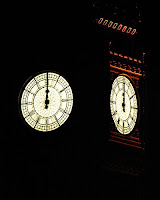
Image of clock on Palace of Westminster tower striking midnight - Graham Binns/Flickr

Watch out for the extra second that’ll sneak in just before midnight tonight! At 23:59:59, there will be an extra wait before 2009 begins.

It’s all down to the rotation of the Earth which slows down over a long period due to the effect of the Sun-Moon attraction as well as vagaries like the Earth’s core/mantle, the atmosphere and the oceans.

The good news is that since 1972, an additional 23 seconds have been sneaked in, the last being on 31 December 2005.

More details if you need it! Update - And yet more over at the BBC.

(Image via Graham Binns/Flickr)

Sunday, October 26, 2008

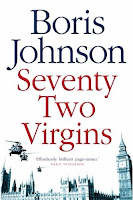
Seventy Two Virgins - what kind of novel would you expect Boris Johnston to write?

Cover of Boris Johnston's Seventy Two Virgins

Boris Johnston has (and nurtures) an image of being bumbling, eccentric, jolly, articulate yet not smooth talking, classically trained, able to mock himself, pretending to be the common man except from a privileged background. His appearances in the media vary from comedic moments in Have I Got News For You to unconventional statesman waving the flags at Olympic and Paralympic closing ceremonies.

I started writing this post about a month ago ... and perhaps Boris has thrown off some of his bumbling persona more recently, and shed his cultivated amateur politico status to join the professional ranks with his short but decisive conversation with Sir Ian Blair that led to a vacancy at the top of London's Metropolitan Police Service.

Seventy-Two Virgins is a comic novel penned by Johnston (his first fiction?) and set against the backdrop of an unravelling terrorist attack at Westminster. The American President is coming to Westminster Hall to address the assembled MPs and staff. But an ambulance has gone AWOL and is making its way towards the security cordon with an unusual team of dangerous men on board.

The story unfolds and the pages turn quickly as the British and American security teams suffer from bad timing, bad personnel and bad mistake after bad mistake as they begin to sense that something is about to go spectacularly wrong. It’s a farce without the forced gags, and a fun bedtime read.

The title’s reference to seventy-two virgins comes from the promised reward in paradise for the terrorists. Though the - perhaps controversial - issue of 72 raisins is raised. Issues of taste, tact and humour abound, with a little explosive toilet humour near the end. And did the reader ever expect a US Secret Service sharpshooter called Pickle to be a deadly assassin?

Johnston’s cleverness is on show throughout the book. He doesn’t actually (need to) identify the political parties and persuasions of any of the characters, and only takes pot shots at the French, American and bad guy stereotyped players.

Surprisingly readable fiction ... that provided this week’s word of the week: ratiocination. Boris’ vocabulary is impressive!

Saturday, August 30, 2008

So Long and Thanks for All the Fish – Geoffrey Perkins

Hitch-Hikers Guide to the Galaxy - The Original Radio Scripts

When I heard this morning that Geoffrey Perkins had died, my mind went back to the Hitch-Hiker’s Guide to the Galaxy – The Original Radio Scripts.

As I’ve mentioned on AiB before, I discovered at about age 11 or 12 that the school library had the published scripts from the original Radio 4 series squirreled away in the non-fiction section. (They were republished in 2003 and still available.)

Geoffrey Perkins

Geoffrey Perkins produced the radio series of HHGTTG – the first BBC radio comedy in stereo – and gets two prominent credits on the front of the script book.

A comedy performer and producer, Perkins created the Mornington Crescent game featured in I’m Sorry I Haven’t a Clue and the uk.games.mornington-crescent and alt.games.mornington.crescent newsgroups. He went on to become BBC TV head of comedy, as well as producing Catherine Tate Show, the Fast Show and the first series of Father Ted.

He died after being knocked down by a flatbed van in London’s Marylebone High Street on Friday morning. His latest production, Harry And Paul, with Harry Enfield and Paul Whitehouse, is due to start airing on BBC One next Friday night at 9pm. Update - Guardian's obituary.

Saturday, May 17, 2008

A furry G-Wiz and two examples of (continuing) good customer service

It had been months since I’d been staying overnight in London and able to get out and about in the evening. So I escaped on a number 55 bus over to Tottenham Court Road (though the bus stopped prematurely due to the fatal stabbing earlier in the evening) and toddled down to Chinatown.

Furry G-Wiz outside Yungs Chinese restaurant in London's Chinatown

And outside Yungs was a furry automobile. G-Wiz cars are becoming quite common in London. Four people can cram into the skinny battery-power cars. Though none of them could be too comfortable. But the furry decal was something special.

Inside Yungs, they still remembered by “usual” order and displayed their customary friendliness.

The Curzon Soho once again displayed their instinctive level of customer service when I tried to use a complimentary voucher to get in to see Persepolis. I’d been carrying the voucher around with my Oyster Card for months. But being across in London a lot less regularly than last year, it’d been quite a while since I’d been over the Curzon.

It was only as I pulled the voucher out of its wallet to hand it over that I noticed that it had expired on the fourth of April. My face sank as I realised I’d missed the boat. But when I explained, mercy was swift, and they were happy to accept the voucher and let me in for free.

Friday, May 02, 2008

Mayor Boris Johnston wins ... in style

Boris Johnston does it and will be the next Mayor of London.

He made an eloquent, and sometimes humorous acceptance speech, gracious to his rivals, and with particular praise to Ken Livingstone's stewardship and obvious love of London, including his leadership in the aftermath of the 07/07 bomb attack.

Ken speaks with emotion in his voice, admitting that losing after eight years of being Mayor is his fault, and will support the new executive and continue to work for London.

Brian Paddick too got a chance to speak. In fourth place, the Green Party's Siân Berry ran to the podium after Brian stepped back. But too late. The producers on News 24 the BBC News channel were already cutting away and back to Jon Sopel on the roof!

Thursday, May 01, 2008

London Mayoral Election – using a voting method we haven’t played with ... yet!

Living in Northern Ireland, there’s part of me feels short changed that we’re not getting to vote today. After all, it is the land of vote early, vote often and tends towards there being some kind of election nearly every year.

(There’s an –ology for the stuffy of voting and elections, but I can’t figure out what it is!)

European elections under Proportional Representation (the Party List system).

Westminster elections under straight-forward First-past-the-post (known as Plurality in the trade).

Assembly elections to Stormont using Proportional Representation (Single Transferable Vote variant). Also used for local Council elections???

Ministerial positions on the Northern Ireland Executive are allocated using the D’Hondt method, and some MLA votes require cross-community support.

But no Mayoral elections. And certainly no Supplementary Vote method.

Sample voting form for London Mayoral elections

In today’s London elections, voters get to cast two votes for Mayor: their first and second preferences. Unless candidates are confident of an absolute win – ie, getting more than 50% of the first preference votes – the use of SV tends to encourage the candidates to reach out beyond their core supporters to secure the second preferences of rival groups. The editors of Wikipedia (people like you and me) suggest that the technique can

“create a more conciliatory campaigning style among candidates with similar policy platforms.”

Oh, and Londoners also have two other votes to cast for the London Assembly today. One for their local constituency representative (elected first past the post), and another for the top up list of parties and independents that make up the rest of the assembly (using a modified d'Hondt system). But that's just plain confusing.

London Elects, the organisation running the election, describe the counting procedure:

In this system, if a candidate receives more than half of the first choice votes he or she is elected.

If this does not happen, the two candidates with the most first choice votes go through to a second stage. All the other candidates are eliminated but the second choice votes on their ballot papers are reviewed. If they are for either of the top two candidates these votes are added to their totals.

The candidate with the most first and second choice votes wins. If there is a tie then the Greater London Returning Officer draws lots.

This voting system is used to ensure the candidate with the broadest amount of support from London is elected.

Since a picture is worth a thousand votes words, they’ve an animation to illustrate it.

So unless Ken or Boris rakes in half the first preference votes, they’ll be reliant on the second preference votes from the rest of the field to top them up. And unlike STV, there’s no fractions of a vote. Each second preference vote adds 1 to their tally.

So Ken could narrowly lose the first round to Boris, but come bouncing back with the second preferences. All to play for?

While the England and Wales local election results will dribble in throughout the night, counting for the London Mayoral contest doesn’t start until 9am tomorrow morning – split across three centres in Alexandra Palace, Excel and Olympia – where a fleet of paper scanners will swallow all the votes and spit out a definitive answer sometime in the evening.

As someone online suggested this week, Ken and Boris could be the UK's Obama and Hillary! (Slugger's Mick Fealty is twittering the election if you're keen.)

Friday, April 25, 2008

Lifts (elevators) - getting trapped - and a near forgotten post about the Gherkin

I stumbled across a remarkable story this evening. First was the story of Nicholas White who was trapped in a lift in a New York building for . The security camera footage of his incarceration is on YouTube, and there's an extended piece in The New Yorker that explains what happened along with the unexpected repercussions.

The article is fascinating, full of details about how and why lifts (elevators) work the way they did. It reminded me of a post I recalled writing a year or so ago on the lifts in the Gherkin. But could I find it?

Eventually it turned up as a draft post last touched on 12 January 2007 and never quite published! The post was to be based around a selection of photos taken in and around St Paul's Cathedral in London. But the nugget I remembered was about the two-stage lifts.

Now writing in a blog entitled “Alan in Belfast” I should probably be posting about St Anne’s Cathedral (conveniently built in Belfast’s Cathedral Quarter) ... but spending so many days and nights working in the centre of London, the shadow of St Paul’s Cathedral dominates more than the Stan’s more modest Cathedral in Belfast.

That and the sight of 30 St Mary Axe (better known as “The Gherkin”) popping out from the ragged skyline of grey buildings.

Trivia: There’s a bar on the top (40th) glassy floor of the Gherkin. So it wasn’t possible to put the lift winding gear on top of the building as normal. Instead the architects designed one set of lifts that go up as far as the 34th floor, with a smaller lift pushed up from underneath to reach the upper floors. From 39 up to 40 you’ve got to walk up the marble stairs, or use the stair lift.

St Paul’s is a beautiful building. Day and night, its crisp lines stand out against the clear sky. (So often it appears to be a clear blue sky, or black if it’s after 4pm. Clouds seem rare in the sky above St Paul’s. Special place!)

No wonder that Charles and Di favoured it over Westminster Abbey for their wedding back on 29 July 1981.

Monday, April 14, 2008

If the Royal Mail/Post Office introduced Phorm ...

I heard an interesting definition of Phorm on Radio 4’s iPM podcast (itself described as a blog with an associated radio show):

“It’s just like if the Post Office suddenly decided they’d open all of my letters in order to find out what I was interested in so that people could send me a better class of junk mail.” Richard Clayton (Foundation for Information Policy Research)

I’ve no real desire to add to the acres of words—not to mention the eons of electrons—that have already been expended on probing and analysing the use of Phorm by a number of Internet Service Providers (including BT, Talk Talk and Virgin Media)* to inspect user’s traffic and target their advertising accordingly.

It’s been described as controversial and the legality of some aspects of the transparent service have also been questioned (specifically around the Regulation of Investigatory Powers Act 2000 that protects users from unlawful interception of information). Understandably, there’s been a lot less mention of the anti-phishing protection and fraud detection that Phorm would enable!

There’s a Phorm Town Hall event in London at 6.30pm on Tuesday night (15 April) where you’ll be able to hear Richard Clayton speak along with representatives from Phorm.

The Lecture Theatre, Brunei Gallery, School of Oriental & African Studies, University of London, Thornhaugh Street, Russell Square, WC1H 0XG

Update - Tuesday - Darren Waters is live blogging the public meeting across at dot.life ...

(* In the interests of full disclosure, I work for one of the telcos in question ... though I've no more idea of how Phorm is being used than what I read online and in the press.)

Wednesday, March 26, 2008

Paid your congestion charge? Like 3,000 receipts?

Graeme Ellis opens some of the 3,000 receipts TfL sent him for his congestion charge

Graeme Ellis is a blind-fitter who sometimes has to drive through the congestion zone in central London. He’s been fined three times for days on which he’s forgotten to pay.

So he pulled his socks on and started to pay the £8 online – requesting a receipt as proof of payment.

  • First time, he got 25 identical receipts through his letterbox – each in their own brown A5 envelope.

  • Next time he paid online, it rose to 500.

  • But no comparison to the last time he paid online and received 3,000 receipts – dropped off by a big Royal Mail lorry at his doorstep!

Guess what, a computer error is to blame. And perhaps a missing user story that fell down the back of a filing cabinet stating:

As a Congestion charge operator
I want to automatically send no more than 5 receipts a day to the same name/address
So that
I have a chance to manually intercept repeat payment mistakes (or system errors) and don’t bombard people with unnecessary mail.

You can catch a two minute news bulletin clip about the story for a few more days.

In a statement, Transport for London explained:

“This is clearly an unacceptable error. Our service provider, Capita, have identified the fault and put in additional controls to ensure it does not happen in future.”

Mr Ellis is considering paying at a petrol station from now on! Though his children are enjoying the lifetime’s supply of drawing paper. And his rabbits are enjoying the shreddings as bedding.

Thursday, February 07, 2008

Relecting on glass, modern architecture & window blinds

Reflections in and on London buildings

Modern architecture uses lots and lots of glass, particularly in tower blocks. A side effect are the wonderful reflections that the acres of plate glass allow. Some shots from earlier in the week around Moorgate.

Fascinating window blinds on London towerblock

And I wonder who got the contract for making and fitting the window blinds, which seem so uniform when viewed across so many floors. If only they could be remote controlled, you could play a great game of Tetris.


Fascinating window blinds on London towerblock